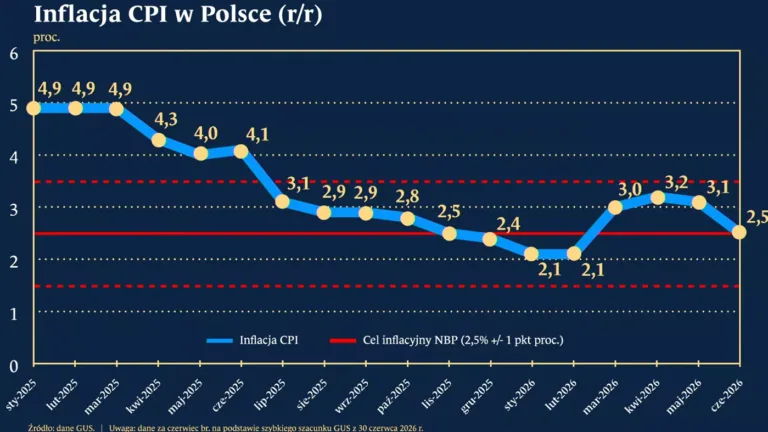

The dollar has climbed above PLN 4 for the first time since March 2025 as higher US Treasury yields and expectations of a December Federal Reserve rate rise put pressure on the zloty. Ebury analysts say the stronger dollar is outweighing encouraging Polish inflation data, with the euro trading near PLN 4.40.
Analysis by Enrique Díaz-Alvarez, Chief Risk Officer at Ebury; Matthew Ryan, Head of Market Analysis at Ebury; and Roman Ziruk, Ebury analyst.
US inflation drives another Treasury sell-off
Higher-than-expected US inflation triggered another sell-off in Treasuries last week, lifting the dollar to its strongest position in a year and a half and back to levels seen around “Liberation Day”. US consumer prices rose 0.4% month on month in October, exceeding forecasts, while core inflation remained elevated for a third consecutive month. That came despite a sharp fall in oil prices since mid-October, fuelled by hopes of an end to the war with Iran.
The figures followed Federal Reserve Governor Christopher Waller’s call for a December rate increase and helped produce the largest weekly rise in two-year Treasury yields in more than two years. A series of weak Treasury auctions, culminating in a poor sale of 30-year bonds, subsequently pushed yields at the long end of the curve back above 5%.
Markets now fully price in a December increase, with a small chance of a 0.5 percentage point move, and also assign some probability to another rise early next year. Higher US yields drew capital into the dollar, which strengthened against most currencies, while gold fell. Equities proved surprisingly resilient, with semiconductor shares rebounding despite the sudden departure of NVIDIA’s chief executive.
Fed speakers, retail sales and AI earnings in focus
The Fed remains central to this week’s market calendar. Minutes of its October meeting, due on Wednesday, 18 November, predate the inflation surprise. Investors are therefore likely to pay more attention to October retail sales on Tuesday, 17 November, and speeches by Fed Chair Kevin Warsh on Monday, 16 November, and Governors Christopher Waller and Lisa Cook on Friday, 20 November.
UK labour market data on Tuesday, 17 November, and October inflation on Wednesday, 18 November, will test expectations of further Bank of England rate increases. Inflation is expected to edge up to 3.6%. For AI-related investments, the major tests will be NVIDIA’s first earnings release since its change of chief executive on Tuesday, 17 November, and Anthropic’s Nasdaq debut on Thursday, 19 November.
Zloty faces pressure despite lower core inflation
A strong dollar and higher US interest rates are challenging the zloty. The euro remains near PLN 4.40, while the dollar has breached the psychologically important PLN 4 threshold for the first time in more than a year and a half. Recent Polish economic data have been reasonably encouraging but have had little impact on the currency.
The final October consumer price reading confirmed that annual inflation had fallen to 3.5%, the upper limit of the tolerance band around the target of Narodowy Bank Polski (NBP), Poland’s central bank. On Monday, 16 November, the bank reported a second consecutive monthly decline in the annual core inflation rate, to 2.9%. Ebury sees this as encouraging evidence that the energy shock is not spreading significantly to other prices.
Poland’s GDP growth slowed to 3.5% year on year in the third quarter, slightly below the consensus forecast, while quarter-on-quarter growth was 0.8%. The figures were broadly in line with expectations. The main surprise was an upward revision to second-quarter growth, taking it above 4%, which Ebury views as evidence of the economy’s resilience to the energy shock.
With no new domestic data due over the next few days, attention will turn to developments abroad. Ebury expects these to remain the main influence on the zloty.
Euro falls for a third week as ECB rate rise approaches
The euro fell to its lowest level against the dollar since spring 2025, recording a third consecutive weekly decline. Euro-area GDP growth of 0.4% in the third quarter matched expectations. Ebury sees no slowdown severe enough to make European Central Bank policymakers doubt the economy’s ability to withstand higher interest rates.
With euro-area inflation at 4%, twice the ECB’s target, the analysts continue to expect a December rate rise and see few factors likely to overturn that forecast. ECB Chief Economist Philip Lane has joined other hawkish members of the Governing Council, while economists are now almost unanimous in expecting a December increase.
But with the Fed also tightening monetary policy, interest rate differentials are widening in the dollar’s favour. France’s budget deadlock continues to weigh on the euro. ECB President Christine Lagarde is due to speak several times this week, and Ebury expects her to keep steering expectations towards a December increase.
Dollar outlook hinges on how far the Fed goes
Unlike in recent weeks, when safe-haven demand supported the dollar, interest rates are driving the latest rally. Ebury considers the December Fed increase it has been forecasting almost certain; the question is whether it will be the last. The analysts still expect it to end the tightening cycle and regard market pricing of a 0.5 percentage point move or a further January increase as excessive, particularly after Friday’s softer producer price figures and the fall in oil prices.
If that assessment proves correct, much of the favourable news is already reflected in the dollar’s price, and further gains would require another upside inflation surprise. Nevertheless, the probability of at least one additional increase early in 2027 is rising, providing strong support for dollar demand.
US retail sales on 17 November and the Federal Open Market Committee’s October minutes on 18 November are the next key releases. Beyond those events, Ebury expects the dollar to respond to bond yields and equity market moves, particularly any further deterioration in sentiment towards technology companies.
Sterling awaits inflation test after strong GDP growth
Sterling fell to its lowest level against the dollar since mid-October, despite Thursday’s figures showing that the UK economy grew 0.7% in the third quarter, its fastest pace in two and a half years. The reading matched expectations. Sterling’s stability against the euro suggests that its decline last week reflected dollar strength rather than domestic weakness.
The pound recently reached its strongest effective exchange rate—a measure against a basket of currencies—since the Brexit referendum. Ebury therefore regards the latest weakening as a pause after a strong rally rather than the start of a reversal.
Wednesday’s inflation release on 18 November is now crucial. A strong reading would support the Bank of England’s decision to raise rates to 4% in early November and could pave the way for another increase at the Monetary Policy Committee’s December meeting, which swap markets already price in almost fully. Ebury still considers further increases beyond that point unlikely to match the scale anticipated by markets.