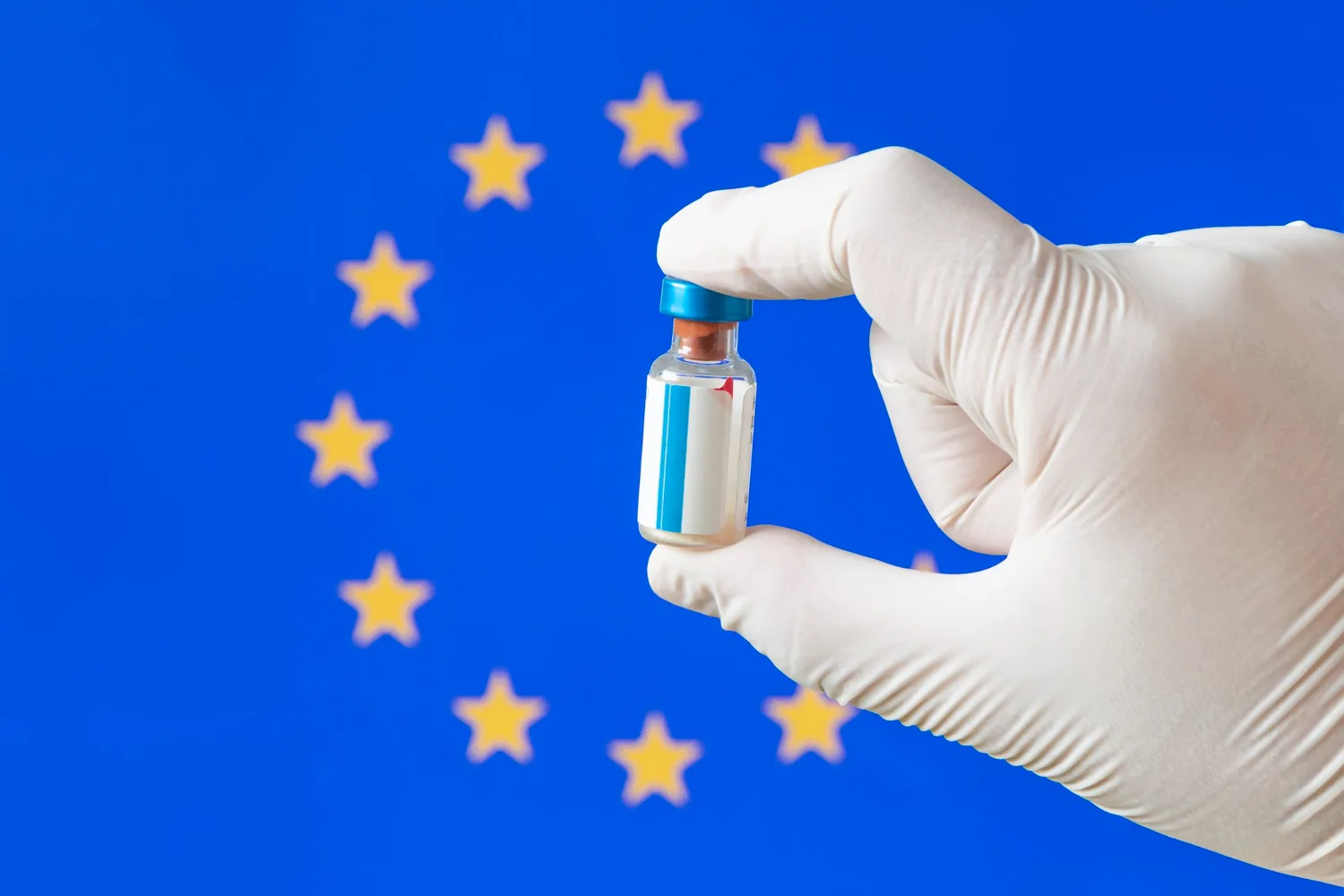
The European Parliament approved the agreement on the Critical Medicines Act on 25 November, voting 592 in favour, 35 against and 30 abstentions. The EU aims to expand European production of medicines and active ingredients and reduce the risk of shortages. The regulation still requires formal adoption by the Council of the EU.
The regulation provides for support for pharmaceutical investment and changes to public procurement rules, giving supply security greater weight when suppliers are selected. The European Commission presented its proposal on 11 March 2025, and Parliament and the Council reached a provisional agreement on 12 May 2026.
EU seeks to expand domestic medicine production
The concentration of active ingredient production outside the EU leaves the pharmaceutical market vulnerable to supply disruptions. A plant breakdown, export restrictions or transport problems can affect medicine availability in several countries at once. The regulation aims to reduce that exposure by expanding EU production and diversifying supplies.
Strategic projects to support pharmaceutical investment
Support is intended to cover the creation, modernisation and expansion of manufacturing capacity through strategic projects. Investors will be able to benefit from administrative and regulatory facilitation and apply for national or EU funding. Strategic project status does not automatically confer a grant.
Changes on the demand side will also matter to businesses. The profitability of new factories depends on their ability to sell their output over subsequent years. Giving supply security a role in public procurement could improve the conditions for manufacturing in Europe.
Supply resilience to shape public procurement
Public bodies purchasing critical medicines will be expected to consider supply-chain resilience. Relevant factors may include diversity of supply sources, continuity of deliveries and where medicines and active ingredients are manufactured. Preferences for European production do not amount to an import ban or the exclusion of foreign suppliers.
The new criteria could increase the purchase cost of some medicines. However, reducing shortages could lower healthcare providers’ spending on emergency supplies.
Five countries can request joint procurement
The minimum number of countries needed to ask the European Commission to conduct joint procurement has been reduced from nine to five. Pooling orders is intended to strengthen participants’ bargaining power and improve access to medicines in smaller markets. Countries will participate voluntarily.
The regulation also provides for coordination of information on stocks. This is intended to reduce the risk that action taken by one country worsens shortages in other member states.
What makes a medicine critical?
A medicine’s clinical use and the availability of suitable therapeutic alternatives determine whether it is critical. Inclusion on the EU list of critical medicines does not mean that a product is currently in short supply. Selected measures under the regulation have also been extended to orphan medicines, which treat rare diseases.
Formal Council adoption is still required
Parliament’s vote does not bring the rules into force. Formal approval by the Council of the EU and publication in the Official Journal of the European Union are the next steps. Completion of those stages had not been confirmed as of 25 November.
The Critical Medicines Act is separate from the EU pharmaceutical package, which covers matters including marketing authorisation rules. It is also unrelated to Poland’s amendment of its medicines reimbursement law.
Sources: European Parliament, P10_TA(2026)0395, procedure 2025/0102(COD); European Parliamentary Research Service (EPRS), document 797034; Council of the EU statement of 12 May 2026; roll-call voting results of 25 November 2026, EP Votes and OpenRCV.
By the CEO Magazine Poland editorial team. Polish original published on 25 November 2026 at 23:49:48 CET (22:49:48 UTC). English adaptation published separately.