Fabrity Group, listed on the Warsaw Stock Exchange under the ticker FAB, increased operating profit 92% year on year to PLN 2 million in the third quarter of 2026. Revenue rose 18% to PLN 19.7 million, while net profit increased almost 65% to PLN 1.6 million. Management attributed the improvement in profitability to efficiency measures and the start of new contracts. The company is also expanding its work in artificial intelligence, data analytics and the industrial Internet of Things (IoT).
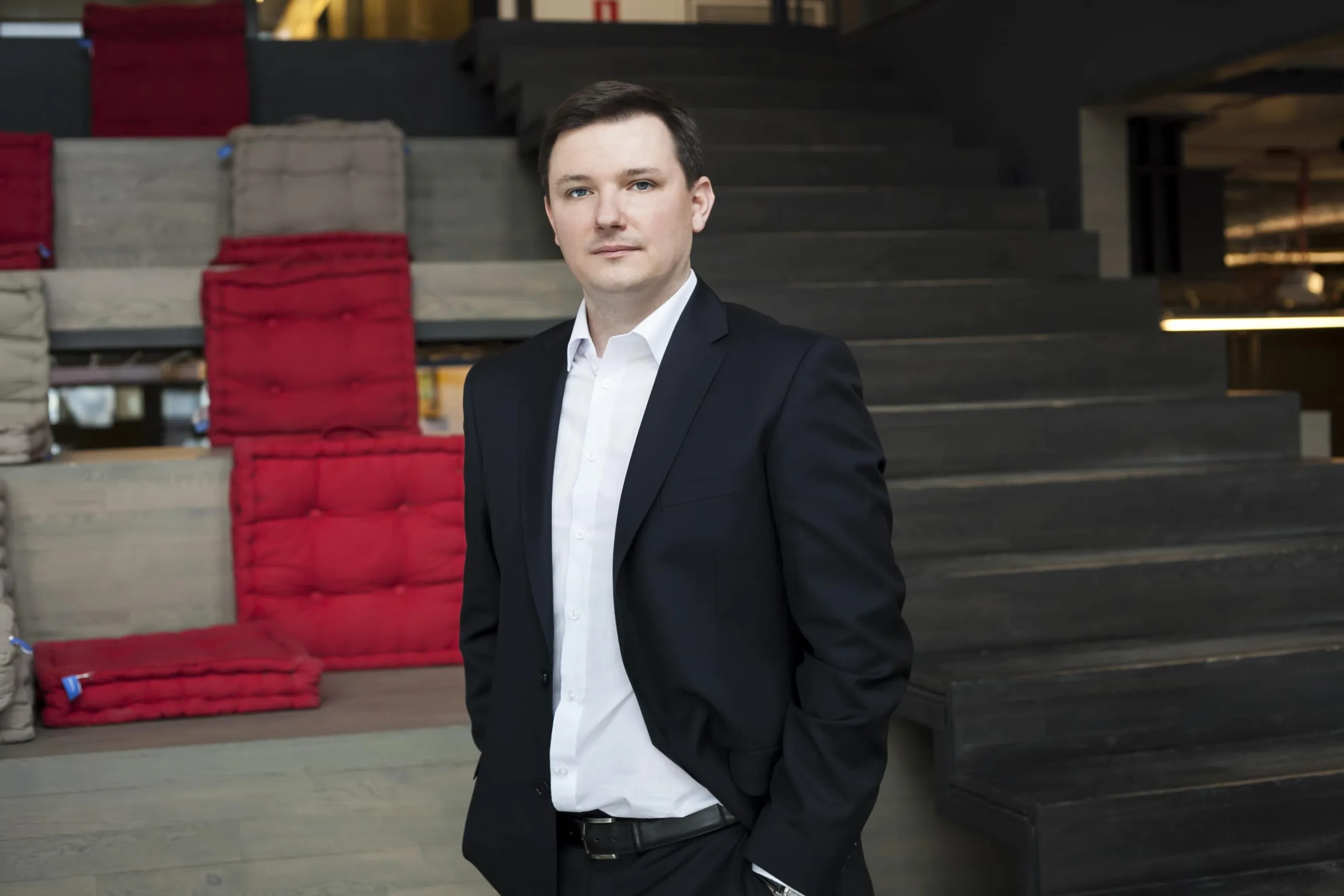
By CEO editorial team. Polish original (source ID 438239), published on 27 November 2026 at 08:26:01 UTC. English edition prepared on 27 November 2026. Image caption: Tomasz Burczyński, CEO of Fabrity Holding.
The group’s operating margin exceeded 10% in July–September 2026, an increase of almost four percentage points from a year earlier.
Consolidated revenue for the first nine months reached PLN 55.4 million, up 9% year on year. Earnings before interest, tax, depreciation and amortisation (EBITDA) rose 33% to PLN 6.5 million, operating profit increased 58% to PLN 5.2 million and net profit grew 71% to PLN 4.4 million.
“We are on the earnings growth path that we announced and have been steadily delivering. Having addressed operational and cost issues, we are now seeing an acceleration as new, large contracts get under way. More will start in the coming months, so I see further drivers of growth ahead of us. Our projects are growing in scale, we are maintaining cost discipline and we are focusing on operational efficiency.”
— Tomasz Burczyński, CEO of Fabrity S.A.
Spending on expanding teams, developing proprietary products and broadening the offering also affected the group’s results. The start dates of some projects for new customers were delayed.
“We achieved our results for the first three quarters of 2026 while simultaneously investing in expanding our teams, developing our own products and adding new elements to our offering, while the start dates of some projects for new customers were pushed back. Much of that spending weighed on current results, whereas the associated revenue was not yet fully reflected in them.”
— Burczyński added.
Fabrity Group’s first nine months of 2026
| Indicator | Result | Year-on-year change |
|---|---|---|
| Revenue | PLN 55.4 million | +9% |
| EBITDA | PLN 6.5 million | +33% |
| Operating profit | PLN 5.2 million | +58% |
| Net profit | PLN 4.4 million | +71% |
New business in private and public sectors
Fabrity provides IT services to private businesses, public institutions and organisations in regulated sectors. During the first nine months of 2026, it expanded work with existing customers and won new clients.
“In the first three quarters of 2026, across both groups we maintained relationships with key customers, expanded the scope of that work and won new contracts, while also developing our range of services and proprietary solutions. We are also strengthening our 300-person team, particularly by developing expertise in data, AI and industrial IoT.”
— Rafał Graboś, deputy CEO of Fabrity S.A.
In the private sector, the group won more than a dozen new customers in industries including automotive, chemicals, food, construction, logistics, media, furniture and finance. They included businesses from the United States, Switzerland and Germany, as well as Polish plants belonging to international industrial groups.
The contracts cover data platforms, AI deployments, systems supporting production and quality control, custom software development and e-commerce implementations.
Work with new customers typically begins with analysis, pilot projects or proofs of concept (PoCs). Further expansion depends on the results of those initial deployments.
Framework agreements with PGE, the OECD and public institutions
During the first three quarters of 2026, Fabrity increased the volume of call-off orders for existing customers in regulated sectors and critical infrastructure. It also signed new framework agreements with the Polish Press Agency (PAP), public broadcaster Telewizja Polska (TVP) and PGE, and began delivering the first orders under them.
The company started providing services to another organisation in Poland’s energy sector. In the second quarter, it also began work for a new customer in the fuel industry.
In the third quarter, Fabrity signed framework agreements with the Organisation for Economic Co-operation and Development (OECD) and with Poland’s State Treasury, acting through the Court of Appeal in Kraków and represented by the judicial procurement centre, Centrum Zakupów dla Sądownictwa, a state budgetary institution.
The group continued delivering orders for Frontex, the European Border and Coast Guard Agency, and expanded work under two framework agreements signed in 2025. It said the number of enquiries and call-off bids submitted had increased since the second quarter of 2026.
Framework agreements do not automatically generate revenue equal to their full potential value. Revenue depends on the number and value of call-off orders and the timetable for delivery.
AI is changing software delivery and pricing
Fabrity is developing projects that combine data analytics with artificial intelligence. These include automating business processes and document processing, analysing images for quality control and deploying AI agents.
The group also uses AI in its own software design, development and testing. It is extending these tools to IT-system maintenance, application modernisation and migration of existing solutions.
Management says AI can shorten prototyping and reduce the cost of testing new concepts. For existing systems, the extent of its use depends on technical constraints and the economics of implementation.
Management sees the greatest potential for margin improvement in custom software. Automating some programming tasks could allow services to expand without a proportionate increase in staffing costs. At the same time, the company points to pressure on average IT-service prices.
Technological change may also affect the industry’s billing models. Management believes fixed-price contracts, fees linked to results and subscription models are becoming more important alongside time-based billing.
Proprietary industrial software and hardware plans
The group is seeing more industrial IoT projects and requests for proposals. Deployments integrate production machinery and equipment with data analytics and AI systems, with applications including production monitoring, quality control and safety management.
Fabrity is also developing its Nexen platform. It includes manufacturing execution systems (MES), production scheduling (MPS), computerised maintenance management systems (CMMS), utilities-consumption monitoring and AI-based visual inspection.
Sales of proprietary software and licences supplement project-service revenue. The group also plans to expand into initiatives involving the design and manufacture of its own devices.
Source: information supplied by Fabrity Group.