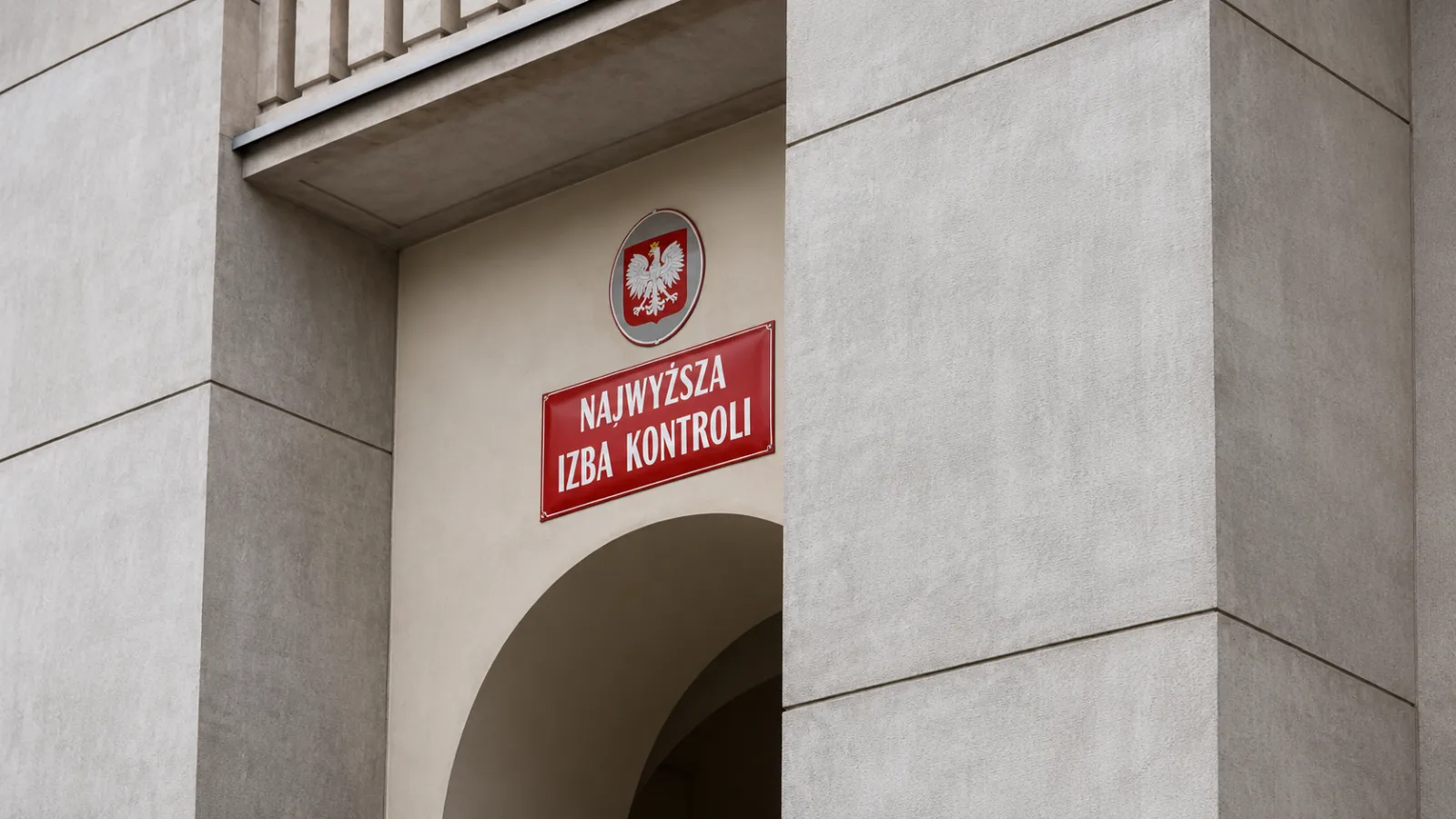
Polish mines discharged more than 10.8 million tonnes of salt into rivers in 2023–2025, according to the Supreme Audit Office (NIK). Its findings highlight higher water-infrastructure costs and gaps in pollution controls: modelled operation, maintenance and replacement costs for selected structures were 57.8–102.5% higher over 50 years in saline water.
The report, published on 24 November 2026, found that the salt inflow from mines had not been durably reduced following the Oder River environmental disaster. Key changes to the water-protection system had not been introduced by the end of the first quarter of 2026, when the period under review ended. Mines adjusted the timing and volume of discharges to river flows, reducing the risk of excessive salt concentrations without removing the source of the problem.
Mining discharges exceed 3 million tonnes a year
Surface waters received 3.52 million tonnes of chlorides and sulphates in 2025, compared with 3.94 million in 2024 and 3.34 million in 2023. The latest annual decline was insufficient to return discharges to their level at the start of the period.
Hard-coal mining, including the water-management and reclamation company Przedsiębiorstwo Gospodarki Wodnej i Rekultywacji, accounted for 49.6% of the total salt load. Copper-ore mining accounted for the remaining 50.4%. Average salinity of discharged water was 14.3 g/l, reaching 38.5 g/l in copper-ore mining and 8.1 g/l at hard-coal companies.
About two-thirds of the salt entered the Oder basin and the rest the Vistula basin. Lower river flows during droughts magnify the effects of pollution even when wastewater discharge volumes do not increase.
Salinity raises infrastructure costs
Commissioned by NIK, Gdańsk University of Technology assessed the economic effects of higher water mineralisation on a lock, a weir and a river groyne. The analysis covered structural elements in direct contact with water, excluding associated infrastructure.
With identical initial investment, modelled operation, maintenance and replacement costs over 50 years were 57.8–102.5% higher. The reference case used water with the natural characteristics of lowland rivers and electrical conductivity below 850 µS/cm.
In a scenario using structures adapted to highly mineralised water, initial investment costs were 100.9–385.1% higher and whole-life costs 7.6–286.7% higher. These results relate to selected structure types; they are not an estimate of costs across the economy.
NIK argues that mining activities should bear the additional costs of building and maintaining infrastructure, as well as losses caused by diminished ecosystem functions. Water-infrastructure operators and other river users currently also bear the effects of salinity.
Retention manages discharge timing; desalination reduces salt loads
In October 2025, the Economic Committee of Poland’s Council of Ministers adopted the framework for the first stage of a hard-coal mining investment plan running to 2030. NIK said its scope had been reduced from the original proposals. The measures did not improve water quality during the period examined.
In March 2026, the Ministry of Climate and Environment and the National Fund for Environmental Protection and Water Management (NFOŚiGW) opened a call for projects to develop energy-efficient mine-water desalination technologies. Opening the call does not mean industrial plants have begun construction. As of 25 November, the Polish article’s authors had been unable to confirm the selection results or commissioning dates for individual investments.
Retention allows mine water to be stored and released when hydrological conditions are more favourable. Desalination has a different purpose: reducing the mass of salt entering the environment. Both require investment, while desalination also entails energy costs and the management of treatment residues.
Inspections find thousands of facilities without permits
Polish Waters, the state water-management authority, carried out 11,346 inspections in 2023–2025, including 2,318 on-site inspections. The annual number of on-site inspections rose from 517 to 1,093. Irregularities were found in about 60% of them.
Checks of wastewater-discharge facilities identified more than 7,000 cases in which facilities had been built or used without the required permit. The legal status of 4,219 facilities was regularised, while more than 1,700 were removed.
Permits fail to account for cumulative pollution
NIK identified a lack of assessment of pollution’s cumulative impact on individual stretches of river. Companies’ compliance with their own permits therefore does not establish that combined wastewater inflows remain safe when river flows are low.
Polish Waters lacked complete information on permits and current wastewater parameters. After the audit findings were released, the authority said it was implementing NIK’s recommendations and working to improve the timeliness and consistency of data in the water-management information system.
NIK calls for changes to water-service charges
The audit office recommends varying charges according to how long mine water is stored. It also calls for removing the option to reduce fees merely because a treatment or pre-treatment system is present, and for assessing whether penalties for illegal discharges are effective.
The infrastructure minister should also agree with the climate ministry on the rules for a warning system using automatic measurements and forecasts of water-quality changes. Data from the Chief Inspectorate of Environmental Protection (GIOŚ) for 2019–2024 show that more than 98% of assessed surface-water bodies had poor status. NIK considers achieving good water status by the end of 2027 unlikely.
Sources: NIK report P/25/075, “Preventing and responding to threats related to the quality of flowing surface waters”, 24 November 2026; NIK’s release of the same date; the Polish Waters statement cited by NIK.
By the CEO editorial team. English adaptation of the Polish original, published on 25 November 2026 at 20:55:27 UTC.