Norway’s jobless register records fewer Polish-origin workers as employers post 32,000 vacancies

Ship in Norway

Falling unemployment among people of Polish and Ukrainian origin helped reduce Norway’s immigrant unemployment register in November 2026. Construction accounted for a substantial improvement, with about 400 fewer Polish-origin workers and 100 fewer Lithuanian-origin workers registered than a year earlier. Employers advertised 32,000 vacancies, led by healthcare and care services. The NAV figures measure registered unemployment and differ from Statistics Norway’s labour force survey.


Poland brings rural renewable-energy funding deadline forward after PLN 400m budget runs out

Biogas plant in Iłówiec Wielki, Poland

NFOŚiGW will close the third Energy for Rural Areas funding round on 4 December 2026 instead of 31 January 2027. Its PLN 400 million budget comprises PLN 260 million in grants and PLN 140 million in loans. Applications above the allocation can be considered if the budget increases. Across the whole programme, the fund has signed 170 agreements worth more than PLN 763 million, including support for 105 agricultural biogas plants.

Poland closes NaszEauto subsidy agreements after paying out more than PLN 1.23bn

Charging an electric car

Poland’s NFOŚiGW has completed contracting under NaszEauto after a budget increase allowed it to support all eligible applicants whose submissions passed assessment. More than 39,000 agreements have been signed and over PLN 1.23 billion paid out. The programme awarded PLN 55 million in scrappage bonuses in 6,240 cases. New electric passenger-car registrations fell 9.1% in January–October 2026 and 28% in October alone.

Temu commits to 14-day refunds and an end to compulsory shopping games in Europe

Online shopping from Chinese e-commerce platforms

Temu has agreed to change its European shopping practices following an investigation launched in November 2024. The commitments cover refunds within 14 days, clearer discounts and charges, checks on reviews, customer support in all official EU and EEA languages, and an end to compulsory shopping games. National consumer authorities will monitor compliance; the case is separate from the European Commission’s Digital Services Act proceedings.

Unified company law could lift EU GDP by 4.4% over 20 years, economists estimate

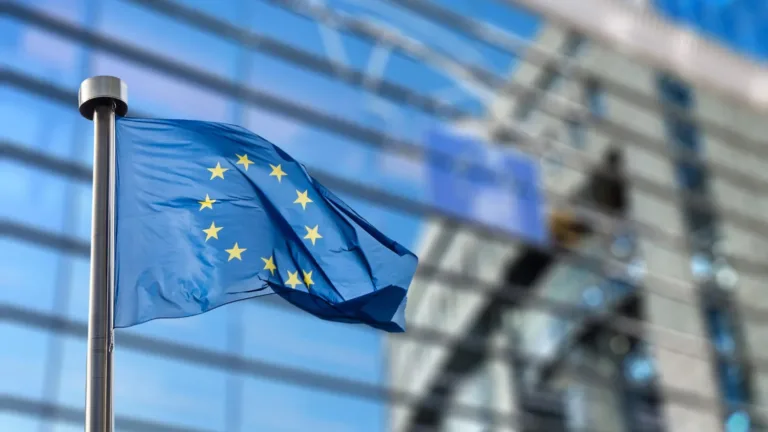
European Union flag

A voluntary European company-law regime could lift the level of EU GDP by 3.3% after 10 years and 4.4% after 20 years relative to a baseline, according to modelling by Allan Gloe Dizioli, Alexandra Fotiou and José M. Garrido. Restructuring and insolvency reform accounts for nearly 55% of the estimated gains after a decade. The authors stress that the results are illustrative and cannot be attributed directly to the narrower EU Inc. proposal.