
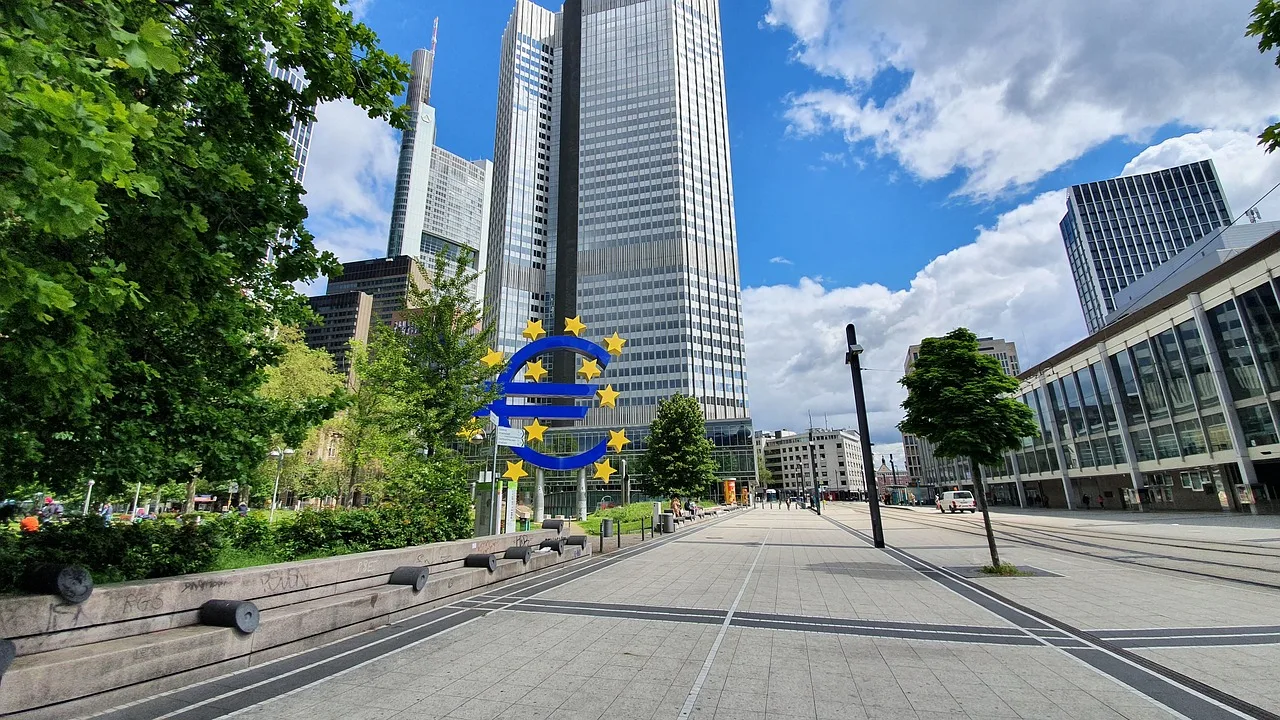
The European Central Bank is likely to need another interest rate increase unless the inflation outlook improves significantly. The Governing Council’s meeting accounts published on 26 November show that a sizeable group of members was ready to support a hike in October. The deposit facility rate remained at 2.50%. Since then, euro area inflation has risen from 3.8% to 4%, twice the ECB’s target.
All Governing Council members supported keeping rates unchanged on 28–29 October. That does not mark the end of the tightening cycle that began in June. The ECB raised rates twice in 2026, in June and September, by a combined 50 basis points.
Why the ECB held rates in October
Moderate wage growth, no clear acceleration in underlying inflation and tighter financing conditions supported the decision. Energy prices rose more strongly than anticipated in September’s projections but had not yet generated pronounced wage pressure. Most longer-term inflation expectations remained close to 2%.
Policymakers must also consider the impact of expensive energy on economic activity. Higher bills reduce household purchasing power, raise production costs and compress company margins. Rising financing costs further constrain investment.
The October pause gave the ECB time to assess incoming data before its December projections. At the October meeting, markets were pricing in a possible rise in the deposit rate to 3% by mid-2027. That reflected investor expectations at the time, not an official ECB forecast.
Euro area inflation reaches twice the ECB target
At the October meeting, policymakers had September inflation data showing 3.8%, up from 3.2% in August. Subsequent Eurostat figures confirmed a further acceleration, with annual HICP inflation reaching 4% in October.
The central bank is increasingly focused on the transmission of higher energy costs into other goods and services. In October, policymakers already noted signs of the energy shock spreading through production chains. Higher transport, manufacturing and service costs could lift underlying inflation even after energy prices stabilise if companies pass them on to customers.
ECB monitors wage negotiations
The ECB’s tracker of agreed wage settlements indicated negotiated wage growth of 2.5–2.8% for the remaining months of 2026 and an average of 2.6% in the first three quarters of 2027.
The tracker excludes agreements yet to be concluded. Inflation exceeding wage growth may prompt workers to demand larger increases. The ECB will watch whether companies can absorb additional labour costs through productivity gains or lower margins. Passing them into selling prices would complicate the return to 2% inflation.
AI investment boom raises financial stability concerns
Governing Council members highlighted elevated valuations of AI-related companies, the scale of technology investment and opaque financing structures. Financial stability risks could increase if future AI revenues prove insufficient relative to investment and financial obligations.
Participants noted that a correction in technology valuations could spill over into debt markets and affect lending conditions. Higher risk premiums would raise borrowing costs beyond the technology sector even without a change in ECB rates.
December policy decision
The next monetary policy meeting is scheduled for 16–17 December 2026, when the ECB will also release new macroeconomic projections.
Sources: ECB, accounts of the 28–29 October 2026 monetary policy meeting, published 26 November; Eurostat HICP data; ECB rate history and meeting calendar.