Around 31% of Poland’s population lived in overcrowded homes in 2025, compared with 16.8% across the EU. EU house prices rose 4.7% year on year in Q2 2026. Eurostat’s figures show that housing challenges extend beyond property prices to the number of rooms, location and running costs.
House prices continue to rise in Europe
Residential property prices in the EU were 4.7% higher in the second quarter of 2026 than a year earlier. For first-time buyers, higher prices mean a larger deposit is needed if other financing conditions remain unchanged.
Rising prices alone do not determine housing affordability, which also depends on wage growth, mortgage interest rates and local housing supply.
Overcrowding is much more prevalent in Poland
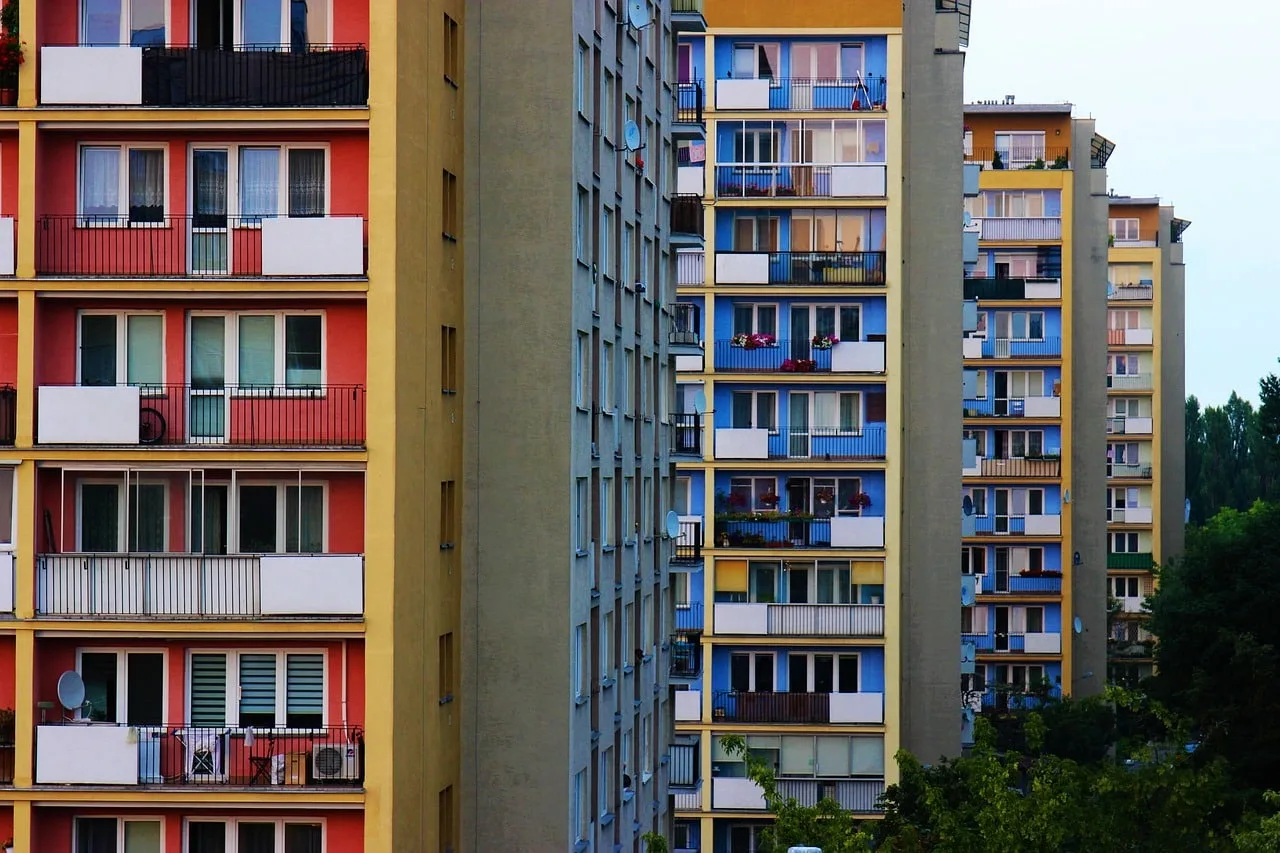
In 2025, 16.8% of the EU population lived in overcrowded homes, compared with around 31% in Poland. The situation was particularly difficult for young people aged 15–29, among whom the Polish rate reached approximately 41%.
Eurostat assesses overcrowding based on the number of rooms and the age and composition of a household, rather than directly measuring floor space. A family with children can therefore occupy a relatively large dwelling that lacks enough separate rooms.
Housing difficulties can impede young people’s ability to relocate for work and establish independent households. For employers in major cities, housing availability is one factor affecting the attractiveness of the local labour market.
One third of EU residents have more rooms than they need
In 2025, 68.5% of EU residents lived in owner-occupied homes. Meanwhile, 33.4% lived in dwellings with more rooms than their households required under Eurostat’s definition.
The coexistence of overcrowding and under-occupation points to mismatches in the housing stock. Larger homes may be located away from areas where families seek employment. Transaction costs and the limited availability of suitable housing can also impede relocation.
Housing costs weigh on household budgets
In 2025, 7.6% of the EU population lived in households where housing costs exceeded 40% of disposable income, according to Eurostat. The indicator includes rent, energy and other housing expenses under the EU-SILC methodology.
High housing costs leave less money for consumption and savings. In Poland, insufficient numbers of rooms remain a particular challenge even if current housing expenses are not as burdensome as in some other EU countries.
Housing investment and new supply
Housing investment accounted for 23.5% of total EU investment in 2025. The usable floor area covered by residential building permits increased 4.9% from 2024.
Growth in permitted floor area may signal future supply, but it does not equate to completed homes. Construction takes time and some projects may be postponed.
The composition of new development also matters in Poland: an increase in the supply of small flats does not necessarily improve conditions for families requiring more rooms.
Source: Eurostat, Housing Dashboard; EU-SILC (ilc_lvho05a); Young people – housing conditions. Data available on 26 November 2026. Polish original: CEO Magazyn Polska, 26 November 2026.