

Gold fell below $3,900 as technology stocks sold off, energy costs rose and geopolitical concerns returned. Silver and platinum lost around 8% over the week, compared with a 2.6% decline in gold, according to analysis by Ole Hansen, head of commodity strategy at Saxo Bank.
Gold breaks a key support level
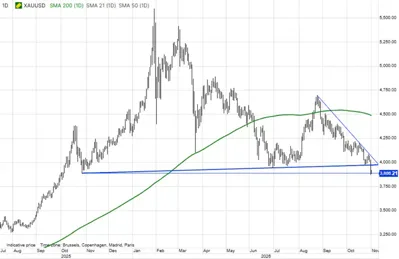
Gold suffered heavy selling on Friday, breaking support around $3,970. Losses accelerated as technology shares, including AI-related companies, came under pressure worldwide. Rising energy prices and concerns that US attacks on Iran could resume after the midterm elections added to inflation worries and weakened risk appetite.
Gold closed below $3,900 at its lowest level in a year. October ended with a 6.8% decline, marking its worst October performance since the global financial crisis.
Investor positioning raises the risk of further losses
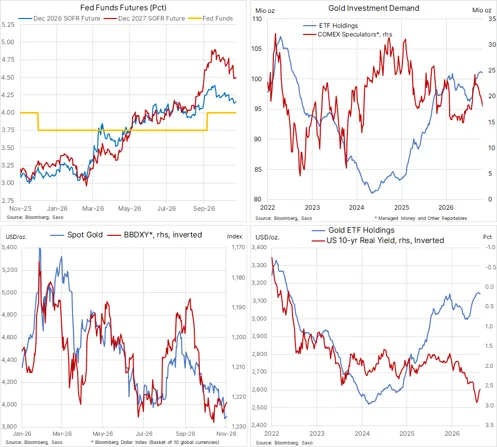
Hansen says technically driven selling remains the main force shaping the market. Weakening price momentum is encouraging investors to close long positions. Gold-backed ETFs lost six tonnes of bullion last week, a relatively small amount compared with roughly 150 tonnes accumulated since July.
However, a substantial share of those recent purchases is now showing losses. Investors’ willingness to maintain exposure will therefore test their conviction in gold’s long-term potential. If confidence weakens, further liquidation could deepen and prolong the correction.
Hedge funds have also been net sellers of gold futures for nine consecutive weeks. Even before the latest sell-off, they had reduced their net long position to 107,000 contracts, just 15,000 above this year’s low.
Although much speculative exposure has already been unwound, a deteriorating technical picture leaves gold vulnerable to further declines. That risk could intensify if broader equity weakness triggers another round of leveraged-position reductions.
Silver and platinum fall more sharply
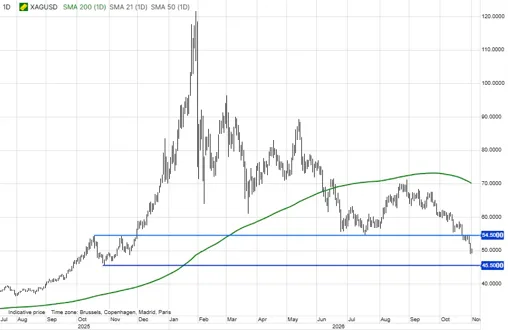
Silver and platinum faced even stronger selling pressure, each losing around 8% last week against gold’s 2.6% decline. Concerns about economic prospects and increasingly unfavourable technical signals weighed on both metals.
Silver in particular has struggled to regain stability after its sharp rally and subsequent correction between December and February. Last week’s break above a key resistance level in the gold-to-silver ratio further confirmed silver’s relative weakness. Its stronger rebound on the day of the analysis nevertheless eased some of those concerns.
Long-term fundamentals remain supportive
The longer-term arguments for gold remain in place. Rising public debt, concerns about fiscal stability, geopolitical fragmentation and de-dollarisation continue to reinforce its role in portfolio diversification and as a store of value.
For now, those forces are insufficient to offset technical selling, weaker risk appetite and fears that persistent energy-driven inflation could force central banks to keep policy restrictive for longer.
A deeper equity correction could eventually turn investors’ attention to potential Federal Reserve support, particularly if financial-stability concerns begin to outweigh inflation risks. Expectations for further rate increases have already eased from three to two; additional market stress could remove the remaining increases from forecasts.
A weaker dollar and lower real bond yields could then support gold again. However, any shift in Fed priorities towards financial stability over inflation control could revive concerns about the long-term credibility of fiscal and monetary policy.
Investors are currently watching global equities, developments in the Middle East, energy prices and US interest-rate expectations. The structural case for holding gold remains relevant, but sentiment, speculative positioning and monetary-policy expectations may need to stabilise before it has a stronger influence on prices.
Former support becomes resistance
The break below $3,970 has worsened gold’s short-term technical outlook. The former support level now acts as resistance. A sustained recovery above it could begin to improve the technical picture and restore a more neutral outlook; failure to regain it would leave gold exposed to further selling.
Author of the analysis: Ole Hansen, Saxo Bank. Original Polish article, November 2, 2026. English editorial translation.