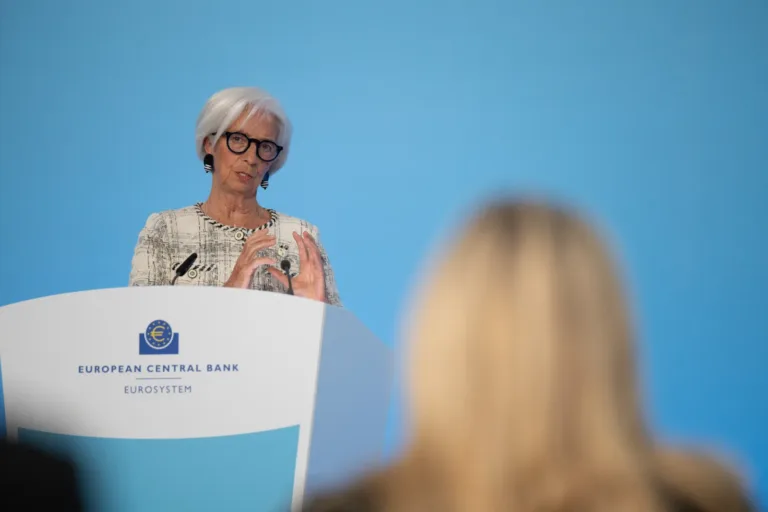
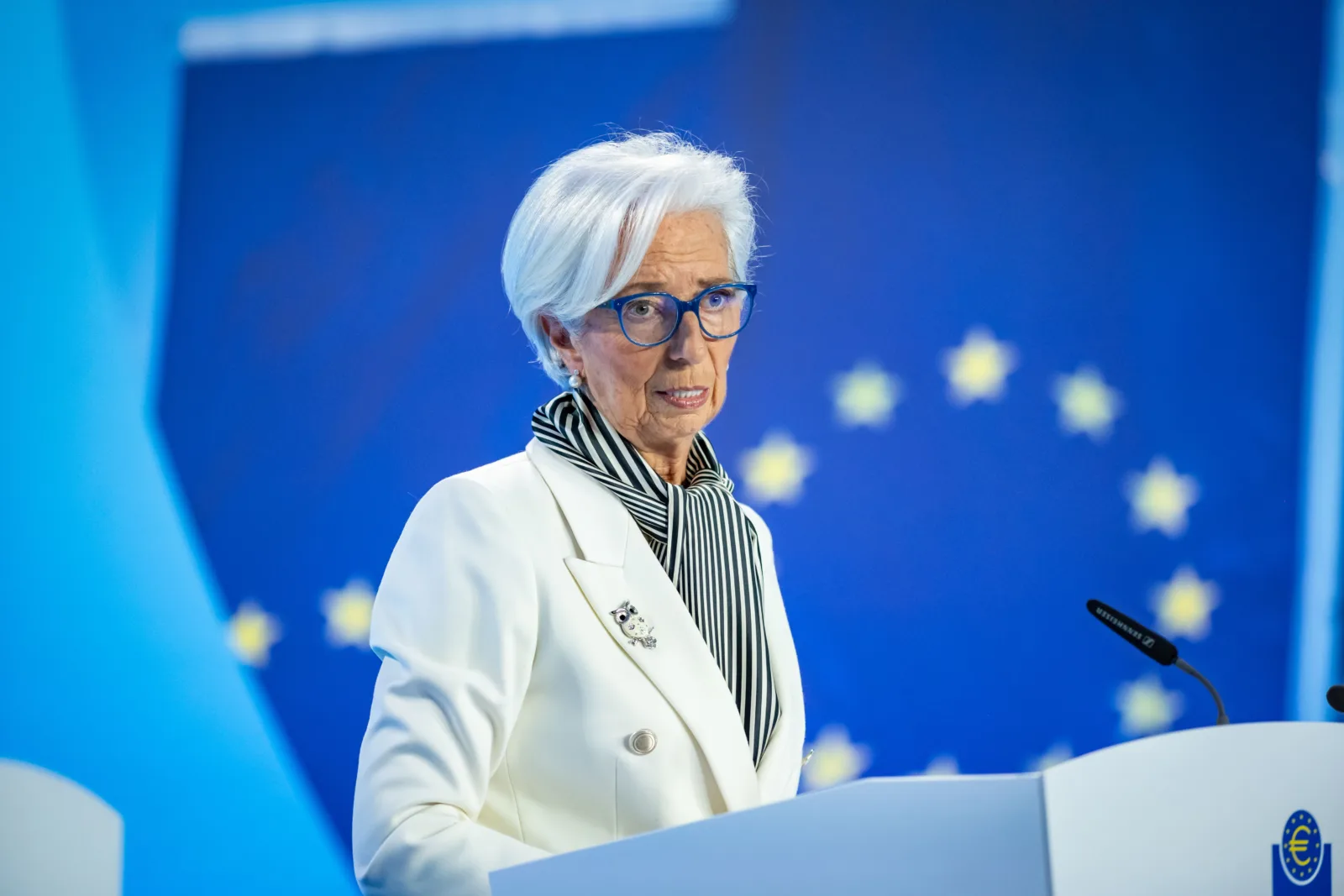
Christine Lagarde is due to leave the European Central Bank in February 2027, according to Bank Pekao’s analysis of her presidency. The bank’s economists credit her crisis management but criticise the ECB’s delayed response to inflation in 2022. Her successor faces the difficult task of containing price pressure as economic momentum weakens.
Lagarde’s term is set to end early
Lagarde is expected to leave as ECB president on 7 February 2027, almost nine months before the scheduled end of her eight-year term. She has led the bank since November 2019. Her presidency has spanned the pandemic, the energy crisis, a surge in prices and renewed geopolitical tensions, forcing central banks to make unusually difficult decisions.
In an analysis published on 30 October, Bank Pekao’s economists assessed that record. They caution that simply comparing inflation under successive ECB presidents can be misleading. Each faced shocks of a different scale, while monetary policy affects the economy with a lag.
Pandemic response earns praise, but the 2022 inflation response draws criticism
Pekao views the ECB’s response to the pandemic positively. Market-stabilisation measures and asset purchases reduced threats to financing and euro-area cohesion. Those decisions were taken amid a sharp contraction in activity and considerable uncertainty.
The economists’ strongest criticism concerns the start of the interest-rate tightening cycle in 2022. Inflation accelerated rapidly as demand recovered after the pandemic and energy prices rose. The ECB maintained accommodative policy for a relatively long time, requiring forceful increases later; Pekao argues that an earlier response could have reduced the persistence of price pressure.
Higher interest rates could not remove the causes of rising energy prices. Earlier tightening could nevertheless have restrained demand and reduced the risk of high inflation expectations becoming entrenched.
How her record compares with earlier ECB presidents
Pekao compares Lagarde’s experience with that of her predecessors. Wim Duisenberg built the credibility of the common currency in its early years. Jean-Claude Trichet faced the global financial crisis, although his interest-rate increases in 2008 and 2011 are now often regarded as premature.
Mario Draghi played a particularly important role during the euro-area debt crisis. His readiness to defend the common currency decisively helped calm bond markets. Lagarde, meanwhile, managed the bank through successive price and economic shocks, making the timing of decisions as important as the level of inflation in assessing her record.
Another ECB increase is possible in December
The ECB left interest rates unchanged at its October meeting. Pekao nevertheless highlights the relatively hawkish tone of its communication and the risk of prolonged inflation pressure. Its economists believe December could bring further tightening.
This is Pekao’s forecast rather than an announcement of an ECB decision. The central bank must assess whether higher energy prices are feeding into core inflation and wage expectations or remain mainly a temporary cost shock. Higher rates can also weaken investment, consumption and euro-area activity.
Bond-market reactions need not simply reflect expectations of more increases. Falling yields may indicate a view that any further tightening would mark the final stage of the cycle. They may also reflect expectations that a slowdown will eventually prompt rate cuts.
France illustrates the policy challenge
Figures cited by Pekao show French GDP falling by 0.1% quarter on quarter in Q3 2026, while annual HICP inflation rose to 3.8% in October. The combination of weak activity and continuing price increases complicates monetary policy.
Higher interest rates can restrain inflation but also raise financing costs for companies and governments. These effects are particularly important in an economy with high debt and limited fiscal room.
US growth continues despite inflation pressure
Pekao also examines the United States, where GDP expanded at an annualised quarterly rate of 3.4% in Q3. Strong investment included spending on AI applications. Some of that expenditure, however, translated into imports of technology and equipment.
Annual core personal consumption expenditures (PCE) inflation rose to 3.1% in September. The figures sustain debate over how long the Federal Reserve will need to keep financial conditions restrictive. Pekao also sees a possible US rate increase in December, subject to subsequent data.
Polish inflation undershoots Pekao’s morning forecast
Pekao’s morning forecast put Poland’s annual CPI inflation at 3.8% in October. Statistics Poland’s later flash estimate showed 3.5%, down from 4.1% in September, a 0.3-percentage-point difference from the forecast.
Falling fuel prices helped drive the sharp slowdown. The reading was at the upper boundary of the tolerance band around the National Bank of Poland’s 2.5% inflation target. It does not establish a lasting easing in price pressure, but reduces the risk of the Monetary Policy Council having to respond to an unexpectedly high October figure.
The October reading was 0.3 percentage points below Pekao’s morning estimate. Detailed Statistics Poland figures breaking down changes across spending categories will help assess whether the inflation slowdown is lasting.
Polish original published on 30 October 2026: CEO.