
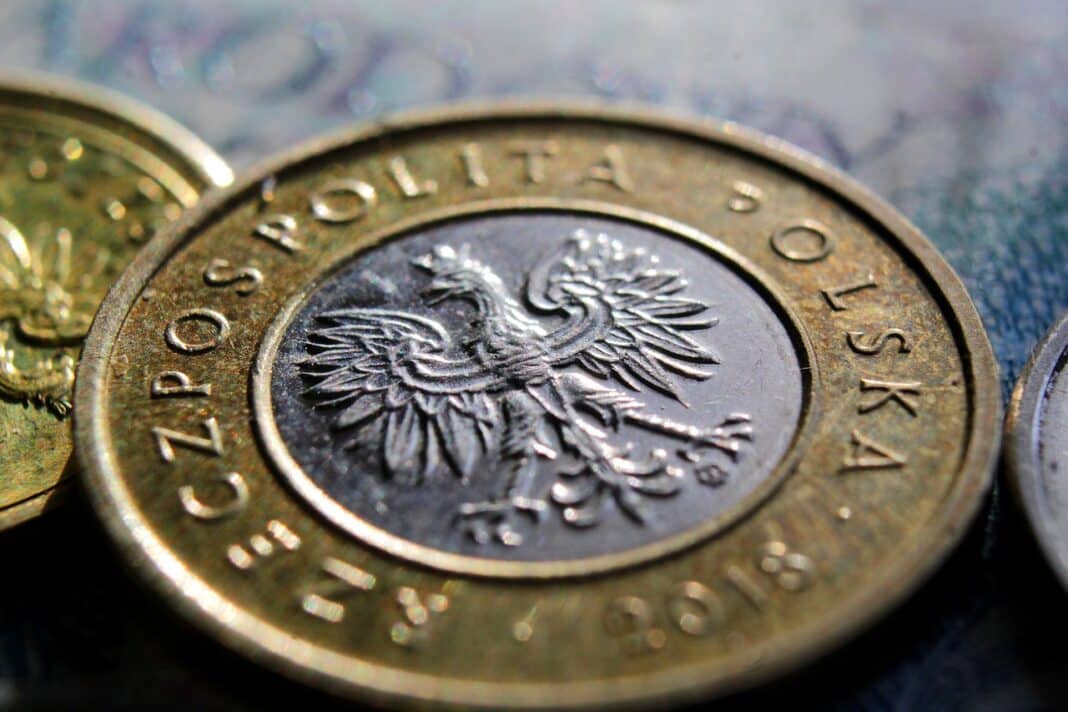


Local content — the share of domestic companies, labor and costs in large-scale projects — is set to become more than just a political slogan in Poland. Statistics Poland is working on a methodology that will make it possible to measure how much of the value generated by strategic investments actually remains in the domestic economy.
“We have been working on a methodology for measuring local content for several months now,” Marek Cierpiał-Wolan, President of Statistics Poland, told Newseria. “Developing an effective measurement methodology is not easy, because we need to combine two aspects. One is linked to traditional reporting, which means we will ask both the contracting authority and contractors and subcontractors about certain costs and expenditures related to the investment: wages, goods, materials and services. We also plan to use administrative data, for example from SAF-T files and e-invoices, once that system is effectively embedded in the Polish economy, in order to ensure precision.”
Poland’s National e-Invoicing System is currently being rolled out in stages. Since April 1, 2026, it has covered businesses whose sales in 2024 did not exceed PLN 200 million, while the smallest taxpayers with very low monthly sales are due to join the system on January 1, 2027. This means that administrative data sources could, in the coming quarters, become real support for official statistics in conducting a more precise assessment of local content.
The problem, however, is that Europe does not offer a simple, ready-made model. Statistics Poland began by reviewing solutions used abroad, but it quickly became clear that transferring them to the EU framework would not be straightforward.
In the European Union, public procurement is based on the principles of equal treatment, transparency and non-discrimination among contractors. EU directives cover both traditional public procurement and procurement in sectors such as energy. This means that the state cannot simply insert a straightforward “buy domestic” requirement into a tender, as is done in parts of the US system.
“We are starting with the energy sector. It was selected by the Ministry of State Assets because it is important and strategic, but also because the companies that are interested and were invited by the ministry, the Industrial Development Agency and Statistics Poland to consult on this measurement methodology come from the energy sector,” Marek Cierpiał-Wolan explained.
The choice of energy also has strong economic justification. In strategic documents, the government explicitly points to the energy sector as a lever for economic growth and as an area where Poland can capitalize on its domestic technological, industrial and human-resource potential.
“Within 30 days, the contracting authority will be required to provide information about the selected subcontractors. Contractors and subcontractors at individual levels will also have to submit reports to Statistics Poland within 30 days of receiving information from the higher-level subcontractor. We want to launch the pilot in June, complete it as quickly as possible, and prepare the methodological and IT systems so that actual production can begin,” said the head of Statistics Poland.
Local content is also an important element of the project to build Poland’s first nuclear power plant. As Marek Woszczyk, President of Polskie Elektrownie Jądrowe, recently stated, more than 400 contracts have already been signed with domestic companies, with an estimated total value of over PLN 1 billion. Many of them involve businesses from Pomerania, where the plant will be built. In his view, the local content share in the construction of the first nuclear facility in Poland could reach as much as 50%.
The government’s “Local First” principle is also being implemented in offshore wind projects. As experts from Baker Tilly TPA and CEE Energy explain, local content — currently estimated at around 20% — is expected to rise to about 40% as domestic capabilities expand, supply chains develop and the necessary industrial infrastructure is built out. Around 500 Polish companies currently have production and service potential for this sector. The guiding principle is clear: public funds invested in energy infrastructure should strengthen domestic capacity, build sustainable supply chains and contribute to long-term competitiveness, rather than flow out of the country without generating added value for the Polish economy. To support this approach, an interministerial Local Content Team has been established at the Ministry of State Assets.