
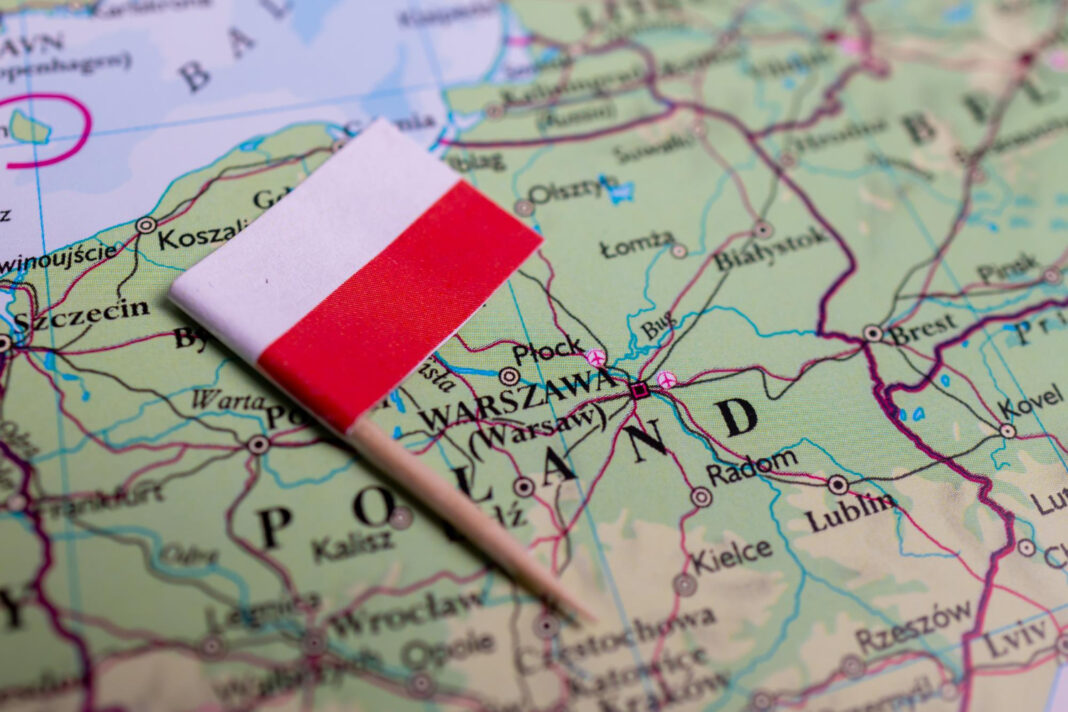


Poland’s Population Falls to 37.33 Million in 2026

- Advertisement -Translation agency in Poland – professional language servicesTranslation agency in Poland – professional language services

As of 1 January 2026, Poland had a population of 37,332.5 thousand, down by 156.6 thousand from a year earlier. The latest figures confirm a further decline in the population, while growth remains concentrated mainly in the largest metropolitan areas and their surroundings.

37,332.5thousand people
Poland’s population on 1 January 2026
−156.6thousand / −0.4%
year-on-year population change

Population by voivodeship: growth only in Małopolskie

Compared with the beginning of 2025, the population fell in 15 of Poland’s 16 voivodeships. The only region to record a slight increase was Małopolskie, where the population rose by 0.3 thousand. The largest declines were recorded in Śląskie (−29.6 thousand), Łódzkie (−17.1 thousand) and Lubelskie (−15.7 thousand). The smallest decreases occurred in Pomorskie (−1.1 thousand) and Mazowieckie (−2.5 thousand). Mazowieckie nevertheless remains Poland’s most populous voivodeship.

Population by type of municipality

Urban municipalities had 17.72 million residents, rural municipalities 10.33 million, and urban-rural municipalities 9.29 million.

Over the year, the population declined both in urban areas (−121.7 thousand) and in rural areas (−34.9 thousand). Administrative changes should be taken into account when comparing these categories, as some residents were reclassified from the rural to the urban population.

Population growth is concentrated around metropolitan areas

At county level, population growth was recorded in only 37 of 380 units. The largest increases occurred in Kraków (+7.4 thousand), Poznań County (+5.1 thousand) and Wrocław County (+3.4 thousand), as well as in Warsaw (+2.9 thousand) and the neighbouring counties of Piaseczno (+2.6 thousand) and Wołomin (+2.1 thousand).

The same pattern is visible at municipality level. Growth was recorded, among other places, in Grodzisk Mazowiecki, Lesznowola, Raszyn and Radzymin around Warsaw; Kosakowo, Żukowo, Szemud and Wejherowo around the Tri-City; Długołęka, Czernica and Miękinia near Wrocław; Dopiewo, Kórnik, Rokietnica and Tarnowo Podgórne near Poznań; and Wieliczka near Kraków.

Key conclusion: Statistics Poland data show that population growth is concentrated in the largest metropolitan areas and their immediate surroundings. This does not mean, however, that all central cities are losing residents: Kraków and Warsaw are among the units with the strongest growth. For the housing market, transport systems and public services, this means that entire functional urban areas need to be analysed rather than only the administrative boundaries of the largest cities.

Data source: Statistics Poland, data as of 1 January 2026. Prepared by ceo.com.pl.

Poland’s Cattle Population Falls to Its Lowest Level Since 2016

At the end of 2025, Poland’s cattle population fell...

More Than 5 Million Polish Jobs Are Exposed to Generative AI

According to the most comprehensive study to date, by...

Poland Becomes a Trillion-Dollar Economy with Growth Still Ahead

Industrial production in Poland accelerated markedly in June, with...

Fewer Jobs, Higher Pay: Poland’s Labour Market in June 2026

In June 2026, average employment in Poland’s enterprise sector...

Poland’s Construction Output Rises 5.2%, Driven Almost Entirely by Infrastructure

Construction and assembly output in Poland increased by 5.2%...
Category Sponsorship

Become a Category Sponsor

Position your brand alongside the business stories that matter and build lasting visibility with a relevant audience.

From €11 a day Annual sponsorship
Explore sponsorship
Topics

Poland’s Cattle Population Falls to Its Lowest Level Since 2016

At the end of 2025, Poland’s cattle population fell...

More Than 5 Million Polish Jobs Are Exposed to Generative AI

According to the most comprehensive study to date, by...

Poland Becomes a Trillion-Dollar Economy with Growth Still Ahead

Industrial production in Poland accelerated markedly in June, with...

Fewer Jobs, Higher Pay: Poland’s Labour Market in June 2026

In June 2026, average employment in Poland’s enterprise sector...

Poland’s Construction Output Rises 5.2%, Driven Almost Entirely by Infrastructure

Construction and assembly output in Poland increased by 5.2%...

Polish Construction Prices Rise at Fastest Rate in 18 Months

Construction and assembly output prices rose by 5.5% year...

Poland Records Its Strongest June for Housing Completions in Two Decades

June 2026 brought 18,705 homes completed and ready for...
Related Articles

Popular Categories