
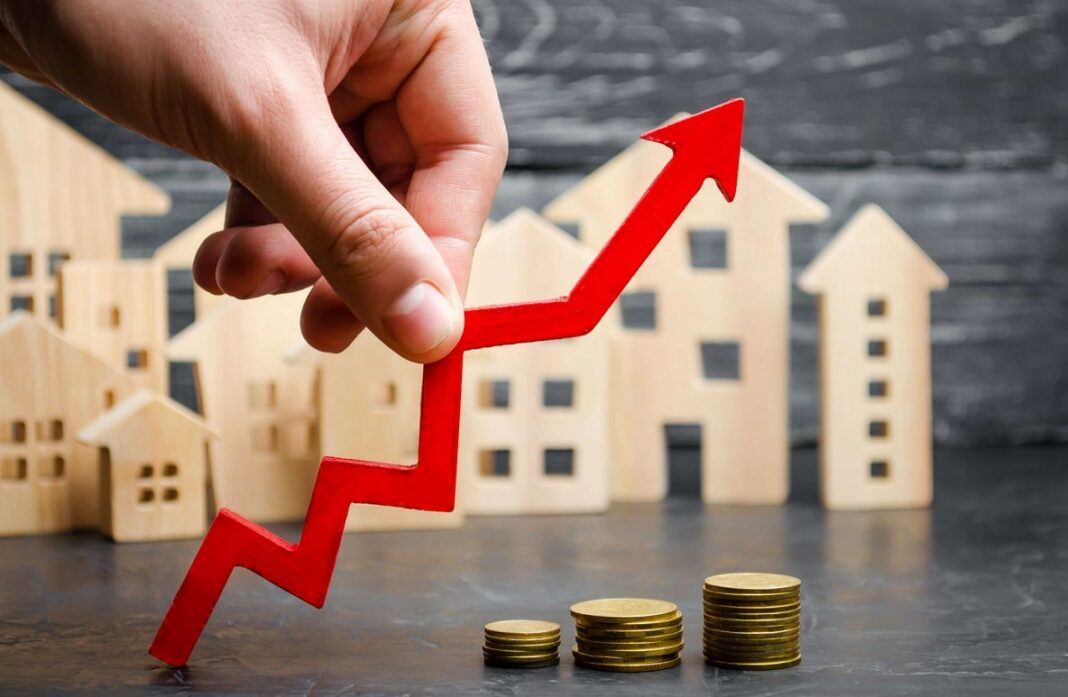



It will get more expensive — this is already the view of 55% of surveyed residents of Poland. According to the latest Real Estate Customer Sentiment Monitor, prepared by Kantar for Otodom, hopes for a decline in housing prices over the next 12 months are now rare, with only one in eight respondents expecting such a scenario.
This pessimism is strongly supported by market data. Year on year, from Q1 2025 to Q1 2026, average asking prices for new apartments in Poland’s seven largest cities increased by 6.4%, a result almost twice as high as inflation. Poles also remain closer to the secondary market, while half of those active on the housing market are not looking for an investment opportunity or spectacular returns. They are simply buying for their own needs.
Poles have become accustomed to the idea that housing prices are rising, or at least not falling. This is particularly visible in the largest cities. In Warsaw, the average asking price for a new apartment stood at PLN 19,300 per square metre in March, up 8.8% year on year. On the secondary market, the figure was PLN 18,500 per square metre, 1.7% higher than a year earlier.
As Katarzyna Kuniewicz, Market Research Director at Otodom, noted: “Expectations regarding housing price trends, which are a key factor in the purchase process, did not change quarter on quarter.”
Buyer preferences also remain stable. For 32% of respondents, it does not matter whether an apartment comes from the primary or secondary market, while 21% consider only new-build properties. Across the country, however, the secondary market still clearly dominates, indicated by 47% of surveyed Poles.
“The stability of demand-side sentiment confirmed in the survey is surprising given the changes that took place in the housing market environment in the first quarter of this year. It seems that the outbreak of the conflict in the Middle East had the greatest impact, followed by rising fuel prices and concerns about a sharp increase in inflation. Although aggregated quarterly data make it difficult to find traces of fears caused by this conflict, the monthly survey on price expectations confirms that in February and March the share of respondents expecting housing prices to fall declined sharply,” Kuniewicz explained.
In March, only 10% of respondents expected housing prices to decline over the next year. This was 9 percentage points less than in December 2025.
As Paweł Jarząbek, Market Research and Analysis Manager at Otodom, added: “Although the past month brought a general decline in belief in cheaper housing, men (18%) more often than women (15%) expect a market correction. The difference is small but telling — even the greater optimists on the housing market sound rather cautious today.”
Family first, return on investment second
The Kantar and Otodom survey shows that Poles buy apartments not only for themselves and not only for rental purposes. Although 50% of respondents are looking for a property for their own use, among investment purchases the family motive is currently the most visible. Securing housing for children or parents was indicated by 14% of respondents, more than the share buying for long-term rental, at 11%.
This trend is strongest among people aged 35–55, a generation that often supports both growing children and ageing parents. In this group, 18% of respondents declare this purpose of purchase.
“This is a clear signal that property in Poland, even when treated as an asset, remains a deeply personal decision. Importantly, caring for others is no longer a stereotypically female topic. The report Happy Home. The Male Faces of Happiness shows that men more often than women take care of loved ones. This naturally translates into purchasing decisions,” Jarząbek said.
The geographical context is also interesting. Residents of northern Poland are much more likely to buy apartments for their own use, with 58% indicating this purpose. As Otodom’s market research and analysis manager noted: “This runs counter to the intuition that sees seaside properties mainly as rental investments. However, this does not mean reluctance to invest capital in real estate. It is in the north and north-west of the country that the most positive attitude towards investing in apartments was recorded.”
At the same time, Poles rarely treat property purchases as a way to acquire a “second holiday home”. Only 3% of respondents indicate this as their goal.
Price still dominates, but location is close behind
According to the Real Estate Customer Sentiment Monitor, for 36% of surveyed Poles, price remains the most important criterion when choosing an apartment. Location follows closely, indicated by 34%.
In the largest cities, however, the balance is completely reversed. There, “where” matters more than “how much”. In metropolitan areas with more than 500,000 residents, location is indicated by as many as 45% of respondents, while price falls to second place at 26%.
The larger the city, the greater the openness to new-build housing. Interest in developers’ offers is particularly high in cities with 100,000–499,000 residents, where it reaches 30%.
At the same time, Poles’ relationship with developers remains cautious. Only 17% of respondents consider them trustworthy, while as many as 39% have no opinion on the matter.
However, Katarzyna Kuniewicz noted that the share of people who negatively assess the way developers present and describe their projects is gradually decreasing.
“In the third quarter of 2025, this group accounted for 55% of respondents, while in the period from January to March 2026 it was already 48%. A growing number of customers assess developers’ information activities neutrally, which may mean that the market is gradually moving towards communication better tailored to buyers’ needs,” Otodom’s Market Research Director concluded.