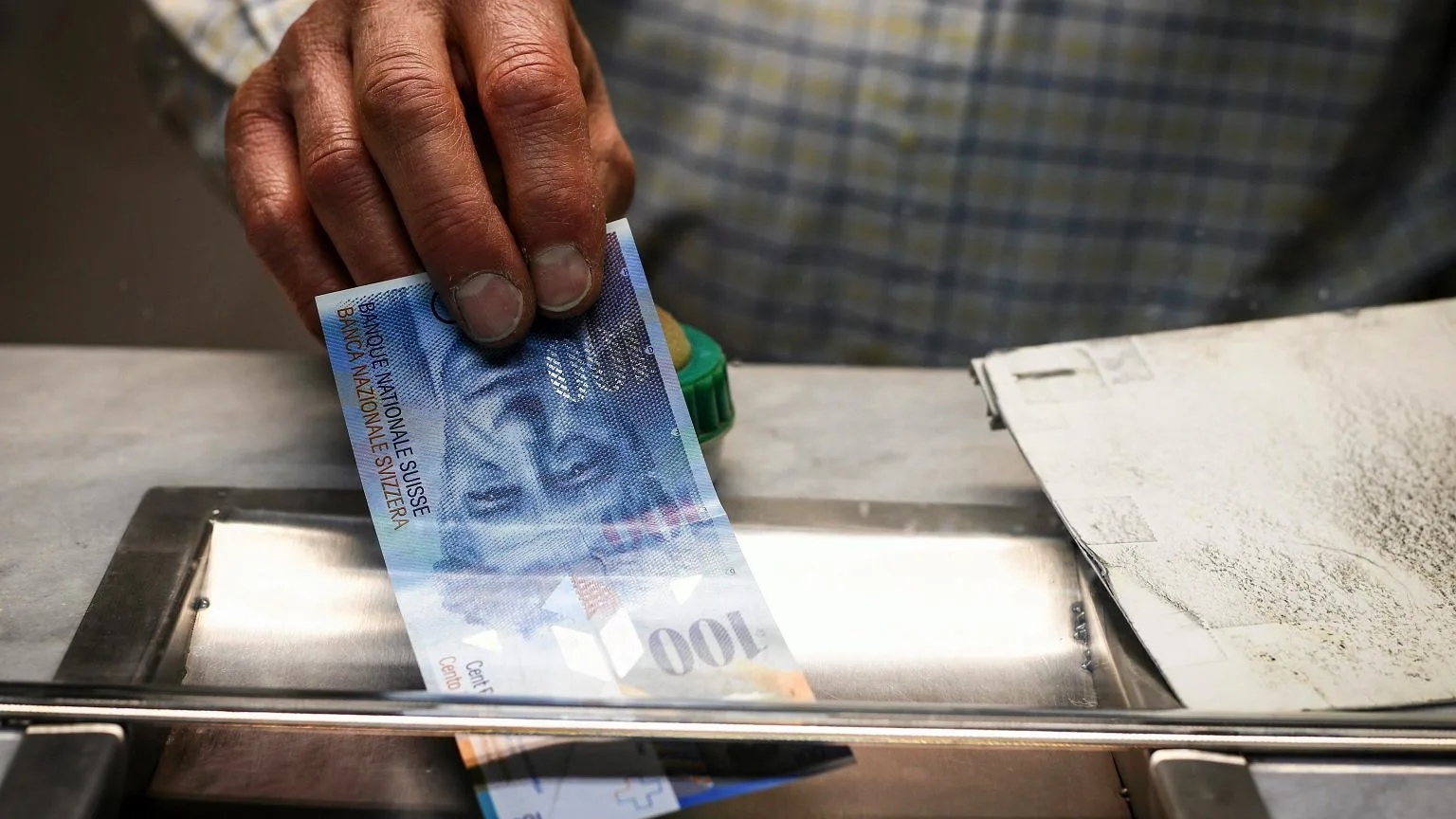
The Swiss franc reached PLN 4.94 this week, its highest level against the zloty since 2022. A weaker Polish currency and investors’ renewed demand for safety supported the franc despite Swiss interest rates of 0%, writes Maciej Przygórzewski, chief analyst at InternetowyKantor.pl.
By Maciej Przygórzewski, chief analyst at InternetowyKantor.pl. English adaptation of the Polish original (source ID 438271), published on 27 November 2026 at 11:07:33 UTC. The publication date shown for this page is the date of the English edition.
Currency markets have seen substantial moves, but the franc’s rise is less of a problem for Polish borrowers than it would have been a decade ago, Przygórzewski argues. Settlements concerning franc-denominated loans have reduced the impact on borrowers who would otherwise face considerable pressure.
Franc gains reflected both zloty weakness and demand for safety
The franc’s PLN 4.94 level was the highest since 2022, when Russia’s full-scale invasion of Ukraine began. This time, the move reflected both pressure on the zloty and a strengthening franc against the euro.
The euro had not reached PLN 4.50 but was trading close to that threshold. Meanwhile, the euro–franc rate had again moved sharply in the franc’s favour, with one euro buying only slightly more than CHF 0.90.
Przygórzewski attributes the franc’s strength to risk aversion and its renewed appeal as a safe haven. Investors were buying the currency even though Swiss interest rates stood at 0%, well below those in other Western economies.
Thanksgiving brought an unusually quiet trading day
US stock exchanges were closed for Thanksgiving on 26 November. Przygórzewski expected the following session to be more active as investors caught up with developments and positioned themselves before the weekend.
Foreign-exchange markets remained open, but the main currency pair saw little movement. The euro–dollar trading range on 26 November was the narrowest in more than two months.
Norway’s economy contracted as oil and gas weighed on output
Norwegian third-quarter GDP figures released on 26 November showed a 0.3% contraction. Norway also publishes a measure excluding oil and gas, a sector that accounts for slightly less than a quarter of its economy.
That exposure means large commodity-market moves can have a substantial effect on the overall result. Przygórzewski notes that oil prices averaged higher levels in the second quarter than in the third, and links the decline in total GDP primarily to weaker performance in the resources sector.
Output excluding oil and gas increased, but the result also disappointed. Growth was just 0.1%, against expectations of 0.4%, although the Norwegian krone strengthened on the day despite the figures.
Przygórzewski’s calendar for 27 November listed no major macroeconomic releases.