
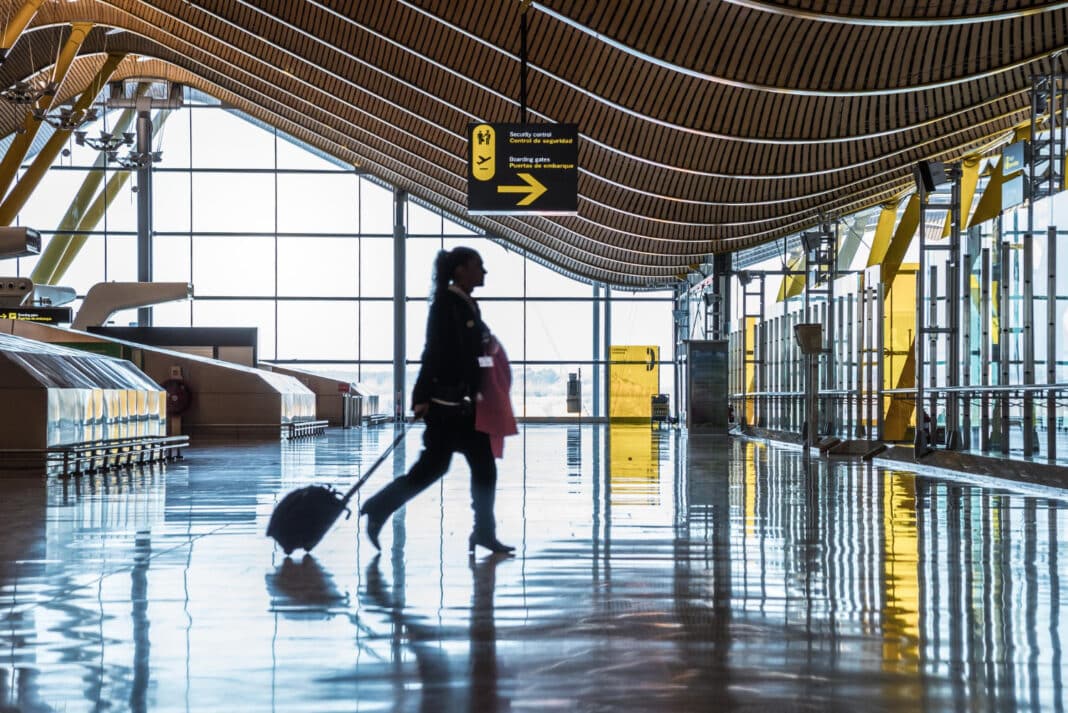


The traditional model of airport retail, long dominated by duty-free sales, is undergoing a clear transformation. Today, travel retail is increasingly becoming part of a broader passenger experience, where authenticity, technology and a strong sense of place play a central role. Within the framework of the Port Polska investment programme, this shift creates an opportunity to design commercial and service functions as part of an integrated Airport City ecosystem—serving not only air travellers but also users of high-speed rail.
Travel retail as part of the journey experience
Modern passengers are no longer just looking to shop—they are looking to connect with the destination. This expectation is forcing operators to rethink traditional retail formats.
Today’s travel retail is built on three key pillars: local authenticity, “phygital” solutions that blend physical and digital experiences, and a carefully curated mix of services and gastronomy. Travellers increasingly expect distinctive design and local craftsmanship that create an emotional link with the place, even during short stays. Stores are becoming more interactive, while technologies such as augmented reality and autonomous retail points are improving convenience and saving time.
A leading example of a “five-star experience” approach is Vienna Airport. Its strategy is rooted in strong local identity rather than global uniformity. Instead of relying on international fast-food chains, Vienna has embraced a “Best of Austria” concept, turning local cuisine into a showcase of national culture. As part of the expansion of Terminal 3, passengers can experience iconic Viennese offerings—from the famous schnitzel at Figlmüller, through coffee from Café Landtmann, to traditional sweets from Demel.
A well-designed tenant mix ensures that retail and food services are no longer just complementary functions. They have become central to value creation, influencing both non-aeronautical revenues and the overall passenger experience. Market data from Vienna shows that premium passengers—such as those travelling on long-haul routes to Asia—spend on average up to ten times more at the airport than low-cost travellers. To attract them, the offer must be distinctive and deeply rooted in local culture.
The concept is further reinforced by the airport’s “Golden Heritage” design, with interiors inspired by Viennese modernism and Art Nouveau. This creates a strong sense of place even for transit passengers.
Similar strategies are being implemented by other global hubs, such as Singapore Changi Airport with its “Jewel” concept and Hamad International Airport in Doha with its “Orchard” garden. In these cases, retail and service functions are fully integrated into a broader vision of enhancing the travel experience.
A catalyst for modern retail in Central Europe
In the context of Central and Eastern Europe, the multifunctional hub planned under the Port Polska programme has the potential to become one of the most compelling examples of integrating transport, services and modern commercial functions. Designing such a hub from the ground up allows for the implementation of solutions tailored to diverse user groups—from airline passengers and high-speed rail travellers to tenants and business partners operating within Airport City and Cargo City.
In this model, retail and gastronomy are not ends in themselves but key elements of a broader ecosystem. Their role is to enhance the user experience while also supporting the growth of non-transport revenues. A well-designed system could combine a wide range of formats—from premium concepts and showcases of Polish brands to fast, technology-enabled convenience outlets and “Grab & Go” solutions integrated with digital tools.
Poland is already the leading market in the CEE region in terms of new supply of modern retail formats, accounting for nearly 60% of the region’s total modern retail space. The new hub could become a platform to showcase this scale and maturity in an international context. Within Airport City, retail, service and food functions could support the development of a strong, multidimensional economic ecosystem. The project is also expected to follow ambitious ESG standards, creating opportunities to promote local suppliers and improve resource efficiency.
A strategic infrastructure project
Port Polska is a major infrastructure initiative built around a modern transport hub integrating air, rail and road connections. The investment includes the development of a globally significant airport and a network of high-speed rail lines linking Poland’s largest cities, reducing travel times and increasing mobility.
An integral part of the programme is the creation of Airport City and Cargo City, designed to become engines of a new economic landscape. These components are expected to attract international investment and support the expansion of Polish businesses, while redefining how commercial functions operate within large-scale transport infrastructure.
In this context, travel retail is no longer just about transactions—it becomes part of a carefully designed experience that connects passengers with place, technology and the broader economic ecosystem.