
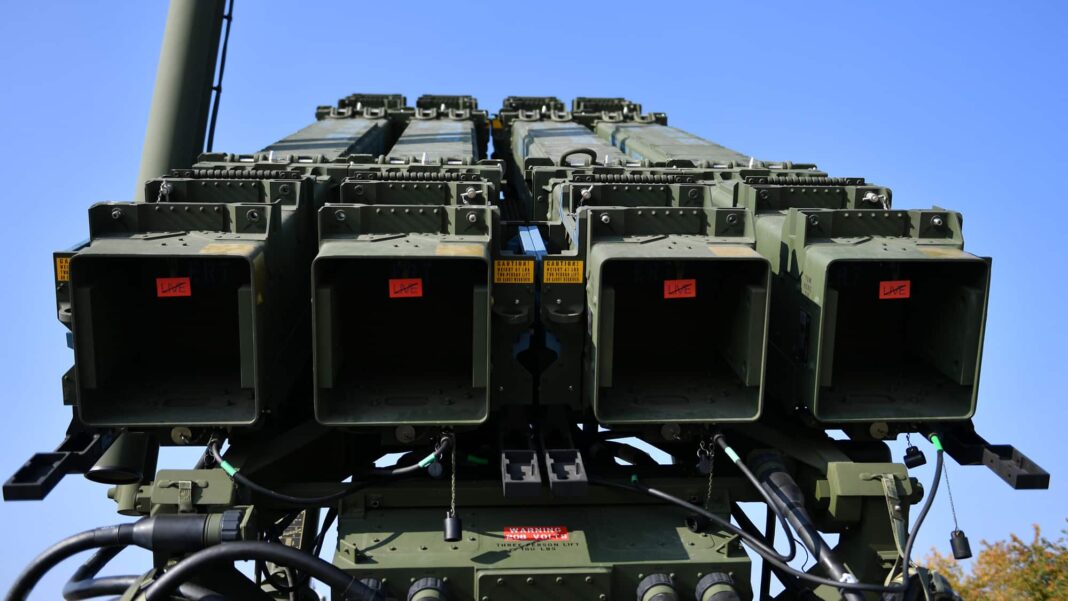



Central and Eastern Europe is accelerating its rearmament efforts, building an industrial base for NATO and the European Union. Poland, with defence spending at around 4.8% of GDP, is emerging as a leader of this transformation.
Central and Eastern Europe (CEE) is undergoing an accelerated transformation of its defence sector, in which rising public spending is beginning to directly shape new models of cooperation between the state and business. According to KPMG’s report “The Underdog Advantage. Central and Eastern Europe – A Growing Opportunity for Multinational Defence and Security”, which analyses the situation in Poland, the Czech Republic, Romania, Slovakia, Ukraine and Hungary, most countries in the region have already exceeded the threshold of 2% of GDP in defence spending. Poland has reached around 4.8% of GDP, placing it among NATO’s leading countries.
At the same time, the region is moving away from a model based mainly on purchasing ready-made military equipment towards building its own production and technological capabilities. European financing instruments, including the SAFE programme — Security Action for Europe — are playing an increasingly important role by supporting production development, joint procurement and industrial integration within the EU. In Poland, one of the key trends is the development of dual-use technologies.
Poland is today the largest and most dynamically developing defence market in the region, as well as one of the most active investment markets in NATO. The scale of expenditure, exceeding 4.8% of GDP, is translating into an unprecedented modernisation of the armed forces and the systematic expansion of the domestic industrial base.
The publication of the report coincided with Poland signing an agreement under the SAFE programme. As the first EU country, Poland will gain access to financing of up to EUR 43.7 billion for the modernisation of the army and the development of industrial capabilities. According to government declarations, a significant part of these funds is to go to the Polish defence industry and companies cooperating with the defence sector.
Dual-use technologies become a key trend
A key trend is the development of dual-use technologies — civilian solutions adapted for military applications, including IT, cybersecurity, advanced manufacturing and unmanned systems. Technology companies supplying software, command and control systems, AI solutions, and UAV and anti-drone technologies are playing an increasingly important role. These areas are becoming one of the main drivers of the domestic defence industry.
Dual-use infrastructure now occupies a central place in security planning. This category has evolved from a technical term used in export regulations into a fully fledged pillar of defence strategies. Ports, railway hubs, pipelines, data centres and energy networks perform both civilian and military functions, and their operational efficiency directly affects the ability to respond in crisis situations.
Military mobility requires precise investment planning focused on logistics flows and resilience to disruption. The growing importance of dual-use infrastructure and technology is also translating into increased interest among companies in developing and selling products that can be used in both the civilian and defence sectors.
“Poland occupies a unique position in European defence, not only because of the scale of its defence spending, but also thanks to its systematic approach to industrial sovereignty. The logistics hub in Rzeszów-Jasionka, which is a key support corridor for Ukraine, is an excellent example of how civilian airport infrastructure can become a critical element of military operations conducted on a continental scale,” says Alina Wołoszyn, Partner and Head of Advisory at KPMG in Poland and Deal Advisory in Central and Eastern Europe.
Expansion of production capacity
An important element of the transformation is also the expansion of production capacity — both in ammunition, including 155 mm calibre, and in weapon components, as well as maintenance and modernisation services. This strengthens the long-term presence of industry throughout the life cycle of military equipment.
At the same time, Poland is developing operational capabilities, including air and missile defence systems such as WISŁA, NAREW and PILICA+, as well as precision strike systems, including HIMARS and HOMAR-K. These programmes increasingly include locally produced components.
There is a clear shift towards greater industrial sovereignty and the construction of a scalable production ecosystem within the European security system.
A key question accompanying the rise in defence spending is whether these funds will allow Poland to build a lasting domestic industrial base. “Local content” in Polish defence procurement is no longer merely an economic slogan, but an element of defence sovereignty. In 2025, the Armament Agency signed 96 new executive contracts and 50 annexes for the acquisition of military equipment with a total gross value of around PLN 105 billion, a significant part of which went abroad.
With such a rapidly growing procurement portfolio, each subsequent tranche represents an opportunity to introduce stricter industrial requirements and genuine technology transfer, going beyond final assembly alone.
Polska Grupa Zbrojeniowa and the growing sector of private defence companies are developing expertise in areas of the highest strategic value: ammunition production, unmanned systems, electronics, cryptography and systems integration. The best measure of progress is not the percentage of contract value remaining in Poland, but the answer to the question of whether, after the contract ends, the country is able to independently produce, repair, modernise and develop a given system.
One area requiring further development is the adjustment of regulatory frameworks — especially in public procurement and exports of dual-use technologies — to the pace at which projects themselves are maturing. This is a natural stage for a market developing so dynamically.
“Poland has both the ambition and the potential of a leader; building the right institutional tools is the next step on this path,” says Alina Wołoszyn.
Poland moves from procurement to industrial sovereignty
What distinguishes Poland from other countries with high defence spending is its conscious shift from a simple procurement model to building industrial sovereignty. Poland is implementing one of the most ambitious armed forces modernisation programmes in Europe, covering, among others, K2 tanks, K9 howitzers, Abrams tanks, FA-50 and F-35 aircraft, as well as systems such as HOMAR-K and KRAB.
The expansion of the naval component includes the Orka submarine programme and the Miecznik frigates. Increasingly, these initiatives involve technology transfer and the localisation of production. At the same time, capabilities in air and missile defence are being developed, as are precision strike capabilities, including through the development of domestic missile production.
The government and Polska Grupa Zbrojeniowa are also intensively developing domestic arms production, with particular emphasis on ammunition. Investments in new plants, supply chains and service capabilities are increasing industrial potential and reducing dependence on external suppliers, signalling a clear move towards greater industrial autonomy in defence.
These programmes form a plan for the development of domestic production capabilities that go beyond individual contract cycles. The convergence of NATO commitments, European Union financial instruments and a mature foreign investment environment creates a unique window of opportunity for international defence companies.
Entering the Polish market — and, more broadly, the Central and Eastern European region — requires patience and the building of local partnerships. Regulatory complexity, evolving public procurement frameworks and the growing importance of industrial participation mean that success depends as much on navigating the institutional environment as on technological competence.
“The convergence of NATO commitments, EU financial instruments and a mature foreign investment environment creates a unique window of opportunity for international defence companies. However, entering the Polish market and the wider CEE region requires patience and the building of local partnerships. Regulatory complexity, evolving procurement frameworks and the growing importance of industrial participation mean that success depends equally on the ability to navigate the institutional environment and on technological capabilities,” says Iwona Sprycha, Partner in Deal Advisory at KPMG in Poland.
The growing strategic importance of Central and Eastern Europe
The importance of the region now goes beyond the level of individual states. Central and Eastern Europe has become a key operational area for NATO — from the Baltic Sea to the Black Sea — and an important logistics and production base.
Poland and Romania, allocating around 4.8% and more than 2.5% of GDP to defence respectively, are strengthening their positions as frontline states, while simultaneously investing in operational capabilities, infrastructure and industrial partnerships.
The Czech Republic, with its strong industrial base and rising expenditure towards 2% of GDP, is developing an export-oriented defence sector and actively participating in European projects.
Hungary is pursuing a model of selective industrialisation, attracting foreign investment and building specialised production capabilities, while Slovakia is focusing on integration with regional supply chains and modernisation adapted to the scale of its economy.
Ukraine remains a market of exceptional strategic importance. Despite high operational risk, it is developing production and innovation capabilities and, in the longer term, will be one of the key areas for reconstruction and investment in the defence sector.
New financing models accelerate sector development
European financial instruments are an important driver of growth for the defence sector, including the SAFE programme, which is intended to support joint procurement, the development of production capabilities and the integration of supply chains across the EU. The importance of SAFE has increased further after Poland signed an agreement under the programme.
Financing of up to EUR 43.7 billion could accelerate the modernisation of the armed forces, the development of production capacity and the participation of Polish companies in European defence projects.
In practice, this means a significant change in the market model — from fragmented national procurement to cross-border projects involving consortia of companies from different countries. For businesses, this means access to larger contracts, often with multi-year horizons, and the opportunity to participate in projects of strategic importance for European security.
Hybrid financing models are also becoming increasingly important, combining public funds, European funds and private capital. Such structures make it possible to carry out large-scale projects while limiting investment risk on the corporate side.
Challenges: time pressure, workforce and regulations
Despite growing investment opportunities, the defence sector in the CEE region faces significant barriers. One of the key constraints remains access to qualified personnel. The dynamic growth of the sector is generating demand for specialists in engineering, IT, cybersecurity and advanced manufacturing, which is leading to growing competition for talent and wage pressure. In many cases, the pace of project development exceeds the capacity of the labour market.
Another challenge is time pressure related to the need to rapidly increase production capacity. Shortening delivery cycles, building new plants and scaling production require significant investment and efficient project management, which is not always possible in an environment of complex administrative procedures.
The regulatory environment also remains a significant barrier. The defence sector is subject to strict supervision, while procurement, certification and export processes are often time-consuming and complicated. For companies, this means the need to build not only technological expertise, but also legal and compliance capabilities.
In addition, the growing importance of production localisation and supply chain security forces companies to make a greater capital and operational commitment in the countries of the region. In practice, this means the need to build local plants, partnerships and a long-term market presence.
About the report
The report “The Underdog Advantage: Central and Eastern Europe. A Growing Opportunity for Multinational Defence and Security Investments” was prepared as part of KPMG’s Defence & Security practice in Central and Eastern Europe, in cooperation with the New Strategy Center. The analysis covered six markets: Poland, Romania, the Czech Republic, Slovakia, Hungary and Ukraine.
The study combines quantitative analysis — including macroeconomic data, FDI flows, defence spending levels and allocations of EU funds — with qualitative analysis of public policies, defence strategies and industrial potential. It is supplemented by expert interviews and KPMG’s project experience in the region.
The time perspective covers data from 2021–2025, with forecasts to 2026 and, in selected cases, to 2035. The report does not constitute investment advice. Financial data are estimates and are based on publicly available sources.