
Magdalena Sobkowiak-Czarnecka will become the Government Plenipotentiary for Strengthening State Resilience. Her responsibilities will include coordinating investments financed through the EU’s SAFE instrument, cooperating with European Union and NATO institutions, and supporting the development of Poland’s domestic defence industry.
The decision to establish the new position was taken by the Council of Ministers on 30 June 2026. The role will be assumed by Magdalena Sobkowiak-Czarnecka, Secretary of State at the Ministry of National Defence. Since October 2025, she has served as the Government Plenipotentiary for the Security Action for Europe instrument, known as SAFE.
At the same time, the government decided to abolish the existing position of plenipotentiary for SAFE. The new role is intended to cover a broader range of responsibilities, including not only the implementation of the EU instrument but also state resilience, military modernisation, economic security and international cooperation.
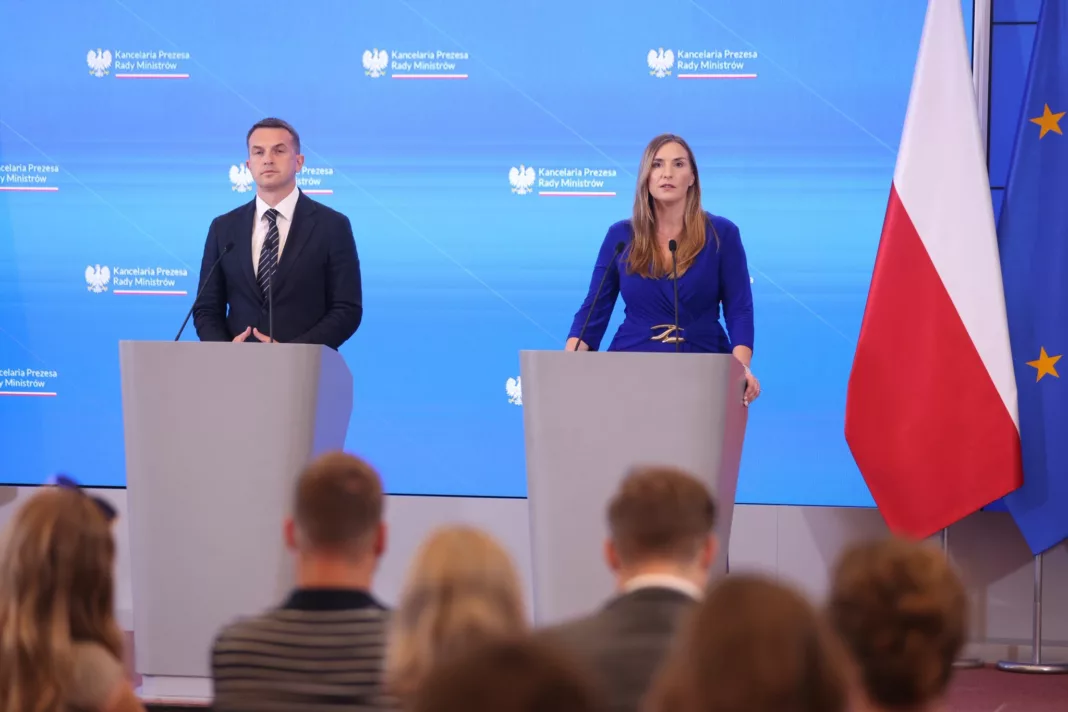
“We are moving to the third stage of implementing the SAFE programme — from designing it, through implementation, to the phase of supervision and coordination of the modernisation of the Polish Armed Forces,” government spokesperson Adam Szłapka said at a press conference following the Council of Ministers meeting.
Coordinating SAFE and Supporting the Defence Industry
The plenipotentiary will be responsible for organising public administration activities aimed at strengthening state resilience, including the development of Poland’s domestic defence industry. Magdalena Sobkowiak-Czarnecka will also supervise the implementation and monitoring of investments financed through SAFE and cooperate with EU and NATO institutions.
“My task will be to ensure that all contracts for new military equipment are delivered on time and to conduct negotiations with our partners as part of joint procurement projects,” Sobkowiak-Czarnecka said.
Her responsibilities will also include promoting Poland’s defence industry abroad. According to Sobkowiak-Czarnecka, Poland should develop not only its purchasing capacity but also its export potential.
“It is time for the next step, so that we can also become an exporter. We have already started doing this by selling our products through the SAFE mechanism, but we need to look beyond European markets,” she said.
She also announced plans to cooperate with foreign partners, including US companies, in order to locate defence production facilities in Poland.
The plenipotentiary will additionally be tasked with initiating legal changes aimed at strengthening state resilience, countering disinformation and supporting defence education among the public.
Government Points to First Effects of SAFE
During the press conference, the government spokesperson said that initial data indicate SAFE has already contributed to an increase of more than 140% in orders placed with Polish industry. However, no detailed breakdown was presented that would make it possible to assess the calculation methodology, comparison period or structure of those orders.
“SAFE is also a major boost for our defence industry and a significant lever for the Polish economy,” Adam Szłapka said.
SAFE, or Security Action for Europe, is an EU instrument designed to support the development of defence capabilities in member states, joint procurement and increased production capacity in the defence industry. The programme was developed during Poland’s presidency of the Council of the European Union in 2025.
Government Denies Claims Circulating on Social Media
Adam Szłapka also addressed information circulating on social media which, according to the government, was misleading.
One claim concerned the performance of the Ukrainian national anthem during the Ukraine Recovery Conference held in Gdańsk last week. MP Włodzimierz Skalik presented the event as evidence of the alleged “Ukrainisation of Poland”.
The government spokesperson said the claim was false, explaining that the performance of the Ukrainian anthem was part of standard diplomatic protocol. At events jointly hosted by the host country and a co-host, the national anthems of both countries are played.
Szłapka also referred to a video published by Robert Bąkiewicz showing a police vehicle in Słubice marked with the German word “Polizei”. The video suggested that German police officers were operating independently on Polish territory.
According to explanations provided by the police in Słubice, the vehicle was part of a joint Polish-German patrol conducted under cross-border cooperation arrangements. Its purpose was to support public safety and border protection activities.
The spokesperson also commented on claims regarding the management of State Treasury assets and the condition of listed Polish companies. He said that the market capitalisation of domestic companies listed on the Warsaw Stock Exchange had doubled in recent years.
The government appealed for caution when assessing information circulating online and encouraged the public to rely on official and credible sources.