

We estimate that Brexit has caused measurable losses in UK GDP growth: under the central scenario, GDP would now be 2% to 4% higher had Brexit not happened. However, the EU has also lost out. Its share of UK imports of manufactured goods has declined in favour of China and the United States, while goods trade between the UK and the EU is around 21% lower than it would have been without Brexit. Among EU countries, only neighbouring Ireland — unsurprisingly — and Poland have managed to preserve or increase their position in the British market.
- Brexit ten years on: neither collapse nor renaissance. Which forecasts proved correct, and which did not? In Allianz Trade’s view, the outcome has been more mixed than many expected. The indicators reveal both strengths and weaknesses in the UK economy — not all of them directly related to Brexit.
- The UK and the EU have both lost out… except for Poland and Ireland. UK GDP is now estimated to be around 2% to 4% lower than it would have been without Brexit, based on a counterfactual scenario. The European Union has also lost ground: between 2016 and 2022, the share of EU-origin value added in UK final demand for manufactured goods fell from 52% to 39%. This measure includes not only suppliers of final goods, but also the components used in production. During the same period, China’s share increased by 8 percentage points, making it the UK’s largest individual country partner in 2022. The United States gained 2 percentage points and became the second-largest partner, while Germany’s share fell by 8 percentage points, pushing it from first to third place. Moreover, the EU now accounts for 43% of total UK goods imports, compared with 57% ten years ago. Within the EU, only Ireland and Poland increased their shares of the UK market for manufactured goods, while most Western European countries recorded declines.
- According to Allianz Trade, Brexit has been an important factor, but neither the only nor the decisive driver of the UK’s economic development in the current decade. Structural changes since the pandemic — including global developments such as growing Chinese competition in manufacturing — have probably played a greater role in shaping economic performance than Brexit itself. In 2025, UK manufacturing output was 1.4% below its 2016 level. However, this headline figure masks major changes within industry, where energy-intensive sectors have contracted while less energy-intensive industries have performed well or very well. Strong output growth was recorded in transport equipment (+25% between 2016 and 2025), pharmaceuticals (+43%), textiles (+8%), food manufacturing (+31%), electrical equipment (+20%), and computers and electronics (+20%). The ability of Polish suppliers to maintain — and even increase — their share of the UK market suggests that they have successfully adapted their offer to the changing structure of British industry and, in some cases, benefited from these shifts.
- The pillars of the UK economy: the knowledge economy, technology and clean energy. UK exports of information and communication technology services to the EU have almost doubled since Brexit, demonstrating the continued competitiveness of Britain’s knowledge-based economy. The UK remains the world’s second-largest exporter of financial services, generating 21% of global exports in this sector, while also expanding the range of financial services offered to EU markets. In private markets, the UK continues to attract more venture capital than any European competitor. Between 2020 and 2026, it raised around USD 164 billion. London has retained a substantial part of its global financial importance. The UK still accounts for almost 50% of global turnover in over-the-counter interest rate derivatives and nearly 38% of global foreign-exchange turnover. In clean energy, the UK has become a European leader. Since 2016, wind power generation has increased by 130%, reducing the country’s dependence on fossil fuels and enabling the successful phase-out of coal in 2024.
- The negative effects of Brexit: slower economic growth, trade frictions and lagging regions that voted to leave the EU. Independent studies estimate that UK GDP would be 2% to 4% higher without the political instability and trade frictions caused by Brexit. Since 2016, regions that voted to leave the EU have generally underperformed compared with the UK as a whole: 59% of the population living in these areas has continued to fall behind the national average in per-capita income.
- Paradoxically, since the referendum and the UK’s formal exit from the EU’s economic structures on 1 January 2021, economic growth has increasingly relied on foreign-born workers, who contribute more than half of GDP growth. Brexit increased tensions and reduced trade flows. Although the EU remains the UK’s largest trading partner, structural estimates suggest that goods trade between the UK and the EU is around 21% lower than it would have been without Brexit. At the same time, new trade agreements and diversified supply chains involving the United States, China and Commonwealth countries have not been able to match the scale of economic ties that previously existed within the EU. UK assets continue to trade at a discount relative to international peers.
- Lower credibility? The lasting lesson from the 2022 mini-budget crisis is that fiscal credibility matters. UK assets continue to trade at a discount relative to international peers. Investors now demand a structurally higher risk premium for UK assets amid rising fiscal imbalances. Equity markets, where British shares have underperformed their US and European counterparts over the past decade, reflect this premium.
- Beyond Brexit: identifying and implementing solutions for the future. Compared with many other advanced economies, the UK performs well in business creation, labour-market flexibility, higher education and scientific research. This suggests that the country’s disappointing economic performance is driven by domestic bottlenecks — exposed by Brexit, but not caused by it. The government has identified many of these problems, but further action is required. Priority measures should include:
- accelerating planning reform,
- increasing investment in housing and energy infrastructure,
- strengthening support for innovation and strategic industries,
- treating NHS reform as an economic priority, and
- addressing the slow diffusion of new technologies from pioneering businesses into the mainstream economy.
Ten years after the Brexit vote: a changing economic and energy landscape
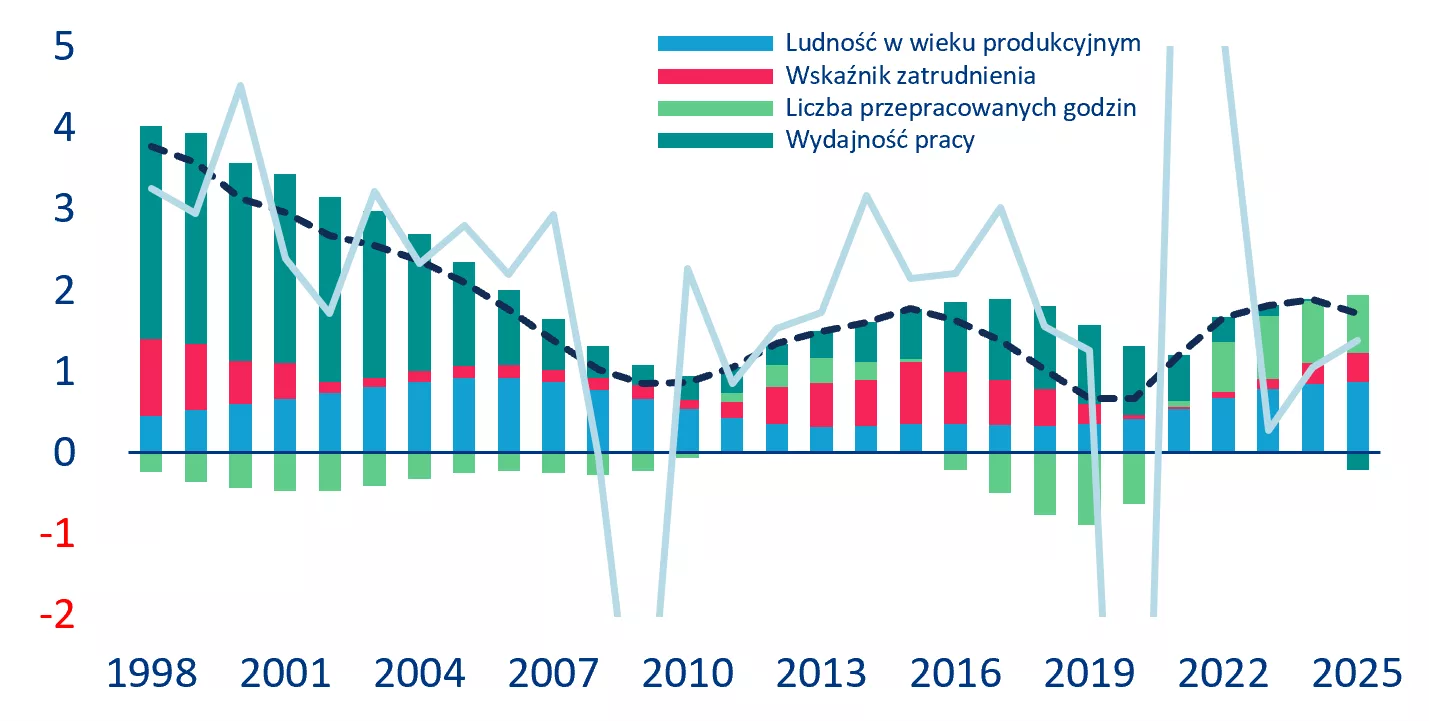
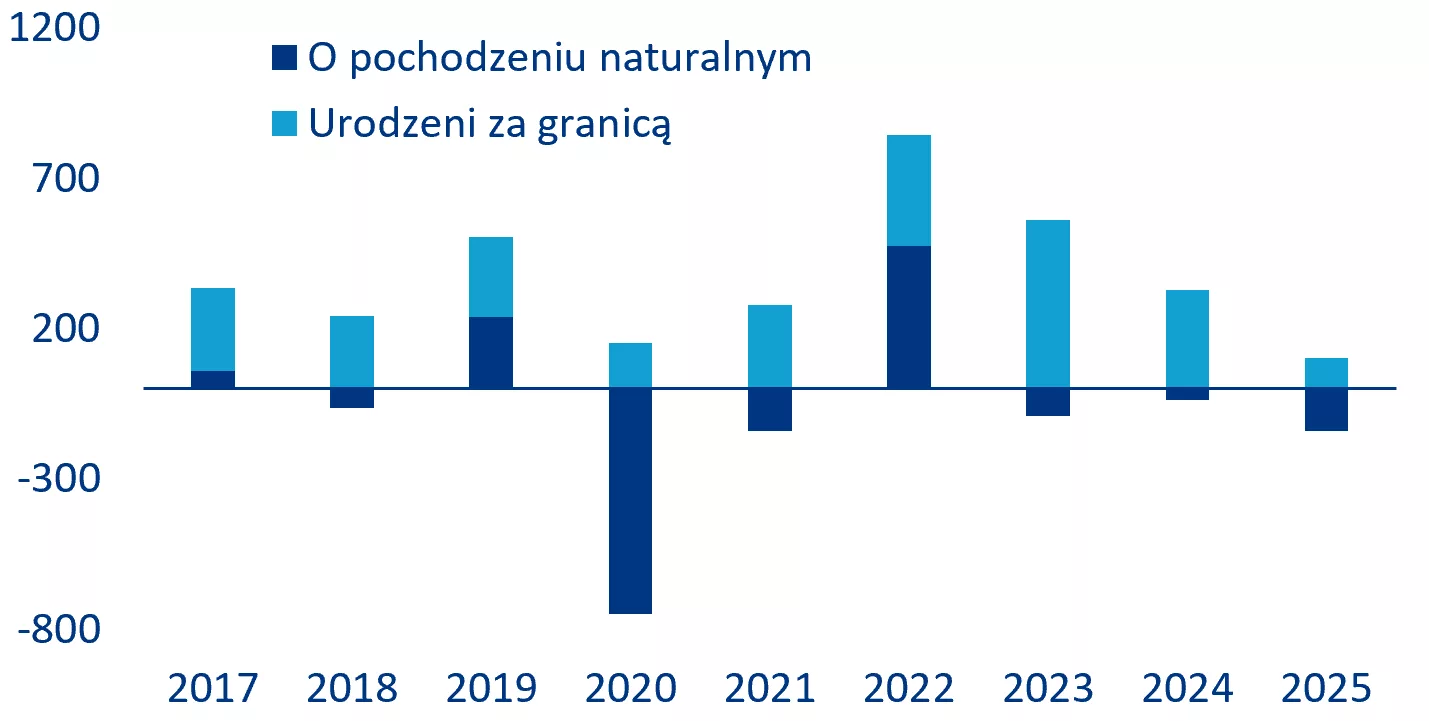
GDP growth has remained resilient since Brexit, but has shifted towards higher public consumption and lower business investment. Higher immigration inflows and longer working hours per employee have offset deteriorating productivity trends. Despite the difficult conditions seen since Brexit — including the vote to leave the EU, the “Truss moment”, political instability, the COVID-19 pandemic and the 2022 energy shock — UK GDP growth has remained relatively solid. Average annual GDP growth has stood at +1.4% since 2016, exactly the same as during the previous ten years, from 2005 to 2015. However, the composition of growth has changed. Stronger growth in government spending (+2% compared with +1.3%) and housing investment (+3.6% compared with -1.8%) has offset weaker business investment growth (+2.4% compared with +3.7%). The volume of exports and imports slowed at roughly the same pace, by -0.7 percentage points to +2.5% for imports and by -0.5 percentage points to +2.4% for exports. Household consumption growth remained unchanged at +1.3%. From the supply-side perspective, the key drivers of potential and sustainable GDP growth[1] have changed even more dramatically. The working-age population began growing again after 2016, supporting job creation and GDP growth. Employment creation has continued to be concentrated among foreign-born workers and recent arrivals.
Chart 1: Potential GDP growth decomposition (% year on year, left axis)
Sources: LSEG Workspace, Allianz Research
Chart 2: Employment growth decomposition (thousand people, right axis)
Sources: LSEG Workspace, OECD, Allianz Research
Note: We include only permanent migration, defined by the OECD on the basis of legal status rather than length of stay. This includes migrants who have the right to remain indefinitely, such as refugees, family migrants and some labour migrants, while people without such rights — for example students and seasonal workers — are excluded. Based on OECD estimates, we assume that around 75% of new immigrants in the UK find employment.
Progress in reducing regional economic disparities has been disappointing. While Scotland and London clearly voted to remain in the EU, other regions such as the Midlands and north-east England strongly supported leaving the bloc. Reducing inequality between regions was a key issue both during and after the Brexit referendum. ONS data indicate that convergence has largely failed to materialise. We analyse a sample of 332 areas in the UK, representing more than 61 million people. A total of 227 areas voted to leave the EU and 105 voted to remain. Since 2016, 59% of the population living in areas that voted to leave has experienced a further widening of the gap relative to the national average income per capita, although several important leave-voting cities — including Blackpool, Doncaster and Wolverhampton — have improved relative to the national average.
At sector level, some areas of services performed well, including transport and storage, information and communication technology, support services, professional services and public administration. Manufacturing remained broadly stagnant, although there were some positive signs. Structural changes since the pandemic — including global developments such as growing Chinese competition in manufacturing — have probably played a greater role in shaping economic performance than Brexit itself. In 2025, UK manufacturing output was 1.4% below its 2016 level. However, this figure masks dramatic shifts within industry, where energy-intensive sectors have contracted and less energy-intensive sectors have performed well. Strong output growth was recorded in transport equipment (+25% between 2016 and 2025), pharmaceuticals (+43%), textiles (+8%), food manufacturing (+31%), electrical equipment (+20%), and computers and electronics (+20%). Meanwhile, output in food and paper industries (-11.7%), coke and refined petroleum products (-38.4%), chemicals (-10%), and gas, steam and electricity generation (-54%) declined sharply.
In energy markets, the UK’s exit from the EU Internal Energy Market on 1 January 2021 represents one of the most direct and measurable Brexit-related costs for British energy consumers. Under the Internal Energy Market’s market-coupling mechanism, interconnectors used implicit capacity allocation to efficiently align prices across borders. Following Brexit, the shift to explicit auctions reduced trading efficiency and increased transaction costs, creating estimated upward pressure on wholesale prices of 0.25% to 0.7%, or GBP 90 million to GBP 250 million, in 2021.[2] The UK also lost its previous role in EU electricity-market governance and in ENTSO-E decision-making structures, although operational cooperation between British and continental system operators remains extensive.
These institutional changes coincided with a broader structural transformation of the UK power system. Since 2016, wind power generation has more than doubled (+130%), while solar generation has increased by 85%, resulting in rapid growth in variable renewable capacity. This transformation enabled a landmark achievement: in September 2024, the UK completed its coal phase-out, becoming one of the first major economies to eliminate coal entirely from its electricity system. However, the rapid expansion of renewable generation has been geographically concentrated, particularly in northern Scotland, creating growing imbalances between power-generation centres and areas of demand. This has created a significant transmission bottleneck between the north and south, with system costs rising sharply. Constraint costs — the costs of managing congestion in the electricity grid when power cannot be transported from where it is generated to where it is needed — increased from GBP 258 million in 2017 to GBP 1.83 billion in 2025. Although these costs primarily result from domestic grid constraints and the spatial concentration of renewable generation rather than Brexit itself, Brexit remains relevant in an indirect sense. Reduced integration with neighbouring electricity markets and slower progress in North Sea infrastructure coordination may have limited the ability to mitigate these pressures.
UK trade performance: goods import substitution and dynamic growth in services trade
The UK’s goods trade deficit has widened since Brexit, but a growing surplus in services trade has offset this increase. The UK goods trade deficit increased by +1.3 percentage points of GDP, or +1.5 percentage points when gold is included, between 2016 and 2025, rising from 6.7% of GDP to 8.0% of GDP. The UK records a goods trade deficit with most of its key trading partners. Around one-third of the total deficit comes from trade with the EU-27, amounting to USD 110 billion, although this is lower than in 2016, when 70% of the deficit originated from EU-27 trade. Commonwealth countries account for 8% of the deficit, or 22% including gold, while China accounts for 28% and the United States for 7%. In services, the UK’s substantial surplus helps offset the rising goods trade deficit. As a result, the current-account balance has remained relatively stable over time and even improved slightly, reaching a deficit of USD 97 billion, or 2.4% of GDP, at the end of 2025. This highlights the continued importance of the UK services sector — especially financial, professional and business services — in cushioning the deterioration in the goods trade balance.
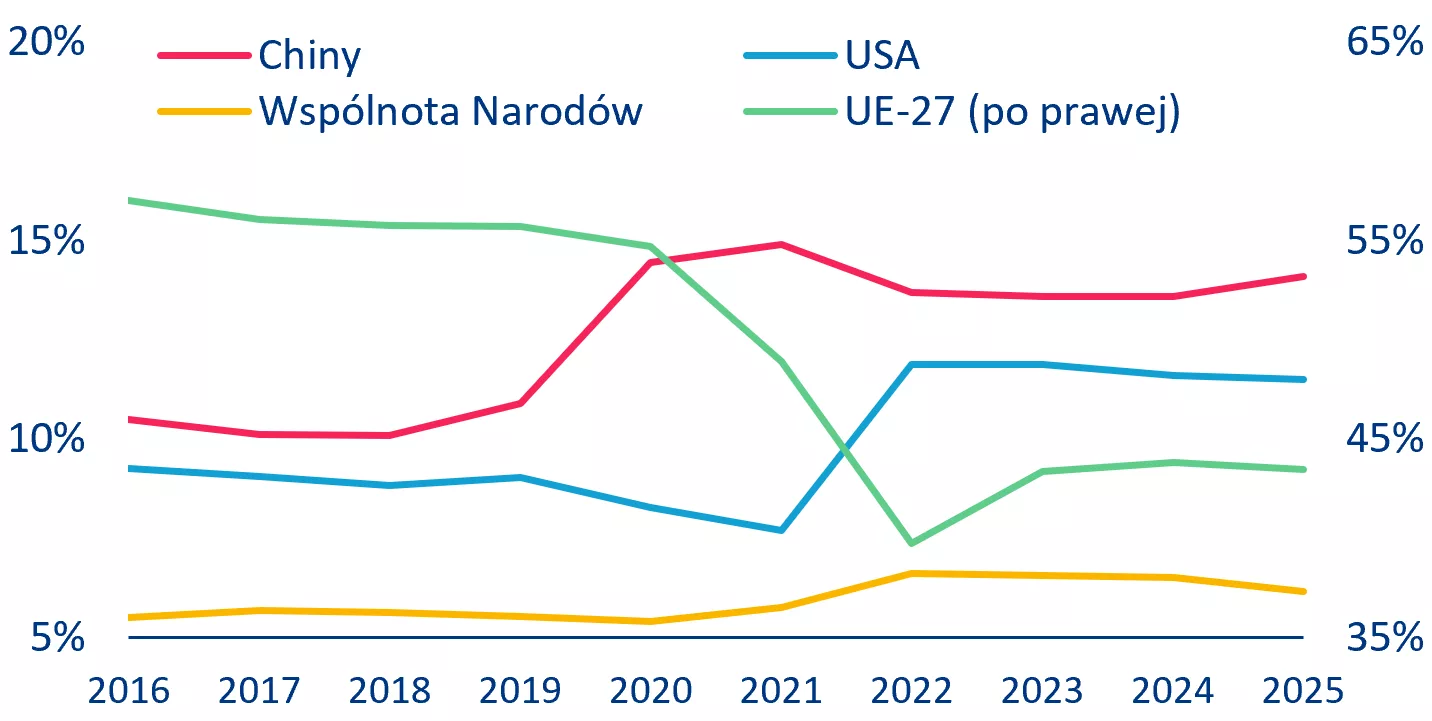
Since the 2016 Brexit vote, the structure of UK goods exports to foreign partners has not changed significantly. On the import side, however, major economic blocs have benefited from the UK’s trade reorientation away from the EU. UK goods exports declined by 2.9 percentage points of GDP since the Brexit vote, reaching 11.2% of GDP in 2025. The EU remains the UK’s largest export market, accounting for 48% of total goods exports — a share broadly stable compared with 50% in 2016. The shares of other major partners, including the United States, Commonwealth countries and China, have also remained relatively stable. On the import side, however, changes have been far more substantial. Total imports increased by 2 percentage points of GDP between 2016 and 2025, reaching 18.7% of GDP. At the same time, the composition of imports has changed considerably (Chart 3). The EU now accounts for 43% of total UK goods imports, compared with 57% ten years ago. Meanwhile, China and the United States have gained importance, accounting for 14%, up from 10%, and 11%, up from 9%, of total imports respectively. Two key factors explain these shifts: first, imports from China surged after the pandemic, driven by strong demand for technology products; second, imports from the United States rose sharply after the outbreak of the war in Ukraine, mainly because of energy purchases.
Chart 3: Share of major partners in UK global gross goods imports, excluding gold
Sources: Trade Map, Allianz Research
The UK has diversified both its sources of supply and the range of goods it imports, particularly by increasing dependence on Chinese manufactured products and US energy exports. UK imports are currently dominated by machinery, chemicals, agri-food products and automotive products. Compared with 2016, the composition of total imports across these categories has become more balanced. Energy imports have also gained importance, while the shares of chemicals, textiles, transport equipment and automotive products in total imports have declined. A closer look at the UK’s changing supplier structure reveals significant shifts between 2016 and 2025. China recorded the largest gains, especially in electronics and electrical equipment, where the UK is a major destination accounting for 35% of total gross imports in this category. This trend is similar to that observed in the EU, where dependence on Chinese technology products is also increasing. China has also expanded its presence in automotive products, machinery, chemicals and transport equipment. In short, China has increased its market share in virtually every manufacturing sector. Meanwhile, the United States has strengthened its position in energy imports, increasing its share of total UK energy imports by 16 percentage points. It has also gained importance in machinery and chemicals. Finally, Commonwealth countries have expanded their presence in almost all sectors, particularly textiles and chemicals, although their overall share has remained broadly stable at +0.6 percentage points.
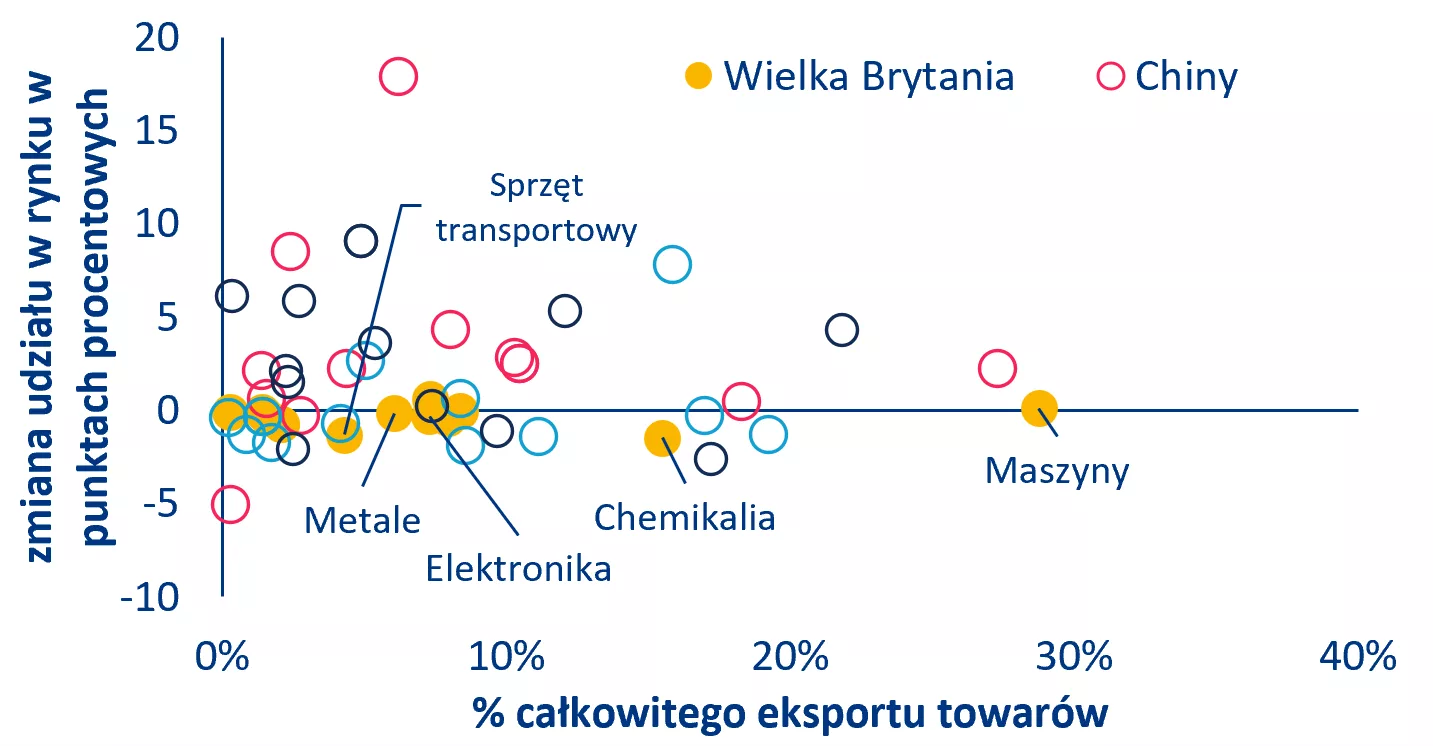
The UK’s export market share has declined. Exports are now more concentrated in machinery, while the country has lost market share in several traditionally strong sectors, including automotive and chemicals. Machinery exports mainly include turbojet engines, turboprop engines and other gas turbines used in aerospace and aviation, as well as specialised medical equipment. These now account for almost 30% of total gross exports. In contrast, the importance of automotive and chemical sectors has declined markedly. Chemicals’ share of total goods exports fell from 20% to 15%, while the automotive sector’s share declined from 13% to 9%, a trend also reflected in broader transport equipment exports. These declines are visible not only in relative terms but also in absolute values: between 2016 and 2025, car exports fell by 20% and chemical exports by 8%. At product level, the UK exports less of most products to the EU than it did in 2016, measured as a share of total gross exports, with notable exceptions in transport equipment and energy. However, these declines have not been offset by an increase in the relative share of another economic bloc. Although the structure of UK exports appears relatively stable in relative terms — with the same trading partners and some balance between product categories — this masks a significant shift towards machinery and energy exports, alongside declines in sectors that have traditionally been UK strengths, namely automotive and chemicals. Chart 12 shows that, overall, the UK has lost global market share in most exported products compared with other major economic blocs.
Chart 12: Change in market share in 2025 compared with 2016, vertical axis, and the share of individual products in total gross exports in 2025
Sources: Trade Map, HS2 classification, Allianz Research
This analysis of UK trade excludes gold exports and imports — a category in which the UK has recorded strong market-share growth and which has had a significant impact on the structure of British trade due to rising gold prices in recent years. Including gold could distort the assessment of the UK’s actual productive capacity and the structural changes currently taking place in global trade, such as the growing role of Asian economies — especially China — in most goods categories and the increasing importance of the United States in energy supplies. When gold is included, the UK’s degree of openness remains broadly unchanged at around 38% between 2016 and 2025. However, when gold is excluded, the indicator points to weaker integration of the UK with global trade, with the ratio falling from 35% in 2016 to 30% in 2025.
The UK’s trade agreements have expanded access to markets, but they do not match the scale of economic relations with the EU and have not fully compensated for Brexit-related trade losses. Although tariffs between the UK and the EU remain relatively low, with an average tariff rate of 1.5%, rising to as much as 19% for some products, the main trade barriers are non-tariff measures. Since leaving the EU in 2020, the UK has introduced 58 trade-related measures affecting EU countries, including 25 export-related measures, 20 subsidies, seven tariff measures and five price-control measures. Over the same period, the EU introduced 337 measures affecting the UK, mainly subsidies, 275 measures, as well as export restrictions, 19 measures, tariff measures, 15, licensing and quota measures, 13, price controls, six, trade-defence measures, four, and one measure concerning foreign direct investment. These policy changes have contributed to a significant decline in bilateral trade integration. Structural gravity estimates suggest that Brexit has reduced UK-EU trade by -21.3% for goods and by -49.7% for services. This weaker bilateral trade performance reflects Brexit-related disruptions to trade and supply chains, driven primarily by higher non-tariff barriers and, to a lesser extent, tariffs.
At the same time, the UK has sought to offset part of the economic cost of Brexit through an independent trade policy. Since Brexit, the UK’s free trade agreement strategy has evolved from initially rolling over agreements negotiated during EU membership to pursuing new bilateral and multilateral arrangements. Major milestones include agreements with Japan in 2020, Australia in 2021, New Zealand in 2022, EEA EFTA states including Norway, Iceland and Liechtenstein, digital trade agreements with Singapore and Ukraine, accession to the Comprehensive and Progressive Agreement for Trans-Pacific Partnership in 2024, a free trade agreement with India signed in 2025, an updated agreement with South Korea, and an agreement with the Gulf Cooperation Council concluded in 2026 but not yet in force. Together, these post-Brexit agreements account for around 21% of UK trade in 2025, excluding the United States, where a prosperity agreement has been concluded to offset the effects of tariffs rather than a full free trade agreement. The UK is also negotiating or updating agreements with Canada, Switzerland and Turkey. Despite the expansion of the UK’s global trade network, the scale of these agreements remains far smaller than the country’s economic relationship with the EU, which still accounts for the largest share of UK trade, at 37% in 2025.
Closer trade ties between the UK and the EU could generate economic benefits worth billions. Over the long term, the UK and the EU may find room for greater alignment in goods trade, while the UK and the United States are more likely to deepen cooperation in services, technology, finance and regulation. However, only a limited share of Brexit-related trade frictions is likely to be removed. Simulations based on a computable general equilibrium model indicate that a deep UK-EU trade agreement could generate annual gains of USD 25.2 billion for the UK, including USD 19.6 billion from trade creation and USD 5.6 billion from trade diversion. It would increase the value of UK exports to the EU by +23.1%, with the largest percentage gains in sugar, processed food products and cereals, followed by vehicles, alcoholic beverages and textiles. EU countries could gain USD 31.9 billion annually, or +17.4%, mainly through vehicle exports, reflecting the restoration of previously integrated value chains, as well as through exports of processed food, dairy products and chocolate.
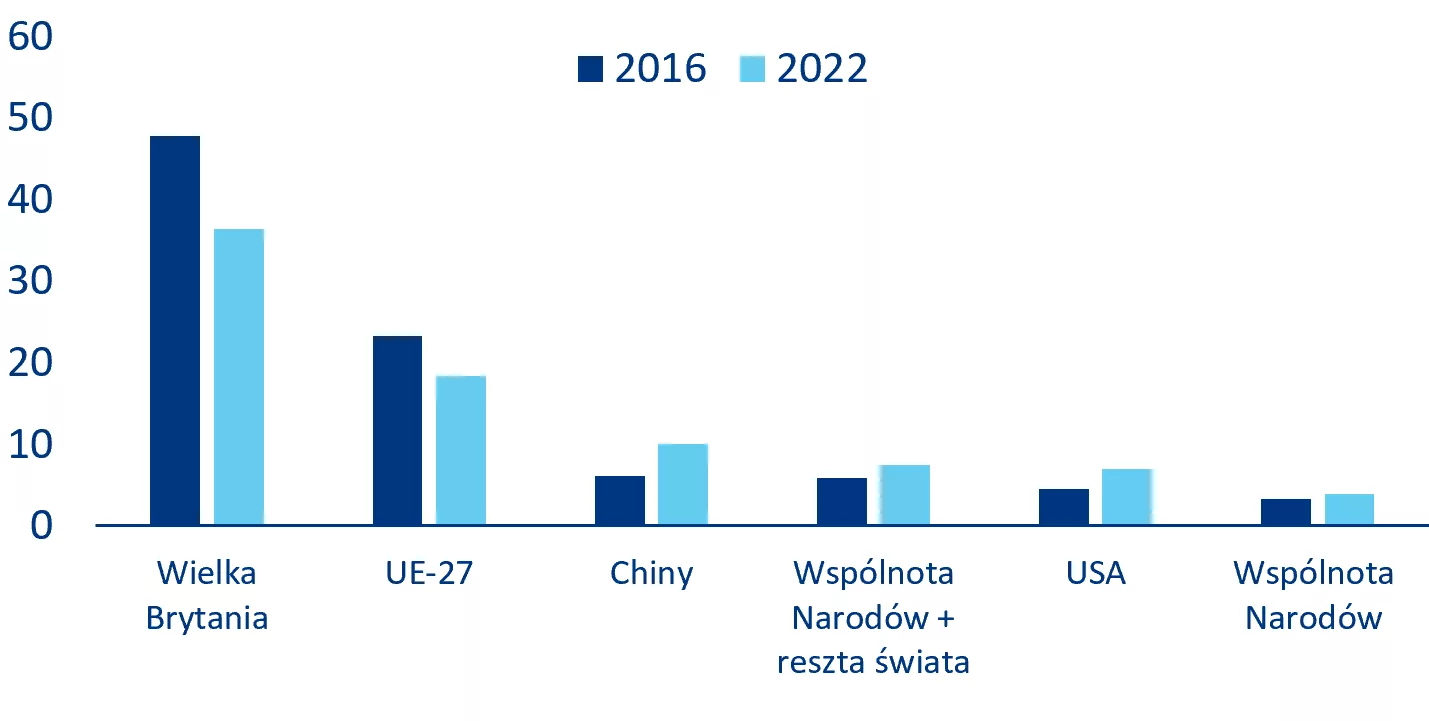
The evolution of UK trade in global supply chainsFrom a supply-chain perspective, UK domestic demand has become increasingly dependent on foreign industrial suppliers, while the country has struggled to expand its export share in global supply chains. The OECD Trade in Value Added dataset is only available up to 2022, but it provides valuable insights into supply-chain developments. It analyses foreign and domestic value added embodied in final demand. For the UK, the data point to a gradual shift in domestic demand away from EU products. Although the EU remains the UK’s largest trading partner in value-added terms, older EU member states are no longer the country’s preferred supply-chain partners, as the relative importance of China, the United States and Commonwealth countries has increased significantly over the past decade. Indeed, between 2016 and 2022, the EU share of foreign value added in UK final demand for manufactured goods fell from 52% to 39%. During the same period, China’s share increased by 8 percentage points, making it the UK’s largest individual country partner in 2022. The United States gained 2 percentage points and became the second-largest partner, while Germany’s share fell by 8 percentage points, pushing it from first to third place. Within the EU, only Ireland and Poland increased their shares, while most Western European countries recorded declines. This shift is particularly pronounced in computers, electronics and optical products, where China’s share has overtaken that of the EU. Similarly, in the automotive industry, the United States gained around 5 percentage points, again at the expense of both EU and UK manufacturing value added. These trends suggest a gradual reconfiguration of UK supply chains away from historical European partners towards a more globally diversified supplier network. In terms of exports, between 2016 and 2022 the UK lost some market share in value-added trade embodied in other countries’ final demand for manufactured products, down by -0.4 percentage points to 1.6% globally. This is visible in the UK’s key industrial sectors, including chemicals, electronics, machinery and automotive production. Chart 4: Geographic distribution of value added in UK final demand for manufacturing inputs, percentage points
Sources: OECD TiVA, Allianz Research |
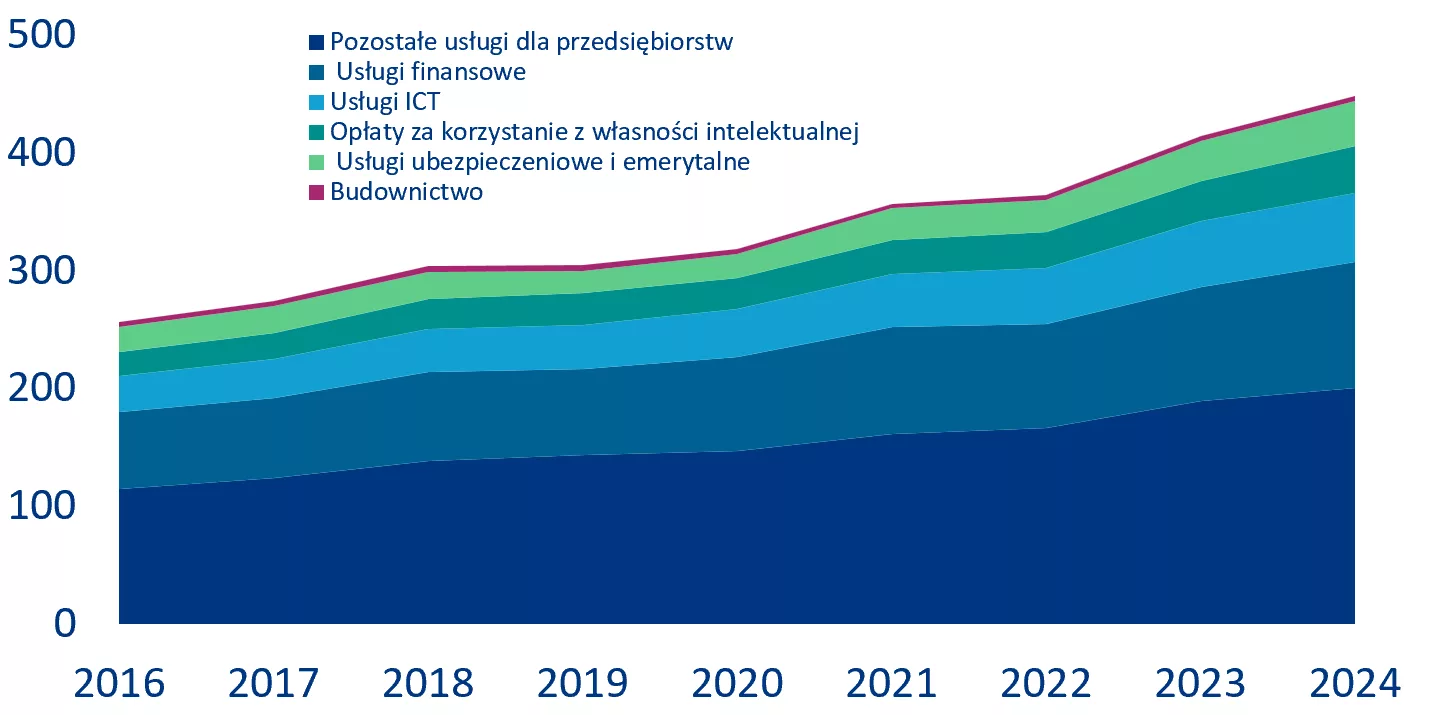
Although Brexit introduced additional compliance requirements and regulatory uncertainty, the services sector has largely avoided the trade frictions seen in goods markets. UK services exports to the EU increased by USD 96 billion between 2020 and 2024, representing growth of +63%, only slightly below the growth rate of UK services exports to global markets, +65%. Financial services have retained much of their international competitiveness despite the loss of preferential access to EU markets. Although some trading activity, assets and jobs moved to Amsterdam, Dublin and Paris, London remains Europe’s leading centre for foreign exchange trading, derivatives, insurance and international banking. Financial services exports to the EU increased by 58% between 2020 and 2024, compared with 63% globally. Moreover, while the UK’s share of value added embodied in global final demand for financial services declined by 0.3 percentage points between 2016 and 2022, its share in EU-27 final demand increased by 0.6 percentage points, suggesting deeper integration of the British financial sector with European value chains. Financial services accounted for a broadly stable share of around 17% of total UK services exports in 2024.[3] The UK’s financial services trade surplus increased over this period, while export destinations remained heavily concentrated in the United States, which accounted for around 27% of UK financial services exports, followed by Ireland, Luxembourg, other EU member states and several offshore financial centres. In the global financial services market, the UK’s position remains remarkably stable. The country continues to rank second worldwide, accounting for around 21% of global financial services exports, ahead of the EU and behind the United States, which remains in first place. The most significant changes in the global ranking occurred further down the list, with Singapore substantially strengthening its role and consolidating its position as the world’s fourth-largest exporter of financial services. These trends suggest that while Brexit has not materially strengthened the UK’s dominance in financial services, it has also not undermined London’s position as one of the world’s leading financial centres. In fact, the UK exports “other business services” to a greater extent than financial services, insurance and pension services, including research and development services, consulting services and technical trade-related services, as shown in Chart 5. Finally, information and communication technology services have performed even better. Supported by digital trade provisions in the EU-UK Trade and Cooperation Agreement and continuing EU data-adequacy arrangements, UK ICT services exports to the EU increased by 94% since Brexit, outperforming growth in the rest of the world, +76%.
Chart 5: Structure of UK services exports, USD billions
Sources: WTO-OECD, Allianz Research
[1] We analyse potential GDP in order to remove cyclical and financial factors that could distort the results of the analysis.
[2] UK-EU energy and climate cooperation: Why greater engagement is essential to achieving net zero, Energy UK.
[3] From a value-added perspective, financial services activity accounted for 4.4% of total UK value added in 2023, down from 6.5% in 2016.