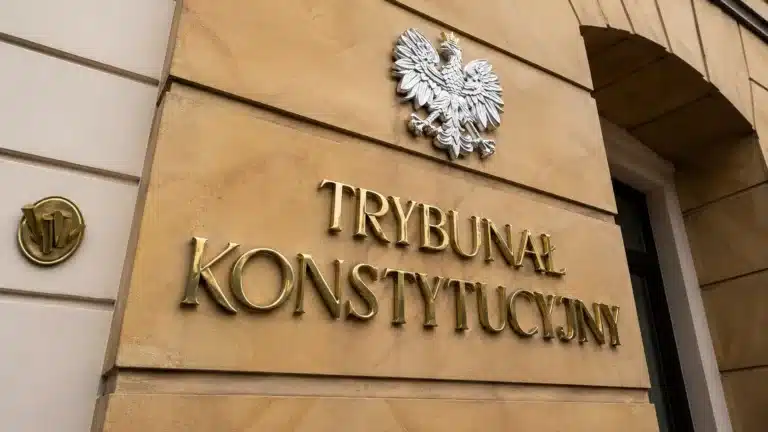
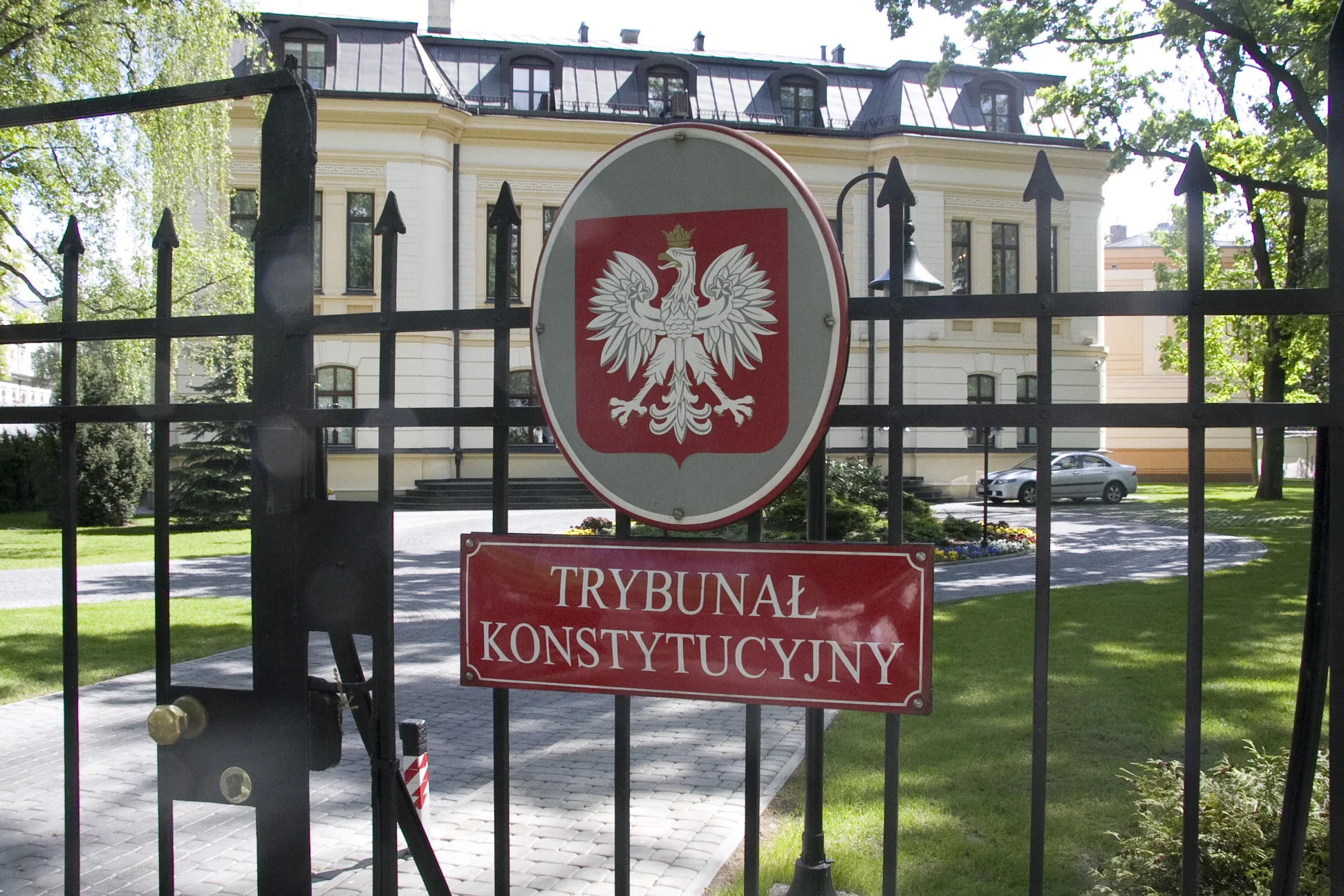
Polish news websites published 5,683 reports about the Constitutional Tribunal in just three days, from Friday to Sunday, according to an analysis by Instytut Przywództwa, a Polish leadership institute. That amounts to more than one report per minute. Over the same period, All Saints’ Day, traditionally a major topic around the turn of October and November, featured in 4,874 reports.
The scale of interest raises questions about political leaders’ responsibility for the authority, stability and public standing of key state institutions. Such intensive coverage is particularly striking over a weekend, when newsrooms are usually less active than on working days. It reflects the political and social importance attached to events affecting the Tribunal.
The number of reports does not, however, establish the quality of public debate or how well citizens understand the dispute.
“Intense media coverage does not always translate into greater public knowledge. We may receive more and more information about politicians’ statements, mutual accusations and successive reactions, while understanding less and less about what the dispute actually means for the functioning of the state. When constitutional fundamentals are at stake, responsibility for the quality of public debate becomes particularly important,” said Dr Piotr Gąsiorowski, president of Instytut Przywództwa.
Institutional authority is a shared responsibility
The Tribunal dispute raises a fundamental question about officeholders’ responsibility to build and maintain the authority of public institutions. Political disputes are natural in a democracy and can be an essential check on power. They should not, however, reduce state institutions to instruments of immediate political competition.
Institutional authority rests on more than constitutional status, formal powers or a place within the machinery of state. Above all, it is built through lawful action, independence, professionalism, transparent procedures and consistent performance of assigned duties.
Those exercising power bear particular responsibility. Their decisions, communication with the public and respect for established rules shape citizens’ perceptions of institutions. Power is not merely the right to decide; it also creates an obligation to protect institutions whose work should outlast any political mandate.
“One of the most important duties of those in power is not only to govern effectively, but also to strengthen the authority of state institutions. Politicians come and go; governments, parliamentary majorities and holders of the highest public offices change. State institutions must nevertheless retain continuity, credibility and the capacity to fulfil their constitutional duties. Responsible leadership also means leaving them stronger than they were when one took office,” Gąsiorowski said.
Leadership involves more than winning disputes
Contemporary political competition increasingly follows the logic of instant media coverage. Speed of response, a clearly defined position and the ability to mobilise supporters take priority. This can yield short-term political gains without necessarily serving the state’s long-term interests.
Leadership requires an ability to distinguish one’s political camp’s interests from responsibility for the common good. Especially during conflict, leaders should consider both immediate consequences and effects on institutional durability and public trust.
This does not mean abandoning criticism of public institutions or accepting legally questionable actions. Protecting the authority of the state requires responding to wrongdoing and taking remedial action. Such action should remain lawful, respect constitutional principles and take account of long-term consequences.
“A leader’s effectiveness should not be judged solely by the ability to win successive political disputes. Far more important is whether their decisions strengthen the state and increase citizens’ trust in public institutions. The real test of responsibility is the ability to take action whose positive consequences may only emerge years later, often after leaving office,” the institute’s president said.
Trust takes years to build and can be lost much faster
A gradual erosion of public trust in the state can be one of the most serious consequences of prolonged institutional conflict. Citizens primarily expect predictability, impartiality, effectiveness and compliance with the law.
If the functioning of the highest state bodies becomes a constant subject of political confrontation, people may conclude that their actions depend more on the current balance of power than enduring constitutional rules. This is particularly dangerous because institutional trust underpins the stability of a democratic state.
The authority of an institution should also be distinguished from that of its leaders. A state institution should not be identified with a particular person or political group. Its credibility must rest on durable operating standards that survive personnel and political changes.
Both government and opposition are responsible for upholding those standards. Criticising state decisions is a natural part of democracy, but should enforce accountability and improve institutions rather than weaken them for political purposes.
“The authority of state institutions cannot be decreed or built through communication alone. It follows from years of consistency between declared values and actual conduct. Every government is responsible for that authority, including when it makes difficult or politically unpopular decisions. It is possible to win a political dispute while weakening trust in institutions that should serve all citizens,” Gąsiorowski said.
Institutions must withstand political divisions
Events surrounding the Tribunal show how quickly conflict affecting a major state institution can dominate public debate. They also highlight the need to consider political leadership standards and responsibility for the state’s long-term stability.
Media attention follows successive events. A topic dominating coverage for several days may quickly give way to another, while decisions taken during intense political conflict can affect institutions for years.
Assessments of officeholders should therefore consider more than immediate political effectiveness. Their impact on institutional quality, the rule of law and citizens’ trust also matters. A strong state is not one without political disputes, but one in which even the gravest disagreements are resolved under stable, widely respected rules and institutions can act independently and effectively.
“In a few days, the media may be covering entirely different events. Yet the consequences of the present dispute could remain with us for years. Responsible leadership is therefore measured not only by effectiveness in political confrontation, but above all by the ability to build and protect the authority of state institutions. Power is exercised for a limited time, while responsibility for the state extends beyond terms of office and political divisions. Leaders’ most important legacy should be institutions that citizens can trust regardless of who currently holds power,” Gąsiorowski said.
Commentary and analysis: Piotr Gąsiorowski, Instytut Przywództwa. Original Polish article, November 2, 2026. English editorial translation.