Poland’s president has signed a law raising corporate income tax (CIT) for selected energy and fuel companies from 19% to 30% in 2027. The rate will fall to 26% in 2028 and 23% in 2029, with the additional revenue helping to fund up to PLN 4.8 billion in electricity subsidies for energy-intensive industry in 2027–2030.
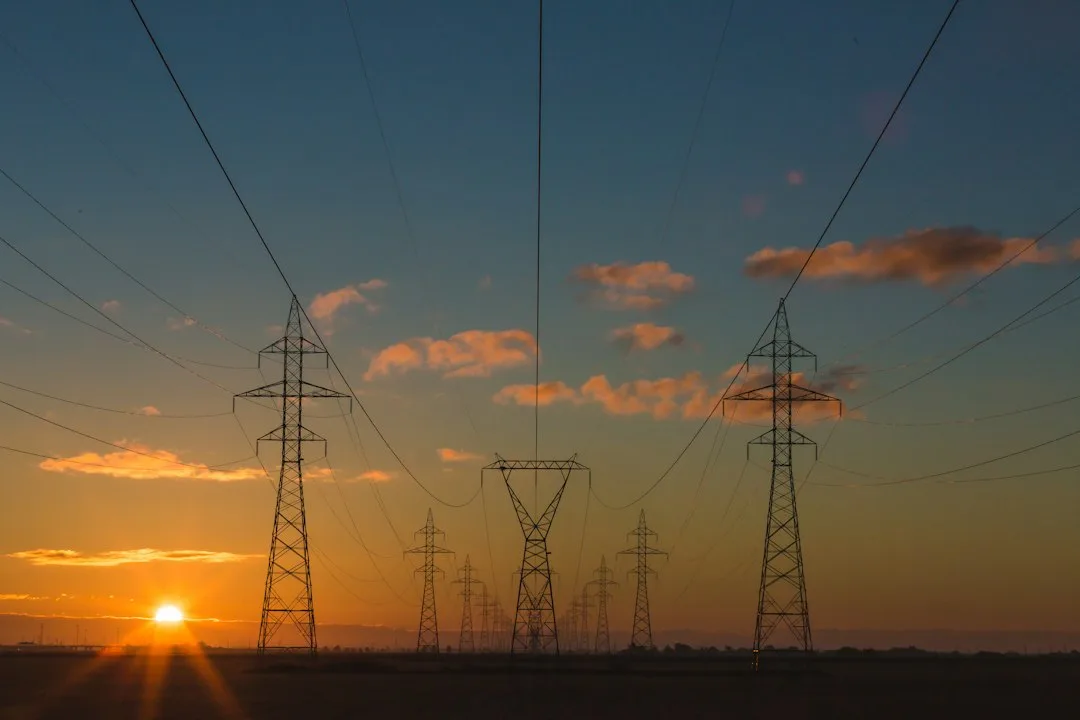
By the CEO editorial team. Polish original published on 29 November 2026 at 12:11 UTC (13:11 in Poland). Photo: Matthew Henry / Unsplash.
President Karol Nawrocki signed the law on 27 November. As of 29 November 2026, it had not been published in Poland’s Journal of Laws. The legislation provides for entry into force on 1 January 2027.
The energy and fuel tax increase is contained in the legislation introduced as parliamentary bill No. 3159. On the same day, the president signed two separate tax amendments, bills No. 3137 and 3148, and vetoed bill No. 3293, which would have imposed a 22% CIT rate on companies with revenue above €50 million.
Which companies will pay the higher tax
The higher tax will cover oil and natural gas extraction, the production of liquid fuels from crude oil, and trading in crude oil, liquid fuels and specified gaseous fuels, including liquefied natural gas (LNG). Electricity transmission and distribution are also covered. The law excludes fuel production carried out as a service for other entities and, in distribution, the vertically integrated undertakings specified in Article 9d(7)(1) of Poland’s Energy Law.
Eligibility is assessed using revenue from the preceding tax year, which must exceed the equivalent of €50 million. As a rule, the activities listed in the law must account for at least 75% of the revenue included in that calculation; revenue from capital gains, other operating revenue and financial revenue are excluded when calculating the share. The taxpayer must also belong to a group covered by top-up tax rules, unless its own revenue in the preceding tax year exceeded €750 million.
Where the listed activities account for at least 33% but less than 75% of the relevant revenue, the higher rate will apply to part of the tax base, provided the other conditions are met. The taxpayer can calculate that portion either from the share of income generated by those activities in income from sources other than capital gains, or from their share of the previous year’s revenue multiplied by 1.33. Separate rules apply, among others, to tax capital groups that include electricity transmission or distribution companies, and to entities that have undergone restructuring.
For companies whose tax year follows the calendar year, the increases above the standard rate will be 11, seven and four percentage points respectively. The first tax year affected must begin after 31 December 2026. The law also addresses certain extended first tax years and cases in which a given rate applied for less than 12 months.
For a typical tax year matching the calendar year. Sources: the CIT Act and the Act of 5 November 2026, parliamentary bill No. 3159.
View chart data in a table
| Year | Standard rate | Rate for taxpayers covered by the law |
|---|---|---|
| 2027 | 19% | 30% |
| 2028 | 19% | 26% |
| 2029 | 19% | 23% |
Government forecasts PLN 7.183 billion in additional tax revenue
The law sets subsidy spending limits of PLN 800 million in 2027, PLN 1.6 billion in each of 2028 and 2029, and PLN 800 million in 2030. Separate limits for administering the programme total PLN 91.3 million through 2035.
In its regulatory impact assessment, the government estimated additional CIT revenue of PLN 2.83 billion in 2027, PLN 2.547 billion in 2028, PLN 1.566 billion in 2029 and PLN 240 million in 2030—a total of PLN 7.183 billion. The forecast used 2025 CIT returns and took account of the rules governing tax advance payments.
Sources: regulatory impact assessment for bill No. 3159 (revenue forecast); Article 29(1) of the signed law (subsidy ceilings). Subsidy ceilings exclude administration costs.
View chart data in a table
| Year | Additional CIT revenue: impact assessment forecast | Subsidy spending ceiling: legislation |
|---|---|---|
| 2027 | 2,830 | 800 |
| 2028 | 2,547 | 1,600 |
| 2029 | 1,566 | 1,600 |
| 2030 | 240 | 800 |
Which industrial companies can apply
Potential applicants include steelworks and some chemical, paper, glass, ceramics and cement plants. A company must appear on the register of industrial electricity consumers and derive more than half of its business revenue in the eligible period from activities covered by the Polish Classification of Activities (PKD) codes listed in the law. It must carry out those activities throughout that period and on the date it applies for support or payment.
Companies in bankruptcy, liquidation or financial difficulty as defined by EU guidelines are among those excluded. Tax or social security contribution arrears can also disqualify an applicant, unless it has obtained relief such as a payment deferral or an instalment arrangement. Sanctions listings and the penalties specified in the law are further eligibility considerations.
How electricity subsidies will be calculated
The subsidy can cover half the electricity purchased and consumed in the calendar year preceding the application for support or payment. For each eligible megawatt-hour (MWh), support can reach 50% of the average of the four quarterly competitive-market electricity sales prices published by the president of Poland’s Energy Regulatory Office (URE). The price after subsidy must remain at least the equivalent of €50 per MWh, converted at the average exchange rate published by Poland’s central bank, Narodowy Bank Polski (NBP), on the last day of the eligible period.
For support in 2027, the law allows the ceiling to rise to 70% of the reference price for eligible MWh purchased and consumed between 1 March and 31 December 2026. This option is available under the EU’s temporary METSAF state aid framework. Only half the volume remains eligible, so the higher ceiling applies to that qualifying portion of consumption.
| Parameter | Rule |
|---|---|
| Subsidy budget | Up to PLN 4.8 billion in 2027–2030 |
| Eligible period | The calendar year before the year of the application for support or payment |
| Consumption covered | 50% of electricity purchased and consumed in the eligible period |
| Ceiling per MWh | Up to 50% of the reference price; temporarily up to 70% for the specified period in 2026 |
| Price after subsidy | At least the equivalent of €50 per eligible MWh |
| Support duration | Up to three consecutive years per business |
| Investment | At least half the subsidy, excluding the amount arising from the temporary higher ceiling |
| Applications | Electronically, with a qualified electronic signature, by the deadline in the call announcement |
At least half the subsidy must fund investment
Recipients must invest at least half their subsidy in Poland, for example in new installations or upgrades to existing ones. Additional aid arising from the temporary increase in the subsidy ceiling is excluded from that calculation. Eligible investments include renewable energy, storage, electrification and energy efficiency. Projects must reduce grid operating costs or meet market and electricity-system needs without increasing fossil fuel consumption.
The Senate added long-term power purchase agreements (PPAs) to the list, provided they finance the construction or modernisation of renewable energy installations. As a rule, investments must be commissioned within 48 months of the aid award. Technical reasons can justify an extension to 60 months where a project makes a significant contribution to energy security, lower energy intensity or a lower unit cost of energy. Companies have three months after the implementation deadline to notify the programme operator that the investment has been completed.
For a steelworks or paper mill, the subsidy lowers the current electricity cost of goods sold on international markets. Benefits could persist after the programme ends where modernisation reduces the power needed to produce a tonne of steel or paper. Energy storage, meanwhile, allows some electricity to be bought during cheaper hours and used when prices are higher.
Combining subsidies with compensation for CO₂ costs
Poland has operated a scheme compensating companies for CO₂ emissions costs passed through in electricity prices since 2019. According to the Ministry of Development and Technology, companies received about PLN 9.25 billion under that scheme in 2019–2024. The new subsidy, based on the EU’s Clean Industrial Deal State Aid Framework (CISAF), is linked to market electricity prices and requires investment.
The subsidy may cover consumption outside the scope of compensation, or an application for compensation, for the same period. If a company has already received compensation for the same electricity, the ordinary subsidy rules allow it to receive at most the difference between the maximum subsidy and the compensation awarded, provided the subsidy would be higher. Where the temporary higher ceiling applies, the combined payments for the same electricity can reach the maximum compensation plus half the maximum subsidy calculated using that higher ceiling.
When combining the subsidy with other state aid, de minimis aid or centrally managed EU funds, the highest applicable ceiling for overlapping costs must be respected. Investments funded from the mandatory investment portion of the subsidy cannot receive other state aid or de minimis support. Aid for a separate project using the same infrastructure is permitted if its scope and costs are clearly separated.
Ministry and BGK will announce application deadlines
The government has three months from the law’s entry into force to adopt the programme. Aid can be granted once a positive European Commission decision has been announced. Application deadlines will be published in the Public Information Bulletin of the ministry responsible for the economy and on the website of Bank Gospodarstwa Krajowego (BGK), the Polish development bank that will administer the scheme. The regulatory impact assessment envisaged calls for applications in 2027 and 2028.
Companies will sign a framework agreement and apply separately for each year’s payment, reporting their actual electricity consumption in the preceding year. Final payments are scheduled by 31 December 2030. If the total subsidy requested in eligible applications exceeds the budget for a call, every payment will be reduced proportionately.