
Poland is preparing to develop its third LNG terminal. Gaz-System has decided to proceed with a second floating storage and regasification unit (FSRU) in the Gulf of Gdańsk. The investment is intended to expand the country’s capacity to import liquefied natural gas and strengthen Poland’s position as a regional gas hub.
The new facility will become another part of Poland’s LNG infrastructure, alongside the terminal in Świnoujście and the FSRU terminal already under construction in Gdańsk. Once all three installations are operational, Poland’s total LNG regasification capacity is expected to exceed 20 billion cubic metres of gas per year.
What is an FSRU terminal?
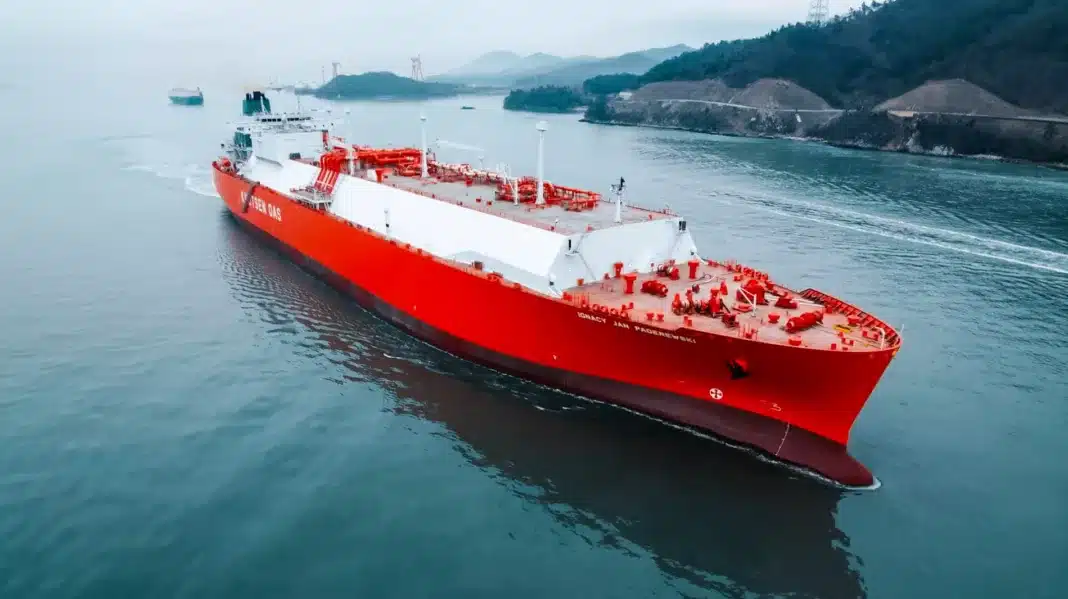
FSRU stands for Floating Storage and Regasification Unit. In practice, it is a vessel designed to receive liquefied natural gas from LNG carriers, store it and then convert it from liquid back into gaseous form.
LNG is transported by sea at a temperature of around minus 162 degrees Celsius. After regasification, it can be injected into the domestic gas transmission system and supplied to power plants, industrial facilities, district heating plants and household customers.
One of the key advantages of an FSRU is its flexibility. Developing a floating installation usually takes less time than building a conventional onshore terminal, although it still requires investment in port infrastructure, connecting pipelines and the onshore transmission network.
Decision follows capacity bookings
Gaz-System made the decision after completing an Open Season procedure, a market consultation designed to assess demand for the planned infrastructure. Four entities secured long-term access to the services of the new terminal.
Demand proved strong enough for the operator to increase the planned regasification capacity of FSRU 2 from 4.5 billion to 6.1 billion cubic metres of gas annually. This means that the new terminal will be able to handle more LNG deliveries than originally envisaged.
According to the Ministry of Energy, interest from market participants exceeded the initial offer of 39 annual slots. In this context, a slot refers to the capacity to handle a specific LNG delivery at the terminal.
Why does Poland need another terminal?
The primary objective is security of supply. A larger number of terminals and greater import capacity would allow Poland to purchase gas from a wider range of suppliers and bring it in by sea from multiple regions around the world.
Diversification has become particularly important since Europe began reducing its dependence on Russian gas. LNG can be sourced from the United States, Qatar, Norway, Africa and other markets where liquefied natural gas is available.
A second FSRU in the Gulf of Gdańsk could also increase Poland’s ability to transmit gas to neighbouring countries. Poland already has gas interconnections with Denmark, Germany, the Czech Republic, Slovakia and Lithuania, meaning that Baltic infrastructure may serve not only domestic customers but also the wider region.
Will more LNG mean lower prices?
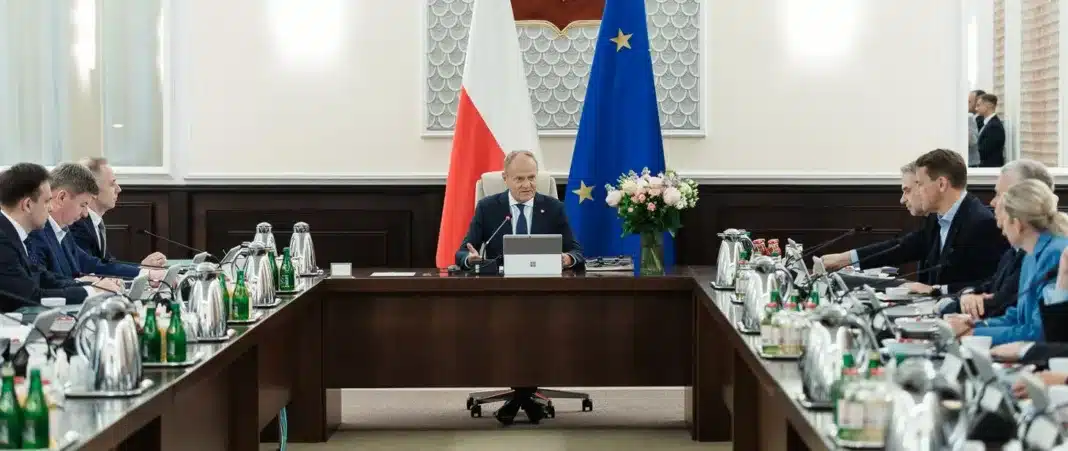
The government argues that a larger number of suppliers and stronger competition could support more stable gas prices. However, this does not automatically mean that consumer bills will fall immediately once the terminal becomes operational.
Gas prices depend on many factors, including conditions in the global LNG market, demand in Asia and Europe, exchange rates, transport costs, transmission charges and weather conditions. New infrastructure may, however, reduce the risk of sharp price increases during supply disruptions or geopolitical tensions.
LNG terminals and the energy transition
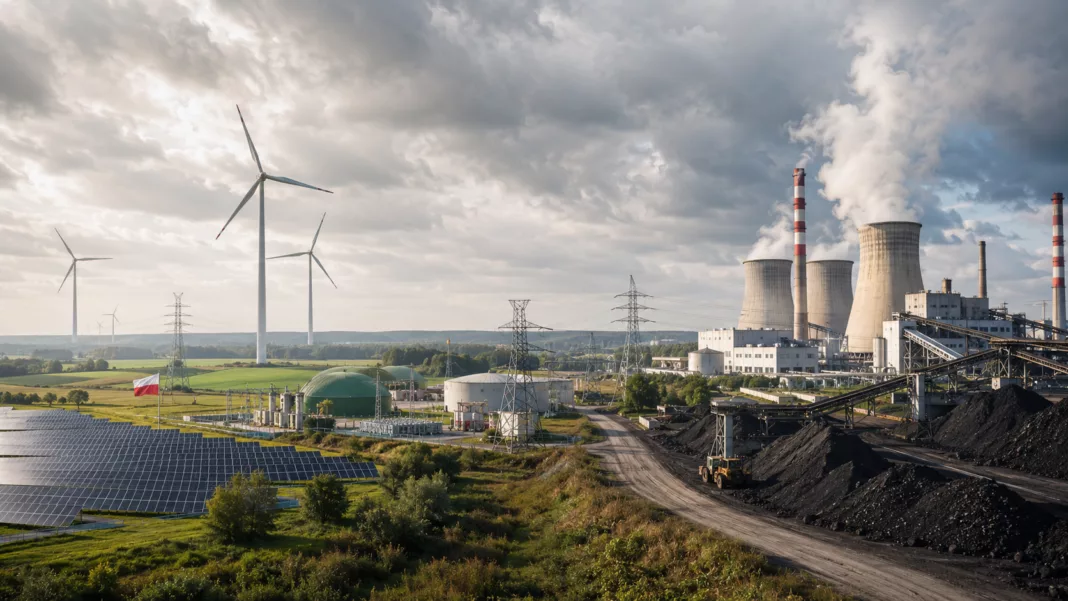
The expansion of gas infrastructure also raises questions about the role of natural gas in the energy transition. Natural gas produces lower carbon dioxide emissions than coal, but it remains a fossil fuel. In the long term, Poland plans to expand renewable energy sources, nuclear power and energy-storage technologies.
The government argues, however, that gas can serve as a transition fuel during part of the energy transition. It is expected to help stabilise the power system as Poland moves away from coal and to complement electricity generation from wind and solar sources, which depend on weather conditions.
The launch of the second FSRU in the Gulf of Gdańsk is planned for the next decade. Gaz-System indicates that from 2030 Poland is expected to have almost 50 billion cubic metres of annual gas import capacity, taking into account all supply routes and interconnection capacity.