
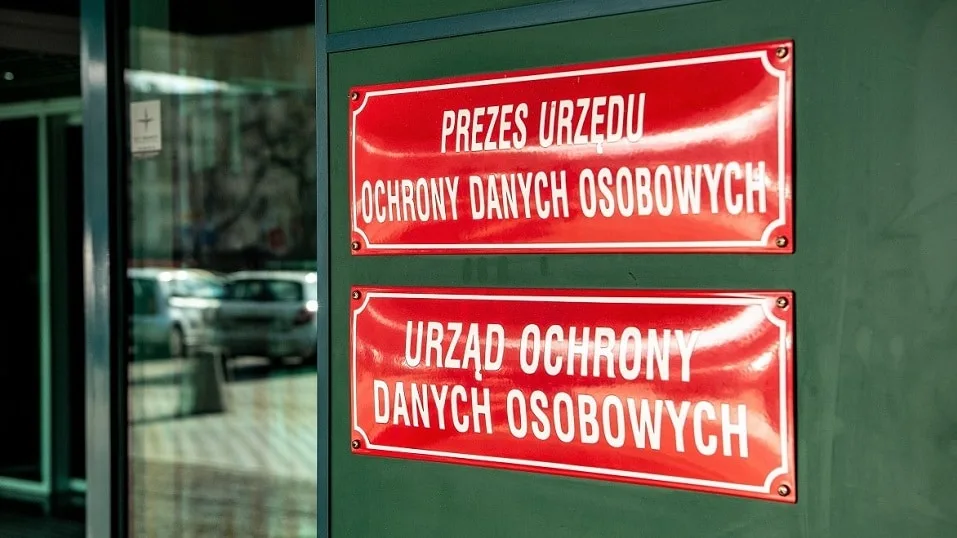
Poland’s personal data protection authority UODO has fined the private SOKRATES primary school in Gdańsk PLN 52,511 for unlawfully recording pupils in classrooms. The school cited safety reasons but did not establish a lawful basis for processing images of children during lessons, the regulator said. The decision is not yet final.
UODO also ordered the school to stop using video surveillance to process pupils’ personal data in teaching rooms within 14 days of receiving the decision.
Classroom surveillance operated for years
The school’s camera system was installed in 2007 and covered parts of the building, including classrooms. In 2019, the installation included 13 cameras and two recorders running continuously. The headteacher and a technician responsible for the system could access recordings.
The school said the equipment was intended to protect pupils, investigate disputes and reconstruct accidents. However, it had not properly analysed the risks associated with recording children or assessed whether constant classroom surveillance was necessary.
A UODO inspection in 2019 identified problems involving the legal basis for processing data, safeguards and documentation.
Safety objectives do not eliminate GDPR requirements
The school argued that, as a private institution, it was not subject to certain detailed provisions of Polish education law on surveillance. UODO rejected the proposition that this exempted it from the EU General Data Protection Regulation.
Article 6(1) of the GDPR requires a lawful basis for personal data processing. The school failed to demonstrate that it had a valid basis for recording pupils during lessons.
The authority also considered proportionality: even legitimate safety concerns do not automatically justify constant monitoring, especially where less intrusive measures such as appropriate supervision and access controls may be available.
Recording counts as processing even if footage is not watched
UODO rejected the school’s argument that recordings not routinely reviewed were not being processed. Under the GDPR, collecting, recording, storing and deleting personal data are all processing operations.
Classroom footage can capture pupils’ behaviour, interactions with peers and teachers, and daily educational activities, requiring careful evaluation of the impact on children’s privacy.
Risk assessment and contracts also questioned
The authority found the school had not adopted appropriate technical and organisational safeguards based on a proper risk assessment, as required by GDPR Article 32.
It also identified deficiencies in the data processing agreement with the technician, which did not adequately cover the pupils’ classroom images, and in the record of processing activities. The regulator issued reprimands for those failures.
Fine and order remain subject to review
The PLN 52,511 administrative penalty concerned processing personal data without a lawful basis. The decision, dated 13 August 2026 and identified as ZSZZS.421.9.2019, remained non-final when UODO publicised it in November.
Sources: Polish Personal Data Protection Office (UODO), 18 November 2026; decision ZSZZS.421.9.2019 of 13 August 2026; EU GDPR.