“Customs clearance in Hamburg starts ten days before the ship arrives. In Poland, it starts only after unloading,” says Maciej Kisiel, a board member of the Polish Fish Processors Association.
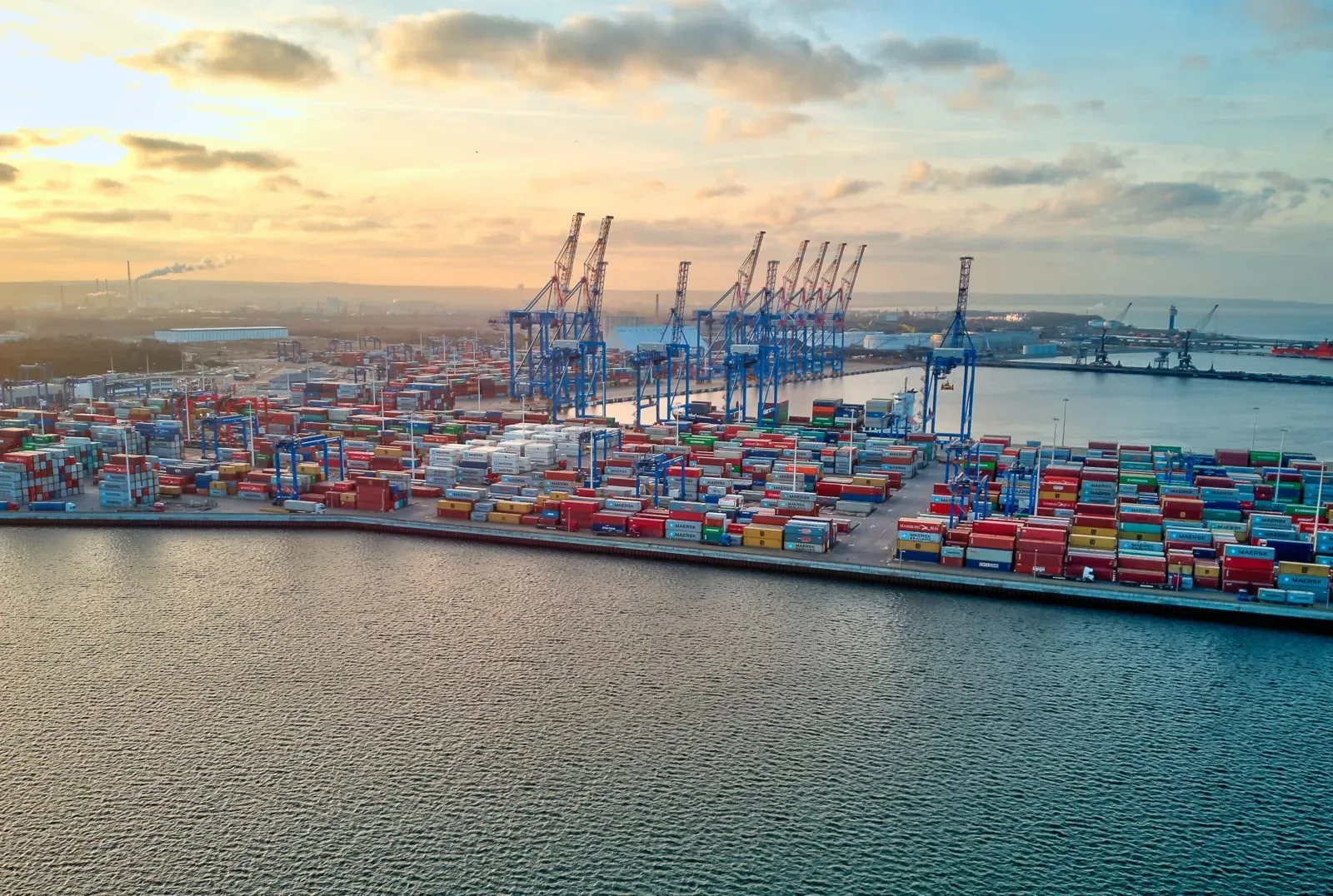
A container carrying frozen goods arriving at a Polish port may be subject to inspections by as many as four different authorities. Each has its own booking process, document flow and calendar, while inspection dates are coordinated separately, often by phone or email. In Hamburg and Rotterdam, the same activities are coordinated through a single system.
The Polish Fish Processors Association argues that the difference does not result from EU law, but from how the rules are organised and applied. The legal framework for official controls is the same across the European Union under Regulation 2017/625. The regulation nevertheless leaves member states discretion over how their national authorities organise their work. According to the association, this is where the difference arises between Gdynia, Gdańsk and Szczecin on the one hand and ports such as Hamburg on the other.
Where the delay actually begins
In Hamburg, freight forwarders begin preparing customs clearance around ten days before the vessel arrives. They submit the container number, bill of lading number and onward transport method through an import platform and receive information from the carrier’s entry summary declaration in return. The customs declaration is filed before the goods arrive.
“When the terminal confirms unloading, the platform automatically forwards the status and the declaration is confirmed without human intervention. The same platform also displays the status of veterinary documents and allows the inspection slot to be booked,” Kisiel says.
In Western European ports such as Rotterdam, an inspection portal gives all parties a complete view of scanner and physical inspections from notification to release. In Poland, the process may still begin with a PDF sent by email. Customs agencies manually enter the same information into temporary-storage declarations, customs declarations, veterinary documents in the EU system and terminal booking systems. Container number, weight, commodity code and consignor details may be re-entered several times, while inspection dates for individual services are arranged separately.
Consequences of poorly coordinated inspections
Inspections performed one after another instead of in parallel extend container dwell times, and each additional day generates costs for the importer. A container unloaded on Saturday may wait until Monday because declaration confirmation requires human involvement. According to industry representatives, control procedures in Polish ports can take from several days to several weeks, compared with roughly two to five days in major Western European ports.
This affects routing decisions by importers. The association estimates that around one quarter of the sector’s shipments now reach Poland through Western European ports. It also estimates that the Polish state budget loses more than PLN 100 million a year as a result. The organisation argues that annual investment of around PLN 3 million could materially improve the process.
“We are not asking for fewer inspections. Each of them has a purpose and nobody in the industry disputes that. We are asking for the container to be positioned once rather than several times, and for the authorities to coordinate inspection dates among themselves rather than through the customs agent,” Kisiel says. “We can also see that inspection authorities are working with staffing levels that have not kept pace with growth in port volumes. Without more staff, procedural improvements alone will not be enough.”
Industry recommendations
In recommendations submitted to the Working Group on Border Crossings at the Ministry of Infrastructure, the association identifies four priorities:
- a single booking process and one positioning of the container for all inspection services;
- a shared electronic inspection calendar;
- access for authorised customs representatives to data from the carrier’s declaration, combined with automatic confirmation of declarations submitted before the goods arrive;
- a common IT platform connecting existing systems rather than creating another separate system.
The issue has direct relevance for the Integrated Border Inspection Point being built at the Port of Gdańsk, where all inspection authorities are expected to have offices. Completion of the first stage of the project is planned for 2030.
“Putting all the services physically under one roof will only bring results if a single coordinated inspection and a common data flow are introduced at the same time. We therefore propose that the one-inspection procedure should be implemented and tested before the facility opens, so that it can operate in the target model from day one,” Kisiel explains.
Dialogue with the public administration is continuing. The Ministry of Infrastructure has established a Working Group on Border Crossings with representatives from industry, ports, customs agencies and inspection authorities. The causes of the problem have been described jointly; what is still missing, according to the association, are decisions that would translate into shorter clearance times.