
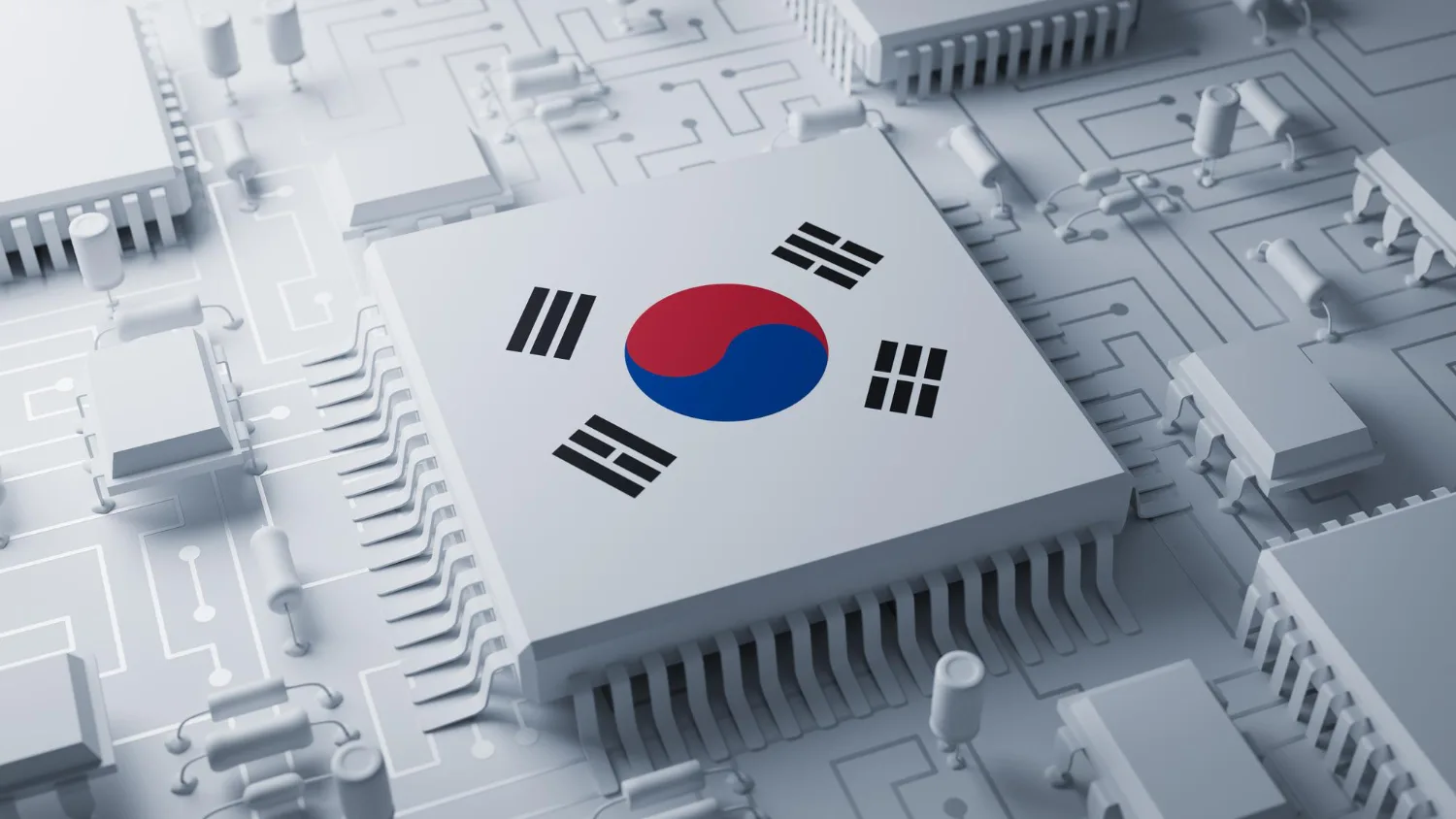
South Korea’s goods exports surpassed $1 trillion in 2026 on 19 November, more than a month before the end of the year, according to the Korea Customs Service. The milestone, which the source describes as making South Korea the fourth country to reach that annual export level, reflects strong demand for semiconductors and computer equipment as technology companies expand artificial intelligence infrastructure.
The Korea Customs Service said the cumulative value of exports reached $1 trillion at 2:09:38 p.m. Korean time on 19 November. South Korean companies exported goods worth approximately $709.3 billion during the whole of 2025.
The cumulative figure for 2026 is therefore already more than $290 billion above the previous full-year total. That does not establish year-on-year export growth of 41%: such a rate would require comparing the same periods in both years.
Demand for AI memory chips drives exports
The semiconductor industry has been the main growth engine. Global technology companies are investing in data centres and AI systems, increasing orders for memory chips and equipment used to run artificial intelligence models.
Samsung Electronics and SK Hynix, two of South Korea’s leading memory producers, are among the beneficiaries of stronger demand. High-bandwidth memory (HBM), used in AI computing accelerators, has become particularly important, alongside DRAM and NAND memory used in servers and data-storage infrastructure.
Higher memory-chip prices are also lifting export values. A rise in unit prices can increase overseas sales revenue even when the number of chips shipped grows more slowly.
As a result, the export figures indicate stronger semiconductor revenues but do not, on their own, reveal how much physical chip shipments have increased. That would require separate information on volumes, unit prices and the product mix.
Exports rise in 16 of 20 major product groups
Other South Korean industries have also recorded stronger overseas sales. Exports excluding semiconductors increased by 20% during January–October 2026 compared with the same period of 2025.
Export values rose in 16 of the 20 main product groups tracked in the trade statistics. Computer manufacturers and electrical-equipment producers were among the industries benefiting from higher international demand.
Small and medium-sized exporters reach $107.6 billion
South Korean small and medium-sized enterprises exported goods worth $107.6 billion in the first ten months of 2026, a year-on-year increase of 9.9%. The figures suggest stronger foreign demand extends beyond the country’s largest industrial groups.
For smaller companies, overseas sales contribute to manufacturing activity and business revenue. However, export value alone does not show how far employment or profit has increased.
South Korea joins the group of trillion-dollar exporters
The $1 trillion milestone places South Korea alongside Germany, the United States and China in the group of countries identified by the source as having reached that level of annual goods exports. Germany and the US passed the threshold in 2006, followed by China in 2007.
South Korea’s export economy has expanded substantially over six decades. Its overseas sales reached $100 million in 1964 and exceeded $700 billion in 2025. Memory-chip manufacturing has become one of its major strengths, supported more recently by investment in AI infrastructure.
Strong semiconductor prices increase export revenue, but they also leave part of the country’s overseas earnings exposed to the global memory cycle. A drop in DRAM or NAND prices could reduce export values even if the number of chips shipped did not fall by the same proportion.
Sources
Korea Customs Service, announcement of 19 November 2026; South Korea’s Ministry of Trade, Industry and Resources, announcement of 19 November 2026.
Original Polish-language report: CEO Magazyn Polska, published 20 November 2026.