

Polish biotech companies only made their debut on the Warsaw Stock Exchange (WSE) a few years ago and, for the most part, they have garnered the attention of mainly local investors. This is because foreign funds tend to invest in larger companies, none of which from the biotech sector are currently listed on the WSE’s top 20 (WIG20). However, according to Łukasz Kosiarski, an analyst at Ipopema Securities, in the coming years, along with the progress of promising projects, the Polish biotech sector will also pique the interest of significant foreign capital. In the immediate future, the companies are likely to benefit from cuts in interest rates, which will lower the cost of capital.
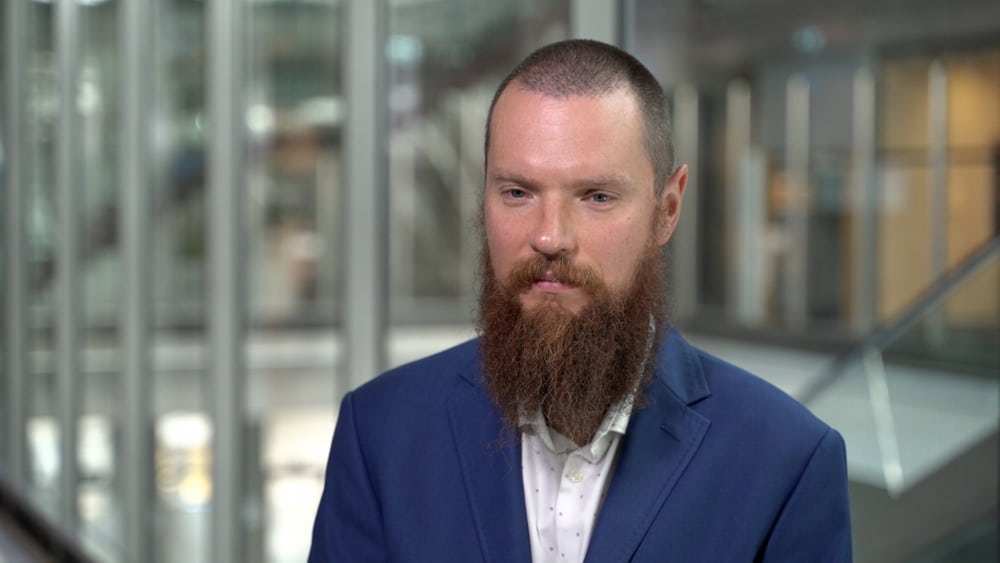
“The entire development of stock market biotechnology has occurred over the last few years when several large companies appeared on the NewConnect market. Only from then did investors start to gain experience and understand this sector, as they had no earlier opportunities. The sector is one of the most interesting on the stock exchange due to its uniqueness. Most of these companies ‘burn cash’ for a large part of their presence on the exchange, as positive cash flows from drug sales are delayed far into the future,” says Łukasz Kosiarski.
In the United States, almost 200 companies were traded below the value of their cash balances, and debuts essentially came to a halt. The situation in Poland also led to substantial drop rates. One of the more recognized and long-listed (since 2011) companies in the industry, Ryvu Therapeutics, lost two-thirds of its value between mid-2020 and mid-2022. However, it is now largely close to recovering all of its losses from this period.
Over the past few months, we have had a very successful offer [public shares – red.] of Ryvu, where even half a year earlier, no one thought it would end in such success, in addition to a high-value agreement with BioNTech. These last months also brought another secondary offer in Molecure, which also essentially succeeded 100 percent,” recalls the Ipopema Securities analyst.
Most Polish biotech companies are still in the early stages of development. Ryvu Therapeutics, BioMaxima, Genomtec and Bioceltix are part of the wide index WIG, only recently graduated from the alternative NewConnect market. But among the WIG20 “blue chips,” there are no biotech companies. Asseco Poland, associated with the IT sector, and CD Projekt, associated with the gaming industry, potentially represent the most modern among this group. According to the analyst, these firms serve as examples of the success that awaits Polish biotechnology.
“At this time, the market is still fairly young, the companies are not too large in terms of market capitalization and are not very liquid,” explains Łukasz Kosiarski.
“I think that if any of these companies achieve success, enter the WIG20, show some groundbreaking data or sign a large contract that also increases their awareness among global investors, the latter will appear. We have had examples of this in other sectors in Poland, such as CD Projekt, which initially mostly attracted local investors, later near abroad, and now virtually the whole world is interested in such a company. I can imagine a scenario in which Polish biotechnology also goes this way,” he adds.
The appeal of the industry to investors is directly related to the long wait time for potential profits. The entire process of developing new drugs or therapies roughly takes 10 years, with the first few years primarily focused on incurring costs that increase as they progress through subsequent stages of research.
“Polish biotech companies, so far, assume that as long as the costs are not overwhelming, which refers to the stage of the second clinical phase, they finance the process independently, of course, considering grants, as it’s a crucial element. However, upon reaching the second phase, that is, the first effectiveness results the default scenario is the sale of the project to a potential partner, or Big Pharma, which will introduce the drug to the market,” explains Łukasz Kosiarski, an analyst at Ipopema Securities.