
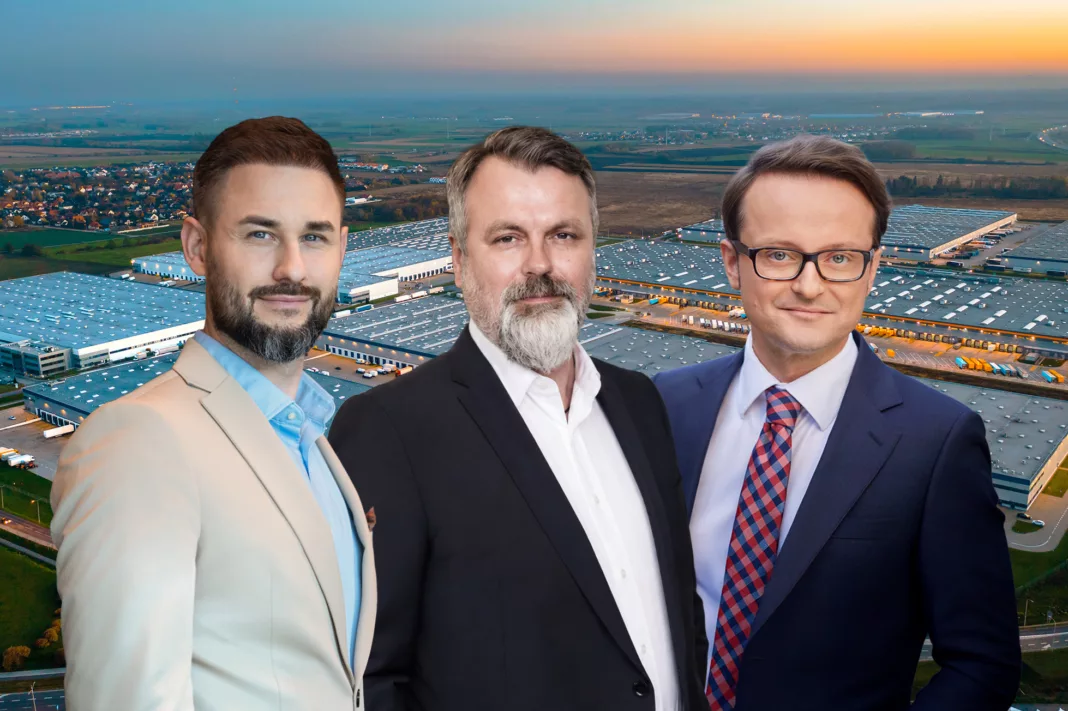


Today’s tenants expect spaces that can be tailored to their processes, scaled alongside business growth and equipped with automation to help address labour shortages. That said, costs remain paramount – from rent levels and the predictability of service charges, says Jakub Kurek, Head of Industrial and Warehouse, Newmark Polska.
We are entering an era of highly specialised warehouses, where individual tenant requirements are increasingly shaping new warehouse developments. This shift calls for greater flexibility and more meticulous planning from developers.
“We design our parks to accommodate both warehousing and manufacturing, depending on tenant needs. Buildings are delivered in modular units that can be easily divided or combined, enabling seamless adaptation to individual client requirements. During foundation work, we reinforce the floors to support heavy manufacturing machinery in the future or mezzanines for e-commerce tenants. As a result, space can be flexibly adapted to complex logistics operations – from high-bay storage to order picking and fast returns handling,” explains Tomasz Pietrzak, Leasing Director Poland, MLP Group.
Jakub Kurek from Newmark Polska emphasises that space adaptation is not limited to new developments: “Well-designed existing facilities can also be modernised, provided they meet certain technical standards. Class A buildings typically offer real scope for modifications – both in terms of building systems and space layout. The only limitations arise where ceiling heights are insufficient or fire safety standards are not met.”
Flexibility and customisation over off-the-shelf solutions
According to Tomasz Pietrzak, modifying technical infrastructure is the most demanding and costly aspect of any project. “Access to sufficient power capacity for automation and manufacturing is critical, as are fire safety systems that must be tailored to the type of goods stored. Many projects also require reinforced floors and foundations to support heavy machinery or high-bay racking, as well as adjustments to loading bays and dock levellers. We are also seeing growing demand for temperature and humidity control. Meeting these needs requires advanced HVAC systems, which significantly drive up development costs,” explains the expert from MLP Group.
Tenants also expect upgrades that immediately improve working conditions. These include higher-quality office and staff amenities, better natural light in picking areas, compliance with BREEAM certification, and smart LED lighting systems. Air quality and increased air exchange rates are also becoming increasingly important.
One market, multiple needs. From e-commerce to data centres
With growing operational complexity and increasing pressure for efficiency, off-the-shelf solutions no longer suffice. According to Jakub Kurek, there is no such thing as a one-size-fits-all leasing model. Space must support the business strategy, not the other way round.
“Driving these demands is the growing role of automation, which helps address the challenges of a tight labour market. We are increasingly talking to tenants about solutions that reduce their reliance on manual labour. This trend, seen in Asia for some time, is now gaining momentum in Poland,” notes the expert from Newmark Polska.
The differences between market segments are becoming highly pronounced. “Manufacturers tend to think long-term, typically opting for 10- to 15-year leases. Their key requirements include technical specifications such as specialised lighting, ventilation, increased grid connection capacity and dedicated infrastructure. In e-commerce projects, storage height – often exceeding 12 metres – is critical. Meanwhile, traditional retailers remain cost-sensitive, prioritising energy-efficient solutions like photovoltaics or heat pumps that directly lower service charges,” says Tomasz Pietrzak.
Logistics operators, whose requirements change with every new contract, represent a distinct group. For them, a space must do more than just fit their current operating model – it has to support future growth. “An ideal warehouse must accommodate increasingly complex supply chains and the rapid expansion of e-commerce. What matters is the capacity for high-intensity operations, access to robust infrastructure and power, as well as the ability to implement automation to improve both scale and efficiency. Ultimately, the key decision driver is not the rent itself, but the total cost of operating in a given location, including labour availability, process efficiency and expansion potential,” explains Daniel Korbus, Member of the Board, Chief Operating Officer, XBS Logistics.
The growing specialisation has naturally led to the emergence of new types of tenants whose requirements go far beyond current standards. Data centres are a prime example, significantly raising the bar for infrastructure. “This segment is already expanding rapidly across Western Europe – we expect a similar trend to gain traction in Poland, so we need to be ready. Data centre projects require massive amounts of power, which in practice dictates where they can be built and whether a project is feasible,” says Jakub Kurek.
Costs under scrutiny. Rent is only part of the equation
Despite the market’s growing flexibility, cost remains a primary decision driver. However, the focus is shifting from base rent to total occupancy costs. “Service charges, which have spiked in recent years, are equally important. If they are not properly estimated before a lease is signed, tenants may be caught off guard by the level of additional charges when they receive their first reconciliation statement,” warns Jakub Kurek.
As a result, contractual safeguards are becoming vital to protecting tenants’ interests in a volatile economic environment. “When advising clients, we look closely at rent indexation clauses and security deposits. For companies planning to scale their operations within a facility, we negotiate rights of first refusal or guaranteed expansion options, allowing them to secure extra warehouse space on pre-agreed terms,” explains Jakub Kurek.
These clauses are especially crucial for logistics operators who grow alongside their clients and experience significant fluctuations in the scale of their operations. “Having expansion options within a logistics facility or park allows a company to grow without the need to relocate. At the same time, flexible lease terms help businesses manage risks more effectively in a sector where demand is increasingly volatile,” says Daniel Korbus.
Towards informed decisions
The warehouse market is maturing, with tenants becoming far more selective. The choice of a building is now rarely driven by a single factor.
“This is no longer a ‘take-it-or-leave-it’ market, but one that allows for negotiation and value creation on both sides. Tenants are taking a broader view, analysing not only rents but also total occupancy costs, lease flexibility and growth potential. Advisory support is becoming essential in these complex processes to translate business needs into concrete lease clauses. The market has matured significantly in recent years and this trend is expected to continue. Moving forward, automation, operational efficiency and green solutions will play an ever greater role, becoming standard across the market,” concludes Jakub Kurek, Newmark Polska.