
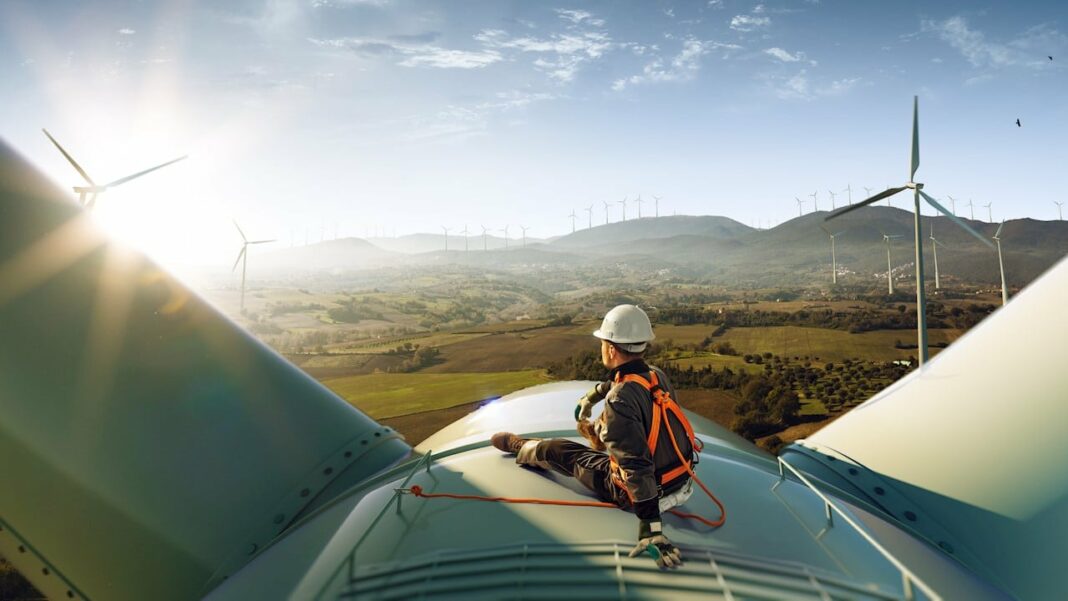


Even though Central-Eastern Europe does not have a major presence in the global renewable energy sector, it has seen significant growth between 2018 to 2022. During this period, the region increased its renewable energy capacity by over 33 GW, resulting in a total capacity of 115 GW by the end of 2022. Particularly noteworthy is Poland, mainly due to the amount of solar and wind energy it has connected to the grid.
Poland still relies heavily on coal-fired power plants, which produce over 70% of the country’s electricity. This is the highest percentage among all EU member states. However, it’s noteworthy that in recent years, Poland has been implementing a program to gradually reduce the use of fossil fuels and increase the use of renewable energy sources (RES). Analysts from EMIS (ISI Emerging Markets Group) examined Poland’s renewable energy sector, as well as the entire Central-Eastern Europe’s[1]. The findings were compiled and made available in the “Poland Renewable Energy Sector Report 2023-2024” and “CEE Renewable Energy Sector Report 2023-2024”.
Central-Eastern Europe
EMIS analysts highlight that in 2022 the renewable energy capacity supplied by Central-Eastern Europe (CEE) – 115 GW – only made up 15% of the total renewable energy supply in Europe (globally it was already 3.4%). Importantly, the figure of 115 GW represents a consecutive increase in the use of renewable energy in the CEE region. In 2018, the figure was 81.9 GW and it has been rising ever since. The dominant source of renewable energy in the region remains hydropower, providing up to 50 GW by the end of 2022. Meanwhile, solar and wind energy capacities amounted to 32 GW and 26 GW, respectively.
The CEE country with the highest installed capacity from renewable sources is Turkey. The country can boast as much as 55.9 GW – of which 31.6 GW comes from hydropower, 11.4 GW from wind, 9.4 GW from solar, 1.9 GW from bioenergy, and 1.7 GW from geothermal energy. It’s worth emphasizing that Turkey is the undisputed leader in Central-Eastern Europe when it comes to geothermal energy capacity (possessing 99.2% of the total). The only other CEE countries using this energy source are Croatia and Hungary, which have a mere 0.01 GW and 0.003 GW of installed capacity, respectively.
Poland in comparison to CEE
As noted by EMIS analysts, Turkey continues to lead Central-Eastern Europe in terms of installed capacity from RES. Poland comes second, with 22.7 GW of installed capacity coming from RES at the end of 2022. Poland ranks 10th in Europe in terms of installed capacity from RES and has a 3% share in the total renewable energy capacity of Europe. This share has doubled over the last five years (it was only 1.5% in 2018). Poland performs best in the solar power sector, with a 5% share, it ranks seventh in Europe in terms of installed capacity.
Poland in focus – Solar and Wind
Renewable energy sources make up about 40% of Poland’s overall energy mix. However, despite this, coal-fired power plants still produce as much as 70% of the country’s total electricity (renewable energy sources provide just 20%). Photovoltaic farms provide the bulk of installed capacity from renewable energy sources – 19% of the total energy (and 49% of RES. Wind farms are next, accounting for 13% of the total (or 35% of RES).
Both the solar and wind energy sectors have seen significant growth in recent years. The capacity of photovoltaic installations increased from 300 MW in 2017 to 11.2 GW at the end of 2022. In Poland, there are currently more than 1.1 million small photovoltaic installations with a capacity of less than 50 kW. In 2022, Poland connected photovoltaic installations with a capacity of 4.9 GW to the grid, the third-highest level in the European Union – after Germany and Spain.
Between 2017 and 2022, Poland added 2.2 GW of installed capacity in wind power. However, the pace of wind energy use is slower than that of solar energy, mainly due to the introduction of the “10H rule” in 2016. The regulation requires wind turbines to be placed at least ten times their height away from the nearest house or nature reserve.
Plans for the future
In April 2023, Poland’s Ministry of Climate and Environment presented a scenario for Poland’s Energy Policy until 2040 (PEP 2040), setting the framework for the country’s energy transition. By 2030, the total installed capacity from renewable energy sources, including solar, wind, biomass, biogas, and hydropower, could reach 50 GW. Looking even further into the future, it is predicted that by 2040 this capacity will increase significantly to 88 GW. In addition, Poland is increasingly focusing on nuclear power, with the installed capacity planned to reach 7.8 GW by 2040, covering about 23% of national electricity demand.
Sources:
EMIS Insights “Poland Renewable Energy Sector Report 2023-2024”
[1]The report defines Central-Eastern Europe as including: Bulgaria, Croatia, Czech Republic, Estonia, Lithuania, Latvia, Poland, Romania, Slovakia, Slovenia, Turkey and Hungary