
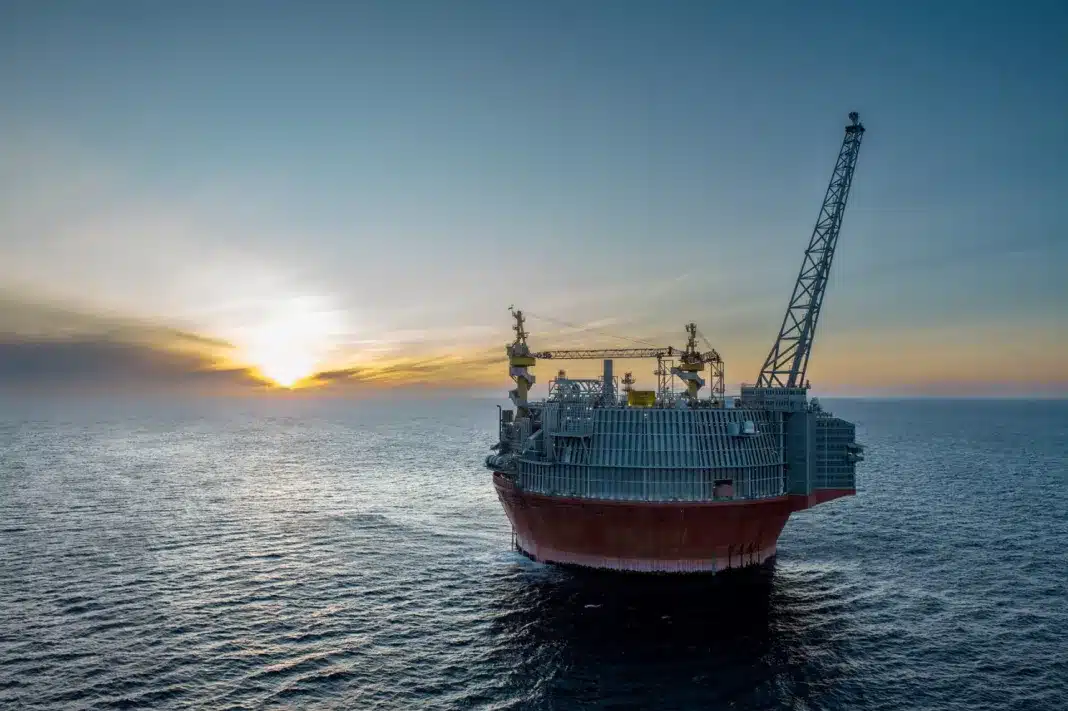

ORLEN Upstream Norway has signed an agreement with Vår Energi to acquire a 20% stake in five licences on the Norwegian Continental Shelf. The key element of the package is the producing Goliat field in the Barents Sea, together with proven resources in the nearby Goliat Ridge area. Completion of the transaction is still subject to approval by the Norwegian authorities.
According to ORLEN, the acquisition is expected to increase the oil and gas resources attributable to its Norwegian subsidiary by nearly 60 million barrels of oil equivalent. This would expand ORLEN Upstream Norway’s total resource base by around 15%.
“With a single transaction, we are increasing our oil and gas resources in Norway by 15%. This acquisition opens a new chapter in the history of the ORLEN Group’s operations,” said Ireneusz Fąfara, CEO of ORLEN.
Goliat and Goliat Ridge Gain Strategic Importance for ORLEN
The purchase covers a 20% interest in five licences containing both operating production facilities and prospective resources. At the Goliat field alone, ORLEN’s share is expected to account for more than 36 million barrels of oil equivalent. A further approximately 22 million boe is expected to come from the planned development of Goliat Ridge.
In total, the portfolio of assets covered by the agreement is expected to provide the Polish energy group with around 58 million boe, including nearly 3 billion cubic metres of natural gas. For ORLEN, which has been developing production in Norway as one of the pillars of gas supply to Poland in recent years, the transaction represents a strengthening of its own resource base.
The company has announced that, once the stakes are acquired, it will participate in further investment in these areas. Current plans include drilling additional production wells at Goliat and beginning commercial production of gas that has so far been reinjected into the reservoir.
Production Expected to Triple
ORLEN estimates that production from the acquired assets could rise from around 4,000 barrels of oil equivalent per day at present to approximately 12,000 boe per day by the end of the decade. This growth is expected to be supported by investment carried out over the next four years.
“The Goliat and Goliat Ridge fields will produce at least until 2040, providing ORLEN Upstream Norway with stable revenue and favourable conditions for further growth,” said Wiesław Prugar, ORLEN Management Board Member for Upstream.
Goliat began production in 2016, although the field itself was discovered 16 years earlier. It is one of the more important projects in the southern part of the Barents Sea, an area with significant hydrocarbon potential but also subject to strict environmental requirements.
An Unusual Platform in the Barents Sea
Production from Goliat is carried out using a floating production, storage and offloading unit, or FPSO. The vessel serving the field differs from most installations of this kind. Rather than a conventional ship-shaped hull, it has a circular design intended to improve stability in the demanding conditions of the Barents Sea.
The installation can produce up to 100,000 barrels of oil per day, while its tanks can store around one million barrels of crude. Greater storage capacity reduces the frequency with which oil must be collected by tankers, which matters both for operational safety and transport planning.
According to ORLEN, the unit is powered by electricity supplied from shore, with more than 90% of that energy coming from renewable sources. The group states that emissions intensity associated with production at Goliat is around 2 kg of CO2 equivalent per barrel of oil equivalent. By comparison, the global average cited in the Offshore Norge Climate and Environmental Report 2025 is 16 kg CO2e per barrel.
The Gas Potential of the Barents Sea
Goliat is located in the southern Barents Sea. The area was opened to exploration by Norwegian authorities in the late 1970s, while also being subject to additional environmental restrictions.
According to Norwegian administrative data, more than 9 billion barrels of oil equivalent of recoverable resources remain in the southern part of the basin. Around 55% of this potential consists of natural gas. The existing Goliat infrastructure could facilitate the development of further projects in the future, particularly gas-related projects.
This is also important from the perspective of the European energy market. Norway remains one of the European Union’s most important gas suppliers, while ORLEN’s own interests in production projects on the Norwegian Continental Shelf are intended to strengthen Poland’s security of supply.
How the Ownership Structure Will Change
Once the required administrative approval has been obtained, Vår Energi will remain the operator of the Goliat field with a 45% stake. Equinor will hold a further 35%, while ORLEN Upstream Norway will acquire 20%.
For the ORLEN Group, the transaction forms part of its strategy to increase its own oil and gas production outside Poland. Expanding its portfolio of Norwegian assets is intended to reduce the group’s dependence on commodity purchases on the market and increase its resilience to price volatility and geopolitical risk.