

Poland’s transport industry remains one of the strongest in Europe, but its competitive advantage is increasingly being put to the test. Carriers are facing a slowing market, rising costs, geopolitical uncertainty, driver shortages and an increasingly complex regulatory environment. At the same time, the energy and digital transition could become an opportunity for the sector, provided it is supported by stable rules, access to financing, infrastructure development and more efficient administration.
Eurostat data confirm the scale of Polish carriers’ importance. In 2024, road freight transport across the European Union generated a total of 1,869 billion tonne-kilometres, while Poland, with 368 billion tonne-kilometres, remained the largest market in the EU, accounting for almost 20% of the entire volume. At the same time, domestic data point to a deterioration in business conditions. According to Statistics Poland, 2,138.5 million tonnes of cargo were transported in Poland by all modes of transport in 2024, down 3.9% year on year. Road transport alone recorded a 4.2% decline in freight volumes.
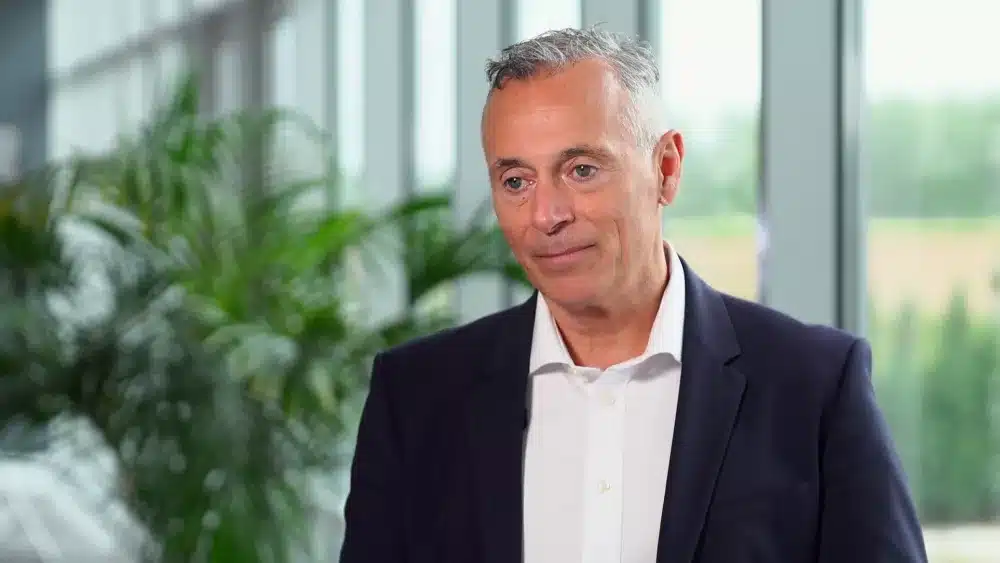
“Poland has become a dominant force in road transport, not only in Central and Eastern Europe. Polish transport companies and their trucks are highly visible across Europe,” Robert Grozdanovski, Vice President of Volvo Trucks for Central, Eastern and Eastern Europe, told Newseria.
One of the Polish market’s advantages, he notes, remains the availability of drivers. Poland benefits both from its relatively large population and from the inflow of workers from neighbouring countries who are willing to work in the sector. In the longer term, however, the industry will need to ensure a steady inflow of new talent.
“Even if we currently have a fairly good workforce of drivers, we need to make sure that this profession attracts younger generations. The education system and skills-development centres must make an effort to provide us with the right workforce in the future, when many current drivers retire,” Grozdanovski says.
The staffing problem is one of the factors that could limit the competitiveness of Polish carriers on the European market. Data from the General Inspectorate of Road Transport show that, at the end of 2025, there were 43,924 valid Community licences for international road haulage and 301,320 certified copies issued for vehicles above 3.5 tonnes. A year earlier, the figures stood at 45,054 licences and 304,120 copies respectively. The number of driver certificates issued to citizens of non-EU countries has also declined.
“The shortage of drivers is becoming an increasingly serious problem on the horizon. The entire process of legalising foreign workers for employment in the transport industry is a complete tragedy. Prolonging this situation will mean that we lose competitiveness in the European cabotage market even faster,” says Jan Załubski, President of Zet Transport.
“The industry is talking about a severe slowdown, even the most serious crisis in two decades. We can indeed see many bankruptcies, a weaker market and disruptions in export supply chains, but the situation differs from company to company.”
The current slowdown is particularly painful for smaller companies, which for years have formed the backbone of Poland’s road transport sector. This is also visible in data on restructuring proceedings. According to an MGBI report, 635 transport companies entered restructuring proceedings in 2024, including 534 firms involved in road freight transport.
Załubski stresses that some larger and better-organised companies are still investing, but the current environment requires an entirely new management model. Carriers must analyse the profitability of contracts, customers, routes and vehicles far more precisely. Increasingly, they also need advanced digital tools.
“Very advanced IT methods and AI are necessary in our industry. I mean real-time data analysis and AI dashboards that allow companies to assess profitability almost online: per kilometre, per truck and per customer,” the Zet Transport president says. “The answer is to change the way vehicles are managed and to seek maximum optimisation in every area.”
Investment decisions in the TSL sector are strongly influenced by the current macroeconomic and geopolitical environment. Armed conflicts, instability in fuel and commodity markets, and broader economic uncertainty mean that some businesses are limiting expenditure to replacement investments. Statistics Poland data confirm this trend: in 2024, revenues from transport services rose by 3.5% to PLN 489 billion, but the cost of services sold increased much faster, by 10.2%, to PLN 453.2 billion.
“Conflicts and uncertainty, both those linked to the war across our eastern border and the situation in the Middle East, are discouraging companies from investing for the longer term. Fleets are primarily replacing existing vehicles, which means this is replacement investment rather than fleet expansion,” says Adrian Wilisz, Chief Operating Officer at OMEGA Transport.
In his view, geopolitical uncertainty and fuel-market conditions will remain the biggest strategic risks in the coming years. Fluctuations in the prices of fuel and oil-related commodities affect not only transport costs, but also the functioning of entire supply chains.
Despite the difficult environment, the energy and environmental transition could offer Poland’s transport sector an opportunity to further strengthen its competitive position.
“It is important to make the fullest possible use of available funding and to establish a pathway for the entire transformation cycle, starting with road infrastructure and the purchase of transport assets,” Wilisz says.
Issues related to the future of the sector, including decarbonisation, electrification, digitalisation, financing, safety and fleet management, were among the key themes of the seventh edition of the 4Poland – Future of Transport Transport Solutions Fair, held on 11 June 2026. The event demonstrated that the industry’s transformation is no longer limited to replacing vehicles. It now involves an entire ecosystem encompassing energy, infrastructure, data, financing, insurance, servicing and workforce development.
Truck manufacturers say they are technologically ready for decarbonisation, but point out that access to low- and zero-emission vehicles alone will not be enough unless suitable infrastructure and incentives for carriers are developed in parallel. Industry representatives also stress that regulations should provide a framework for development rather than place excessive burdens on businesses. Transport is a heavily regulated sector, and frequent legal changes make it difficult for companies to plan investments and maintain competitiveness.
“We are ready, and our products have been ready for several years, but the right ecosystem and political momentum are missing. More action is needed from lawmakers and politicians to establish rules that guide us towards more sustainable transport,” Grozdanovski says.
“Running a transport company today is genuinely not easy. There is an enormous number of regulations, and it is difficult for smaller companies to remain compliant with all requirements. Overall, the European Union regulates too much. We should set clear boundaries, but at the same time give the industry more freedom to develop and establish standards.”
Carriers themselves also point to overregulation. In their view, some national and EU rules, including regulations introduced under the Mobility Package, have increased the cost of doing business and weakened the competitiveness of Polish companies against firms from other countries.
“What has been implemented into national law under the Mobility Package is counterproductive for us. High driver employment costs mean that many companies are considering relocating their operations, for example to Romania. It would be good for the industry and policymakers to develop a shared understanding of this problem,” Załubski says.
“The European market is a major advantage for us. Nearly 500 million consumers and open borders enabled Poland’s transport industry to grow. However, various regulations in individual countries are gradually closing this market and disrupting the free and competitive flow of services.”
According to experts, the coming years will determine whether Poland can retain its dominant position in European road transport. Stable regulations, faster administrative procedures, access to drivers, infrastructure development, financing for the transition and the digitalisation of companies will all be crucial. Without these elements, the advantage built by Polish carriers over the past two decades may gradually weaken, particularly among smaller businesses.