
Debt financing linked to data centres and artificial intelligence infrastructure exceeded $680 billion in the first ten months of 2026, more than five times the $130 billion raised in all of 2023, according to the Federal Reserve. Its latest financial stability report warns that increasingly complex ties between technology companies and financial institutions make the scale of borrowing and risk harder to assess.
By the Editorial Team. Adapted from the Polish original, published on 13 November 2026 at 21:45 UTC.
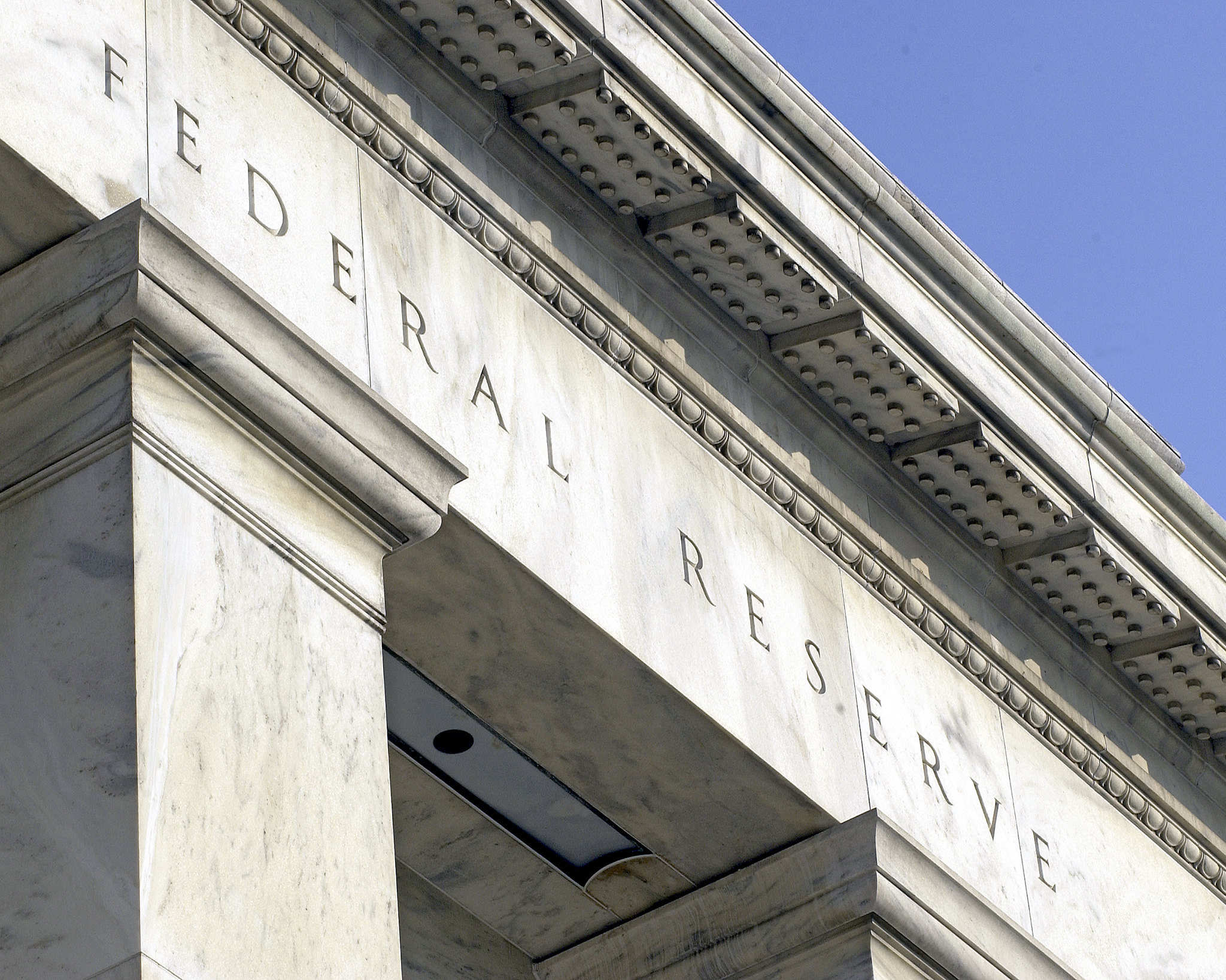
Photo: Official Federal Reserve Photo. U.S. government work.
AI infrastructure debt tops $1.1 trillion outstanding
The Fed’s November financial stability report shows how rapidly investment in data centres and AI infrastructure is reshaping the US debt market. The more than $680 billion raised between January and October includes bonds, loans and other debt instruments associated with the sector.
Large technology companies with investment-grade credit ratings accounted for most of that financing. AI infrastructure’s share of debt issuance by investment-grade non-financial companies rose from less than 6% in 2023 to about 31% in 2026.
The stock of debt accumulated through earlier issuance is also growing. The Fed estimates that publicly issued debt linked to AI infrastructure exceeded $1.1 trillion outstanding in October 2026. That figure does not capture all financing provided outside public debt markets.
Private financing is harder to measure, the Fed notes. Its issuance analysis covers public transactions and identifiable private offerings, but not every agreement negotiated directly between investors and companies.
Data centre financing moves beyond corporate bonds
Large technology companies initially funded data centre expansion mainly from their own resources and corporate bond issuance. Credit funds, project finance and instruments backed by future revenue or assets are now playing a growing role. Long-term leases and guarantees create additional commitments.
In project finance, debt repayment depends on the revenue generated by a particular investment. A data centre developer can borrow against a long-term lease signed with a large technology company.
This can fund expensive construction without directly increasing the debt of the principal customer. It also links the developer’s finances to the tenant’s creditworthiness and the project’s ability to generate revenue.
Similar arrangements are used to finance graphics processing units, or GPUs, for AI applications. Hardware manufacturers may guarantee a specified value for equipment pledged as collateral, helping other companies obtain financing to buy it.
The Fed also points to large technology companies’ equity investments in businesses that use their hardware and services. These arrangements create overlapping financial relationships: the same companies can be technology suppliers, investors, customers or guarantors of obligations.
Future leases and guarantees add trillions in commitments
Commitments under leases, guarantees and other contracts are growing even faster than debt reported on balance sheets, the report finds. The Fed’s analysis puts the value of leases that have yet to commence at more than $1 trillion.
Other contractual commitments and guarantees exceeded $2 trillion. These include obligations to pay for contracted services and guarantees of asset values.
The analysis covers seven companies: Amazon, Alphabet, Meta Platforms, Microsoft, Oracle, Nvidia and Broadcom. The figures are undiscounted future commitments. They cannot be compared directly with balance-sheet debt or treated as loans already extended.
The significance of these contracts extends beyond the obligations of any individual company. A long-term agreement with a financially strong business can enable a smaller company to secure substantial financing even if its own credit rating is weaker.
In a downturn, losses could therefore extend beyond the direct borrower. Guarantors, equity investors in a project and financial institutions that bought its debt securities could also be affected.
How risks reach banks, funds and insurers
Data centres are increasingly financed through special-purpose companies established for individual projects. These entities can issue debt with different levels of risk and use the proceeds to build infrastructure.
The safest portions of the financing go to different investor groups from subordinated securities, which absorb losses first. Investors in the riskier instruments include high-yield bond funds, insurers and funds that lend to companies.
Spreading financing across multiple institutions makes it harder to identify who would ultimately bear losses if a project defaulted. Cross-shareholdings, guarantees and contracts whose full financial consequences depend on future events further complicate that assessment.
According to the Fed, the largest US bank holding companies have combined exposures of nearly $1 trillion to large technology companies, data centre developers, AI infrastructure financing entities, credit funds and energy companies. This is a broad, multisector measure, rather than a total consisting solely of AI-related loans.
The Fed includes these exposures in its annual supervisory stress tests. It nevertheless says the increasingly complex financial connections require continued monitoring.
Disappointing AI earnings could hit stocks and credit
AI is one of the factors supporting high US equity valuations. The Fed notes that the S&P 500’s forward price-to-earnings ratio remained well above its historical median.
Those valuations leave markets more sensitive to disappointing financial results. If AI-related revenue falls short of expectations, companies could cut investment and investors could mark down their shares.
The Fed’s analysis describes a scenario in which asset prices fall, credit conditions tighten and capital spending declines. Weaker economic activity could then impair some companies’ ability to service their debt.
Hedge fund leverage adds to market vulnerability. In the first quarter of 2026 it reached its highest level since comparable measurements began in 2013, with borrowing and financial exposures particularly concentrated among the largest funds.
Meanwhile, corporate bond risk premiums remained low by historical standards. Investors were demanding relatively little additional compensation for holding corporate debt.
AI risks cited by 87% of surveyed market participants
The expansion of AI infrastructure financing is also reflected in market participants’ concerns. In a Federal Reserve Bank of New York survey conducted in September and October 2026, 87% of 23 respondents identified AI-related risks among the threats to US financial stability. That compared with 50% of 20 respondents in the March–April survey.
The survey covered representatives of banks, brokerages, investment funds and consultancies. It records the opinions of selected market participants, rather than an official Fed assessment of the probability of a crisis.
Respondents highlighted three main AI-related concerns: high valuations of AI-linked stocks, the potential for cyberattacks and the difficulty of assessing complex investment financing structures. A broad correction in asset prices was cited by 52% of respondents, rising long-term interest rates by 48%, and cyberattacks and US public debt concerns by 43% each.
The Fed notes that financially stronger large technology companies may absorb some losses incurred by smaller businesses, limiting their impact on other market participants. At the same time, those large companies’ actual exposure to a downturn may be considerably greater than their reported balance-sheet liabilities suggest.
Sources
Board of Governors of the Federal Reserve System, Financial Stability Report — November 2026, 13 November 2026, pp. 5–9, 19–25, 34–37 and 47–50.
Reuters, Pete Schroeder, “AI rockets to top of worries about financial system in latest Fed survey”, 13 November 2026.