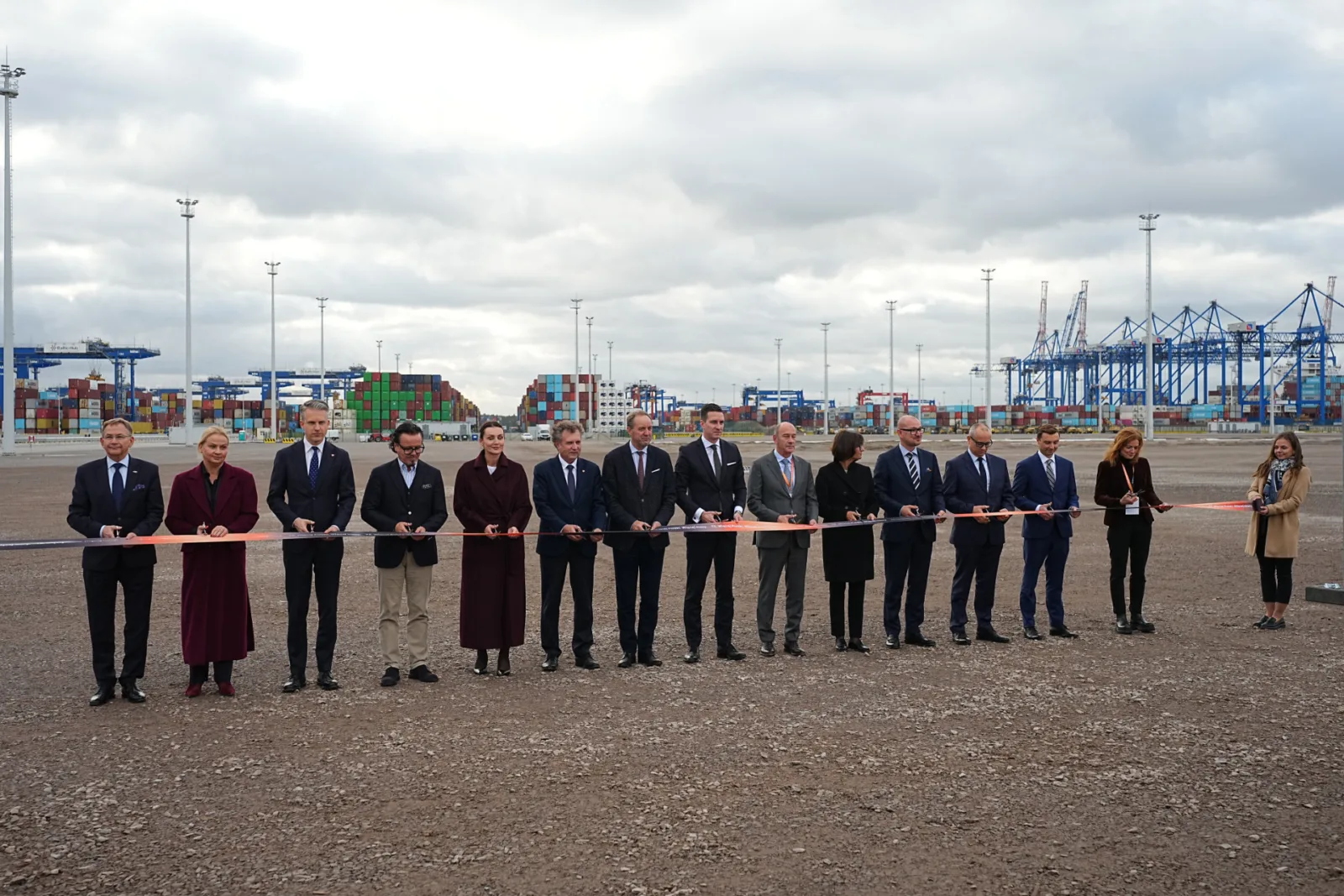
The Port of Gdańsk has opened Terminal T5 as an installation base for offshore wind turbines. The investment cost around PLN 1.2 billion including tax and added more than 21 hectares to the port. From November, the facility is due to support construction of Baltica 2, the wind farm being developed by PGE and Ørsted.
The terminal officially opened on 30 October 2026. It was developed by Istrana, in which the PFR FI FIZ AN fund holds an 85% stake and Baltic Hub the remaining 15%. The project received support from Poland’s National Recovery and Resilience Plan.
Installation base for Baltica 2’s 107 turbines
Baltica 2 will be the first project served by T5. The terminal will support the installation of 107 turbines with a combined capacity of around 1.5 GW. Offshore installation is scheduled for 2027.
A lease agreement with Elektrownia Wiatrowa Baltica 2 was signed in 2024, before construction of the terminal was completed. According to PGE, Baltica 2 will be Poland’s first offshore wind farm to have its turbines installed using a Polish terminal.
Heavy cargo capacity and space for two installation vessels
T5 was built in the outer part of the Port of Gdańsk, next to Baltic Hub’s existing infrastructure, on land reclaimed from the sea. It will receive, unload and store large turbine components before preparing them for transport offshore.
According to PSA International, the infrastructure can handle two installation vessels simultaneously. The technical depth alongside the quays is 17.5 metres. Storage and handling areas are designed for blades, tower sections and nacelles, with the strongest areas able to bear loads of up to 40 tonnes per square metre.
Around 3.5 million cubic metres of sand were used to create the site. Ground reinforcement required nearly 2,700 piles with a combined length of around 85 kilometres. Construction used around 12,000 tonnes of steel for the retaining walls and about 35,000 cubic metres of concrete for the reinforced-concrete quay structures.
At least 10–15 years of offshore wind operations planned
NDI Group was the general contractor. At the peak of construction, around 300 people from dozens of companies and subcontractors were working on site at the same time.
The Ministry of Infrastructure expects the terminal to serve as an offshore wind installation base for at least 10–15 years. Once that activity ends, the 21.3-hectare site can be adapted for other cargo-handling operations, depending on the Port of Gdańsk’s requirements.
Sources: PFR, Ministry of Infrastructure and PSA International. Polish original published on 31 October 2026: CEO.