


Krakow is actively seeking new investments as the city embarks on several projects aimed at improving residents’ quality of life. These initiatives span various sectors, including infrastructure, as evidenced by the construction of tram lines to Górka Narodowa and Mistrzejowice, as well as cultural and educational improvements. However, a significant challenge remains the insufficient funding. Bogusław Kośmider, the deputy mayor of Krakow, notes that the current and next year’s budgets will be among the most difficult in the city’s history.
Kośmider points out that a major problem for local governments, including Krakow’s, is the lack of financial resources. There has been a nearly one billion PLN shortfall in personal income tax (PIT) revenue compared to the previous year, exacerbated by inflation. According to a recent press conference, PIT revenues account for almost a third of the city’s budget. Last year, Krakow fought for these revenues by encouraging non-resident taxpayers to pay their taxes in the city. Despite the increasing number of taxpayers, the positive effects are offset by recent government reforms, such as the reduction of the PIT rate from 17% to 12% and the introduction of zero PIT for individuals under 26 years old.
Data from the Central Statistical Office of Poland (GUS) shows that last year, the revenues of local government units in Lesser Poland (Małopolska) increased by 0.5%, while expenditures rose by 10.3%. The budgetary year closed with a deficit of over 1.45 billion PLN, whereas the previous year ended with a similar surplus. All cities with county rights in the region reported a budget deficit last year, with Krakow’s deficit at 11.5% of total income.
The deputy mayor emphasizes the difficulties ahead, with decreasing revenues and increasing expenditures necessitating cuts in investments and various current expenses. Simultaneously, costs such as teachers’ salaries and electricity are rising, making it challenging to maintain a balance. The next years are expected to be extremely tough.
Current expenditures, which in 2022 accounted for 81.5% of total expenses (25 billion PLN), remain a significant burden for budgets in Lesser Poland. A substantial portion was allocated for salaries and associated costs, as well as the purchase of materials and services. The region allocated nearly 5.4 billion PLN for investments, a 15% increase year-over-year. In 2022, per capita expenditures by municipalities in Lesser Poland averaged just over 6.5 thousand PLN, a 10% increase from 2021, with Krakow’s per capita spending being just over 10 thousand PLN.
In 2022, the city managed to fund several small investments using funds from the European Games and is stretching out investments to delay payments. The city is also hoping for financial support from the National Recovery Plan to think about the future development of cities like Krakow.
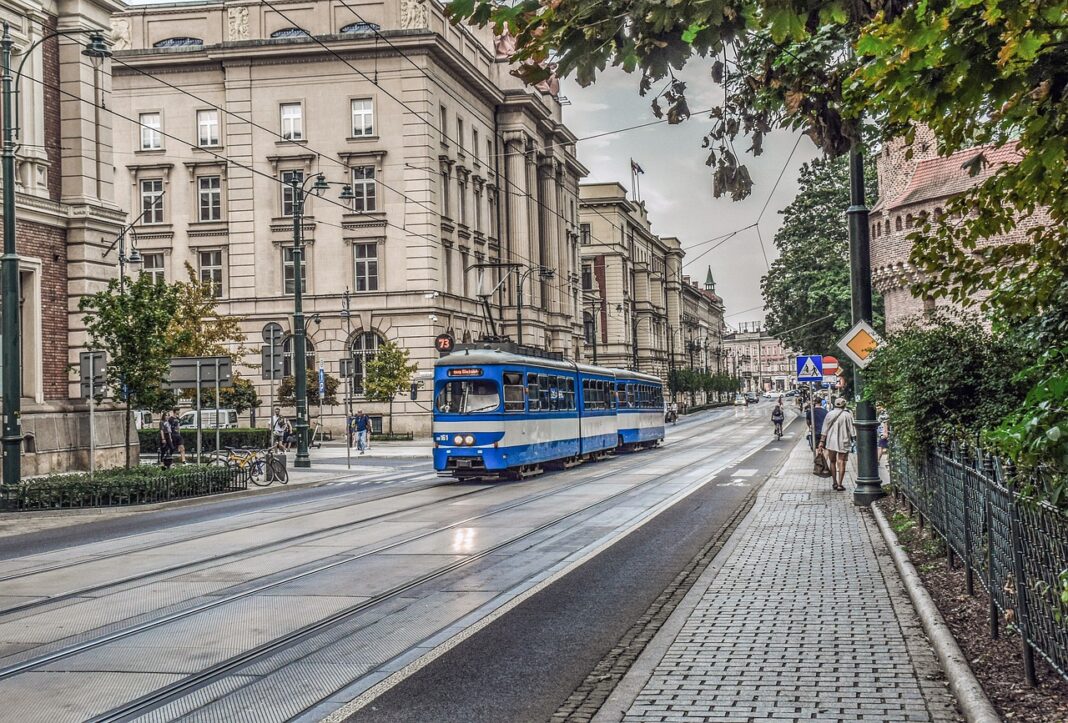
Among the major infrastructure investments in the city is the new tram line to Mistrzejowice. Another line of the Krakow Fast Tram to Górka Narodowa has recently been opened, and the construction of the Wolbromska Route is nearing completion, which will connect with Krakow’s northern bypass.
In addition to infrastructure, the city is also focusing on building new schools and cultural houses, like the one in Ruczaj, and is broadly engaged in cultural initiatives.
Krakow’s efforts also extend to combating air pollution. A key project is the introduction of the Clean Transport Zone, set to launch on July 1, 2024. This zone will only allow vehicles that meet the Euro 1 standard for petrol engines and Euro 2 for diesel engines, effectively limiting access to cars manufactured before 1992 for petrol engines and 1996 for diesel engines. This is only the first phase, with the final SCT restrictions, affecting vehicles produced before 2000 for petrol and before 2008 or 2010 for diesel (depending on weight), to be implemented in 2026. The SCT has been a contentious issue for many residents due to the challenges it presents.