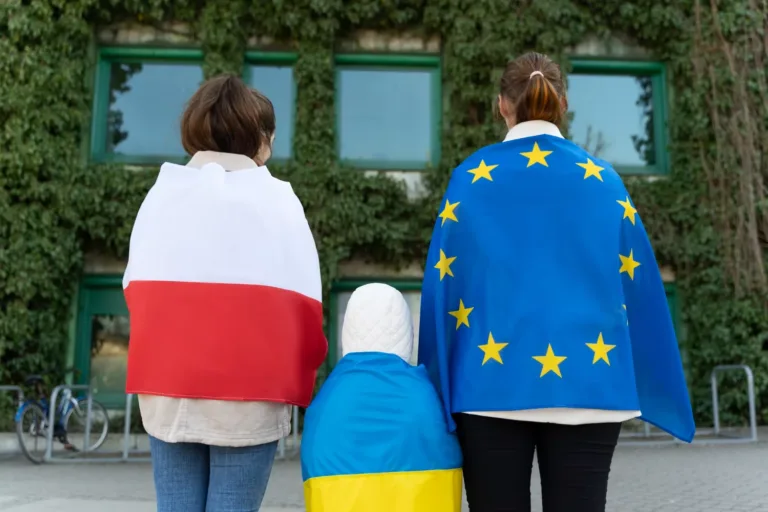

Ukraine, the United States and European partners agreed common principles for Ukraine’s future security in Abu Dhabi on 10 November 2026, ahead of a new round of talks with Russia. They backed credible security guarantees and respect for Ukraine’s sovereignty and territorial integrity, but announced neither a detailed guarantee mechanism nor an agreement to end the fighting.
Author/source: CEO editorial team. Polish original published on 10 November 2026 at 10:11:49 UTC.
Representatives of the European Union, France, Germany, Italy, the United Kingdom, Ukraine, the United States and NATO attended the meeting. It was intended to coordinate their positions before negotiations with Russia scheduled for 10–11 November in the United Arab Emirates.
According to a statement published by the European Council, participants agreed that any future peace settlement must preserve Ukraine’s ability to make its own political and security decisions. They also stressed respect for the country’s sovereignty and territorial integrity.
Security guarantees intended to underpin a lasting peace
The main focus was on arrangements that would protect Ukraine against renewed conflict after an agreement with Russia. Western and Ukrainian representatives supported a system of mutually reinforcing guarantees covering the country’s long-term security.
The statement said those arrangements should protect Ukraine while also building confidence among participants in the negotiations. The aim is to create conditions for a peace agreement that goes beyond a temporary suspension of hostilities.
No details were provided on any military involvement by Western countries, the terms of assistance in the event of renewed aggression or how future guarantees would be enforced.
NATO retains its central role in European defence
Participants also discussed European security after the war. They favoured building on existing institutions and international agreements rather than replacing them with an entirely new system. The statement reaffirmed NATO’s central role in collective defence across the Euro-Atlantic area.
That position is significant in discussions of Europe’s future security arrangements. Russia is seeking restrictions on Ukraine’s ability to join NATO and changes to the European security system. Kyiv opposes arrangements that would limit its independence in foreign and defence policy.
The meeting also considered ways to reduce the risk of renewed escalation. Participants did not disclose which specific measures might be introduced after the war.
European countries seek a place at the negotiating table
One of the main political commitments was to maintain close cooperation between the United States, Ukraine and European partners throughout the negotiating process. Participants said they would work towards a broader, multilateral format involving European countries. This does not mean Russia has accepted that format.
Moscow has so far favoured three-way talks involving Russia, Ukraine and the United States. European governments want a direct role in shaping a settlement, particularly provisions affecting the security of the continent as a whole.
The participation of the EU, NATO and the four major European countries involved reflects the wider scope of the negotiations. They concern both an end to hostilities and the future rules governing security in Europe.
US-mediated Russia–Ukraine talks resume
The meeting of Western partners preceded a two-day round of Russian–Ukrainian negotiations organised by the United States in Abu Dhabi. These are the first such talks since February 2026, when the previous process was interrupted.
Steve Witkoff and Jared Kushner represent the US administration. The agenda includes ending the war, future security guarantees, reducing military operations and humanitarian issues.
Fundamental differences between Moscow and Kyiv remain unresolved. Russia demands territorial concessions and limits on Ukraine’s defence capabilities, while Ukraine rejects terms that infringe its sovereignty and seeks durable security guarantees.
Previous negotiations have produced no political breakthrough. Earlier rounds primarily secured humanitarian arrangements, including exchanges of prisoners of war and the remains of fallen soldiers.