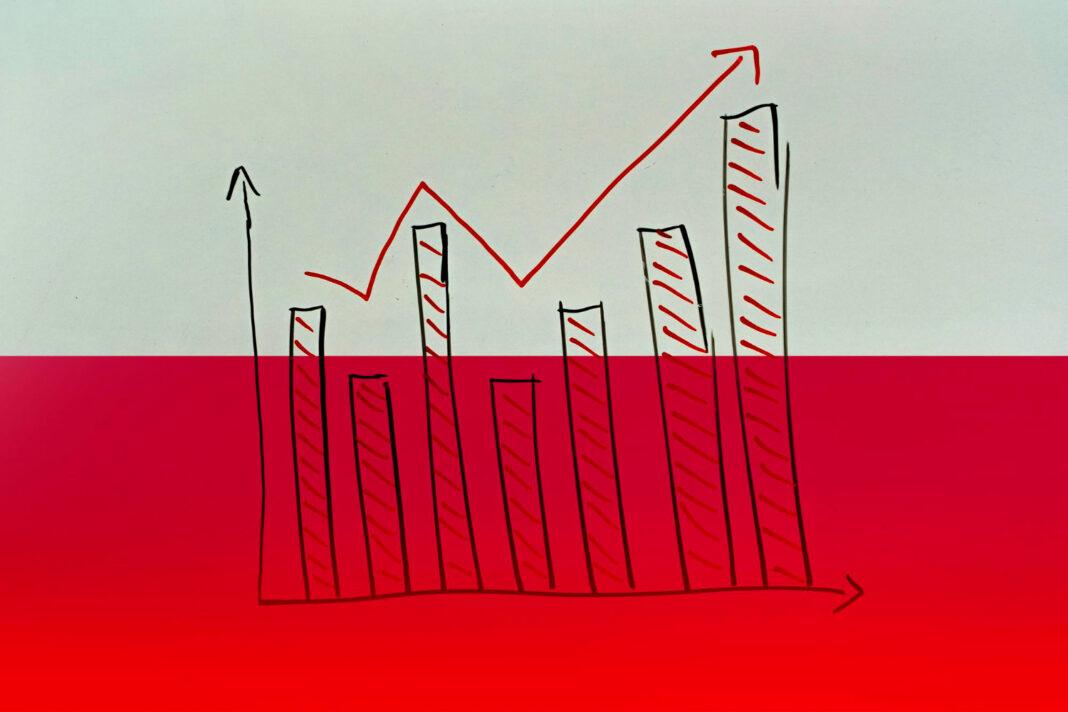


Poland ranked sixth in Europe and nineteenth worldwide among the countries where doing business is most difficult, according to this year’s Global Business Complexity Index compiled by TMF Group, a leading provider of compliance and administrative services. The result is better than in recent years, although Poland remains one of the more demanding European markets for entrepreneurs.
Poland’s sixth place in Europe and nineteenth place globally among the least business-friendly jurisdictions is the weakest result compared with its neighbouring countries. The Czech Republic, Poland’s southern neighbour, is among the ten most business-friendly countries in the ranking. Other European countries, such as Malta and Denmark, are also among the global leaders, showing that business regulations can be relatively simple.
In the thirteenth edition of the GBCI report, the authors analysed 81 jurisdictions representing more than 90% of the global economy and compared 292 indicators covering key aspects of doing business — from accounting and tax regulations, through labour law, to corporate entity management.
Digitalisation is changing the picture of the Polish market
In previous years, Poland was assessed negatively as a place to do business because of complex regulations, extensive administrative obligations, the need to submit numerous reports and the repeated provision of the same information in statutory documents. Another barrier was the requirement to keep part of the documentation in Polish.
The improvement in Poland’s position in this year’s ranking is directly linked to the ongoing digitalisation of administrative processes and the government’s active legislative policy aimed at simplifying regulations.
In accounting and taxation, digitalisation makes compliance management easier, while the possibility of conducting court proceedings electronically allows companies to submit documents online without the need for physical presence.
A historic change for the digitalisation of Poland’s tax system was the introduction of the National e-Invoicing System, known as KSeF, which from 1 April this year covered almost every entrepreneur issuing invoices in Poland. The final group, micro-entrepreneurs with monthly sales of up to PLN 10,000, will join the system from 1 January 2027.
“We continue to observe real progress in simplifying the regulatory environment in Poland, mainly in the area of digitalisation. The digitalisation of processes is becoming a noticeable relief for companies, especially those operating in multiple markets at the same time. This is complemented by solid logistics infrastructure, an extensive transport network and Poland’s advantages as a production centre closer to sales markets, which strengthen its position as a location attracting investors. At the same time, we must be honest: there is still a great deal of room for improvement,” said Joanna Romańczuk, Director at TMF Group for Northern Europe.
Challenges that discourage investors
Despite positive signals, entrepreneurs — especially foreign investors — still face clear barriers when entering and operating in Poland.
Investors are still required to prepare documentation exclusively in Polish, must go through numerous separate registrations and spend time opening a bank account due to strict Know Your Client requirements. KYC refers to key customer identification processes used by financial institutions to ensure transaction security and compliance with anti-money laundering regulations.
Frequent regulatory changes and short vacatio legis periods, for example around JPK CIT, force companies to adapt their systems and processes very quickly.
“Regulatory volatility and short implementation deadlines remain one of the main reasons why large organisations have to allocate a disproportionately large amount of resources to ensuring compliance with legal provisions, internal regulations and industry standards, rather than focusing on their core business. This is a challenge we know well from conversations with our clients,” Joanna Romańczuk added.
Labour market under pressure
Employment remains an area requiring particular attention. Employers have to navigate a maze of complex payroll regulations, rules on the taxation of benefits and social security requirements — all in the context of a tight labour market, strong competition for talent and rising wage costs.
Foreign workers partly ease staff shortages, while Poland is increasingly moving towards higher value-added roles such as R&D and technology. Nevertheless, labour market pressure remains one of the key challenges for companies planning to expand in Poland.
Globally, Greece is the most difficult country in which to do business, taking first place in the ranking for the third year in a row. It is followed by Mexico, Brazil and France.
The countries that are best at removing obstacles to doing business are the Cayman Islands, a British Overseas Territory; Denmark; Jersey, a British Crown Dependency; Hong Kong, a special administrative region of China; the Netherlands; New Zealand; the Czech Republic; the British Virgin Islands, a British Overseas Territory; Malta; and Curaçao, a constituent country of the Kingdom of the Netherlands.
Their positions in the ranking are influenced primarily by three factors: simple accounting processes, stability and regulatory predictability.
In Europe, Denmark, the Netherlands, the Czech Republic and Malta remain benchmarks.
“Political fragmentation and economic dispersion mean that companies are adding more jurisdictions to their supply chains, increasing the complexity of their management. Political fragmentation also means having to deal with growing regulatory uncertainty. Investors are looking for simplicity, but above all for certainty about the rules under which they operate. We encourage governments to improve their positions in the ranking by acting on both fronts,” concluded Mark Weil, CEO of TMF Group.