

Heatwaves are turning into a structural economic cost for Europe, and the damage runs deeper than lost workdays. New research from Allianz Trade’s Economic Research division finds that once temperatures cross a threshold of roughly 30°C, every additional degree drives increasingly steep productivity losses and higher energy use — and the biggest long-term casualty isn’t consumption, but corporate investment.
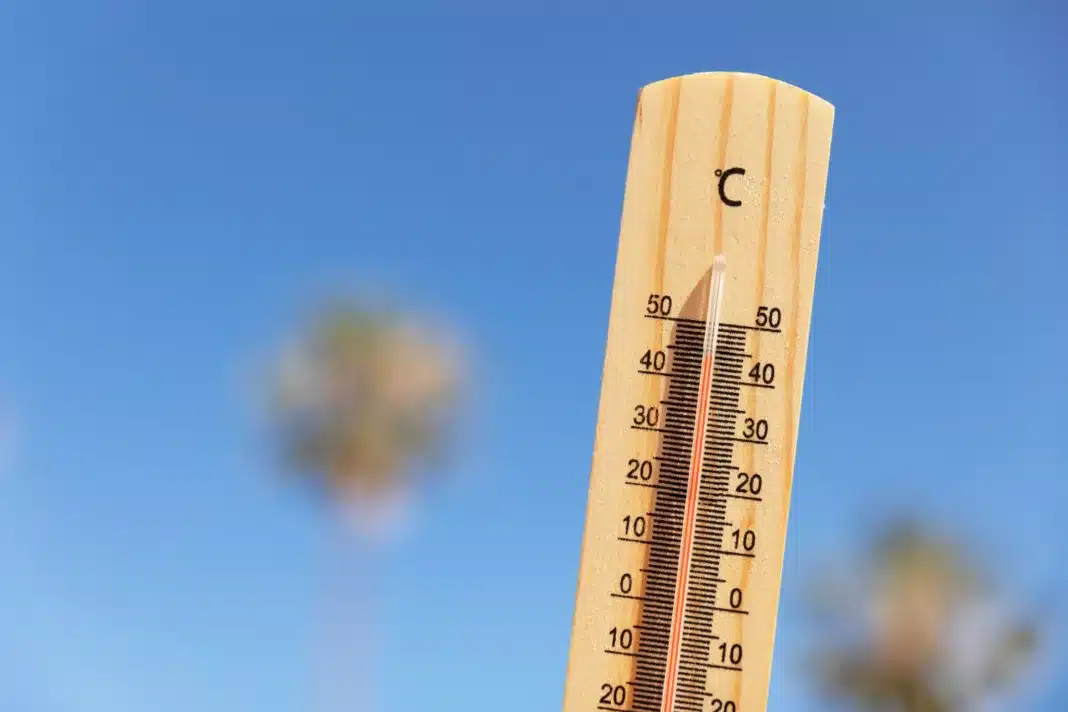
At what temperature does the economic impact of heat start rising sharply? Allianz Trade’s Economic Research division points to a clear threshold around 30°C. Below that level, the impact of temperature on the economy is limited; above it, each additional degree brings increasingly larger productivity losses and higher energy consumption.
What is the biggest long-term cost of heatwaves? In the scenarios modeled by Allianz Trade, losses from investment forgone due to heat are typically larger than the drop in consumption. In the most exposed economies, investment could run as much as double digits lower than the baseline scenario, limiting the economy’s future capacity to grow.
Why do heatwaves hurt corporate profitability? As the analysis shows, productivity deteriorates almost immediately, while wages adjust with a lag. That means the cost of heat hits corporate margins directly, first.
Heatwaves are becoming an increasingly measurable business cost. Beyond the productivity hit, they also mean higher energy bills, greater risk of logistics disruptions, and the need for additional investment.
Why are heatwaves becoming an economic problem?
The largest economic impact of high temperatures comes from falling labor productivity and rising energy consumption. Allianz Trade notes that heat is becoming an increasingly measurable business cost. Once the roughly 30°C threshold is crossed, each additional degree can lower labor productivity by around 3% of average hourly value added, while simultaneously increasing energy consumption by around 1.2% — raising operating costs at exactly the moment operational efficiency declines.
In practice, this also creates pressure on profitability. Productivity falls immediately, while wages adjust to the new conditions with a lag. In the short term, the effects of heat therefore weigh mainly on corporate margins, only later feeding through to household income and consumption.
Which industries are most exposed?
The effects of extreme temperatures are felt most strongly in sectors dependent on physical labor, logistics, and weather conditions — chiefly construction, transport, logistics, manufacturing, and agriculture. In these industries, high temperatures more frequently lead to falling output, delayed order fulfillment, and rising operating costs.
Energy-intensive businesses face a double challenge. Allianz Trade estimates that once the critical temperature threshold is crossed, energy consumption can rise by an average of around 1.2% for every additional degree, pushing up the costs of production, cooling, and storage.
What is changing in the economy?
The report’s most striking conclusion is that heatwaves hit investment harder than consumption. In the scenarios analyzed, corporate investment falls by a multiple of the drop in consumer spending. In France, the cumulative decline in investment could reach 14.7%; in Italy, 12.8%; and in Portugal, 6%. In other words, the largest cost of heatwaves is not the immediate loss of output, but the constraint placed on the economy’s future growth capacity.
According to Allianz Trade, the most exposed economies could lose between 5% and 7% of GDP relative to the baseline scenario over 2026–2030. In monetary terms, that would correspond to roughly USD 240 billion for France, USD 147 billion for Italy, and USD 131 billion for Germany.
Source: Allianz Trade, Economic Research. Cumulative GDP loss, 2026–2030, most exposed economies vs. baseline scenario.
Is Europe prepared for extreme heat?
Not really. Allianz Trade points out that one reason for Europe’s high vulnerability to heat is its comparatively underdeveloped cooling infrastructure. Air conditioning covers around 19% of buildings in Europe on average, compared with roughly 90% in the United States.
That means part of today’s economic losses stems not just from rising temperatures themselves, but from infrastructure that has not adequately adapted to the new climate conditions.
What can businesses do?
Not every effect of heat can be eliminated, but many can be reduced. Investments that improve building energy efficiency, cooling systems, and solutions that limit overheating in plants and offices are becoming increasingly important. At the same time, companies should adapt work schedules to periods of peak heat, but also — something usually overlooked in heat-related analysis — assess the resilience of their suppliers and factor weather risk into business continuity plans.
According to estimates from Allianz Trade’s research division, investment in climate resilience is increasingly becoming an investment in competitiveness. It limits productivity losses, helps protect margins, and reduces the risk of costly business disruptions.
In depth: what the underlying research shows
Extreme heat is becoming a structural economic threat to which Europe is particularly exposed. The number of heat-stress episodes has risen sevenfold since the 1980s, and the average death toll per episode has risen fivefold. Part of this result reflects measurement: civil registration and excess-mortality monitoring are far more developed in Europe than in most of Africa and South Asia, where heat-related deaths largely go unrecorded. But genuine structural vulnerability also plays a role — aging populations, dense urban development designed to retain heat, and severely underdeveloped cooling infrastructure, with air-conditioning penetration averaging 19% across Europe, compared with roughly 90% in the United States.
The economic effects of heat stress are non-linear, with a critical threshold of around 30°C — above that level, productivity losses intensify sharply. Below that threshold, warming actually lowers heating costs and is associated with a small productivity gain. Above it, the relationship reverses, and both effects worsen with every additional degree. The dominant channel runs through labor: hourly output falls by roughly USD 1.3 (at constant purchasing power parity, around 3% of average hourly output in the 2014–2024 sample) for every degree in the 30–35°C range. Wage adjustment lags productivity considerably, so in the short term costs fall disproportionately on corporate profitability before gradually passing through to household income and consumption. A second, smaller channel runs through the energy sector: energy consumption rises by around 1.2% per degree, raising companies’ input costs exactly at the temperatures where labor productivity falls.
To estimate the macroeconomic consequences, Allianz Trade built a stress scenario in which each country’s five hottest years recorded between 2014 and 2024 are replayed in ascending order across 2026–2030 — the fifth-hottest year in 2026, the fourth-hottest in 2027, and so on, up to each country’s hottest year on record in 2030. Under this trajectory, cumulative implied GDP losses (2026–2030) could reach 5–7% for the most exposed economies: USD 240 billion for France, USD 354 billion for Japan, USD 147 billion for Italy, USD 131 billion for Germany, and USD 120 billion for Spain. What matters more for long-term growth is that, in this scenario, the decline in fixed-capital spending systematically exceeds the loss in consumption, averaging around 8% in the affected countries: because heat lowers expected returns on capital, investment falls, which reduces future productive capacity in a self-reinforcing brake on economic growth. A shift toward stagflation dynamics can also be expected — rising prices alongside rising unemployment — putting monetary authorities in a difficult position, particularly in the eurozone, where a single interest rate must serve economies with very different climate exposures.
Fiscal consequences hit the least resilient economies hardest
Lost economic output caused by heat reduces tax revenue: estimated annual losses would amount to 1.8% in France, 1.3% in Italy and Spain, and 0.7% in Germany — partly because progressive tax systems mean revenue typically falls faster than output itself, amplifying the fiscal drag beyond the headline GDP loss. At the same time, inflation-indexed transfers, healthcare costs, and emergency infrastructure repairs push public spending up. Budget balances worsen by an average of around 0.5% of GDP per year. Italy and Spain, once heat-related pressures are factored in, risk (re-)breaching the Maastricht deficit ceiling. France, which already has a projected deficit of −4.9% of GDP, faces an additional 2.2 percentage points of pressure from heatwaves.
The insurance gap
Insured losses from heatwaves cover only a small fraction of total damage, revealing a structural mismatch between what heat destroys and what traditional property insurance was designed to cover. In 2022, total climate-related losses in Europe reached EUR 46 billion, while the share of losses covered by insurance rose only marginally. Most heat-related damage comes from excess mortality, lost working hours, strain on the healthcare system, and infrastructure stress — factors that insurance contracts are not built to capture. This makes extreme heat harder to insure than other climate hazards, since losses are diffuse and often indirect — such as productivity declines or health effects — making them difficult to measure and price. Closing the protection gap is therefore a challenge both for product design and underwriting capacity, and the insurance toolkit is already evolving in response: parametric instruments that pay out once objective temperature or duration thresholds are met, public-private risk-sharing arrangements for systemic exposures, and dedicated public backstops where private insurance capacity cannot provide adequate cover.
Policy still focuses on compensating losses, not preventing them
Europe’s policy response to heat impacts relies mainly on compensating losses rather than preventing them. Following the IPCC’s (Intergovernmental Panel on Climate Change, a UN body established in 1988) multi-pronged approach, closing this gap in Europe requires coordinated action on four fronts: labor market regulation, construction, public finance, and households.
An effective worker-protection system requires binding temperature thresholds, automatic work restrictions once those thresholds are breached, compensation for lost hours, and coverage extending to fixed-term, seasonal, and platform workers. No major European economy has all four elements in place, and the gap is concentrated in the last one: protections were designed around standard employment contracts and largely overlook the workers most exposed to heat. Preventive measures themselves also remain underused — shifted working hours, partial mechanization, and indoor cooling are still rare.
For buildings, four elements need to work together: overheating standards for new construction, mandatory passive cooling during renovations, access to cooling for vulnerable households as a social entitlement, and grid-adequacy planning that accounts for simultaneous summer cooling demand alongside heat-related derating of generators. The revised EU Energy Performance of Buildings Directive delivers the first of these; the gap lies in the remaining three, which are what actually limit indoor temperatures, mortality, and peak electricity demand.
On fiscal architecture, every major European economy has a national adaptation strategy, but almost none has translated it into a multi-year budget line, so the response defaults to ad hoc emergency packages — and each such episode quietly consumes fiscal space that ex-ante adaptation would otherwise have used to limit the next one.
The missing piece: households
EU households hold nearly EUR 40 trillion in financial assets, including very large deposit holdings, while a significant share of Europe’s housing stock remains poorly adapted to warmer years. Mobilizing even a small, well-targeted share of these funds — through incentives for retrofitting, passive cooling, and affordable climate-risk-reduction solutions — could help close part of the gap that public funds alone cannot cover. This is not, however, a case for private financing alone: the households most exposed to climate change are typically not the ones with the largest liquid savings, which is why public guarantees, subsidies, and safeguards should be the mechanism that turns household wealth into greater heat resilience — rather than deepening inequality.