
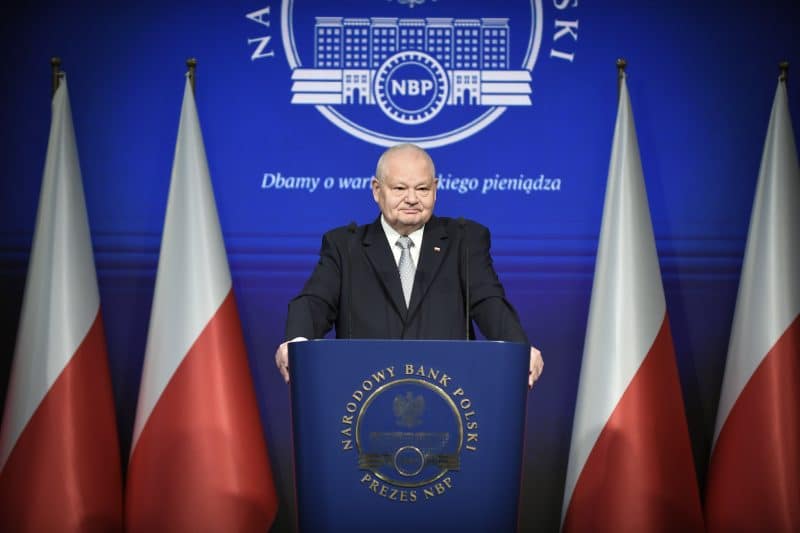


This Wednesday (04.10), the Monetary Policy Council will make another decision regarding monetary policy. After the reduction in September, we are likely expecting another one – the question is, when exactly and to what extent. Opinions are divided, and signals from the Council are mixed. Additionally, we have in the back of our minds that relying on these recent signals led both us and other analysts astray. Given the stronger than expected inflation decline, we lean towards another reduction, this time by 50 basis points. However, a clear weakening of the złoty in this context seems unlikely.
The outcome of the last MPC meeting in September was a shock for investors. There was weak consensus for a reduction in interest rates, but no one expected a cut as big as 75 basis points. The signals from that meeting – and later ones – are not clear. The tone of the September press conference by the chairman, Glapiński, was dovish, but he did not declare at what pace interest rates would be reduced. In a later statement for PAP Biznis, he said that “the room for further interest rate cuts has significantly narrowed, although it will still appear with the incoming data”. So let’s look at the data.
The latest information from the Polish economy is slightly positive overall. The situation in the industry remains weak, however construction and assembly production rebounded in August surprising, although this was significantly contributed by the approaching end of the previous EU perspective. There are signs suggesting a lower demand for work in the labour market, but it remains strong. This is evidenced by the relatively high, two-digit wage dynamic and low unemployment, which remains at 5%.
Our greatest interest recently has been retail sales data, serving as a reference for consumption. Improvement in consumer sentiment indices and labour market strength gave reasons to claim that a revival of consumer demand is approaching, which in recent quarters has been stifled by rising living costs. Stronger retail sales data from August (increase of 2.8% in monthly terms) suggest that this rebound may be starting. The economy is not doing very well, but it’s possible that it’s beginning to improve.
According to the preliminary data from the Central Statistical Office (GUS), CPI inflation fell in September to 8.2% from 10.1% in August and was lower than expected (consensus: 8.5%). One-time/regulatory factors seem to be playing a significant role, additionally there are certain threats (including the increase in oil prices). But the base inflation, crucial for the central bank, has also clearly dropped. Also, it appears that price dynamics will drop even further in the near future, which may be a strong argument for cutting rates.
In our opinion, the Council will continue to cut interest rates in the near future: we consider rate cuts at two or even all three meetings this year as the most likely. The market agrees with us.
Although there are arguments for holding off on cuts in October (stronger macro data, publication of new projections in November, sensitive period due to the proximity of the elections), we bet that a measurable decline in price dynamics will outweigh and decision-makers will vote for a rate cut. Our base assumption is a movement of 50 basis points, but we also do not exclude a “standard” decrease of 25 basis points. The consensus leans towards the latter, although the difference is quite large – economists surveyed by Bloomberg expect from 0 to 75 basis points cuts.
We have no doubt that the dovish approach of MPC is responsible for a large part of the recent weakening of the złoty and translates negatively into the prospects for the Polish currency. At the same time, in our opinion, in October we will most likely not experience a repeat of last month – a significant weakening of the złoty as a result of decisions and signals from the MPC.
The bar for the złoty to weaken significantly seems to be set high. First, the currency is already relatively weak. Second, the interest rate path is much lower than before the September meeting – the market has no doubts that cuts will continue. Additionally, the recent statements of some MPC members – which we treat as verbal interventions – suggest that the fate of the Polish currency is not completely indifferent to decision-makers, which can influence their decisions and communications
However, this does not mean that there is no risk of weakening the złoty. If there are further large interest rate cuts, and they are accompanied by disappointing communication, the złoty may find itself under pressure again. We can’t ignore the calendar either. Especially in the context of the proximity of the elections, responsible communication from the central bank will be crucial.
Author: Roman Ziruk – senior analyst at Ebury.