
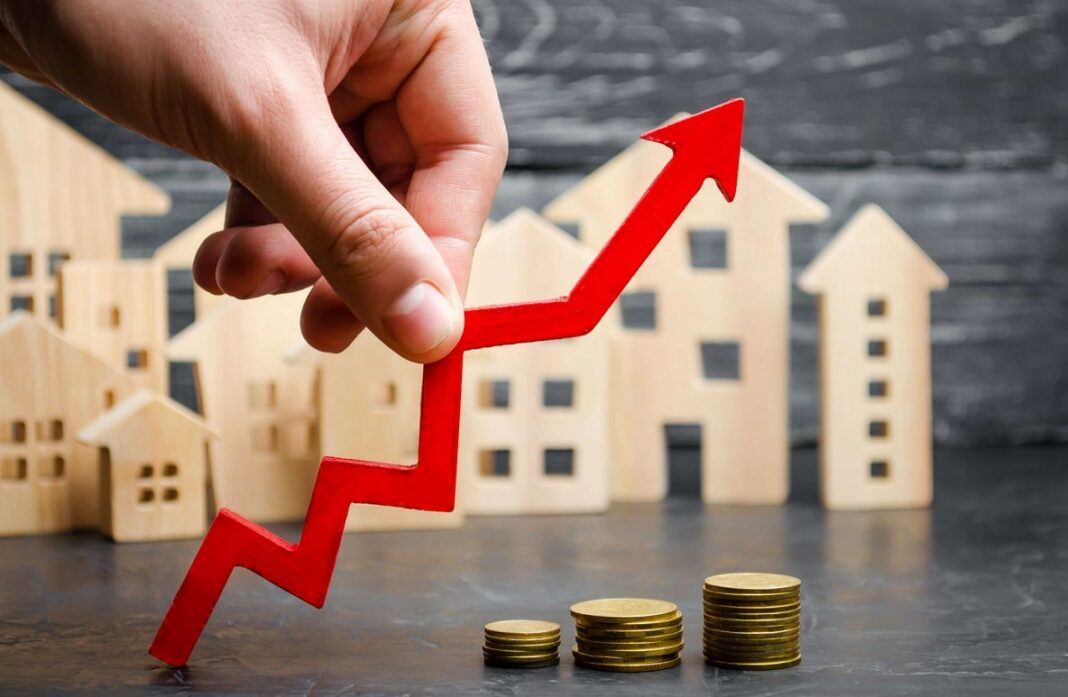

April brought a clear change on Poland’s primary housing market. After two months in which apartments were selling faster than new units were being introduced, sales slowed by 22% month on month. As a result, both the offer and current supply increased across the seven largest residential markets in Poland. Paradoxically, although fewer buyers decided to purchase, prices of new apartments did not stop rising.
The situation is commented on by Katarzyna Kuniewicz, Head of Market Research at Otodom.
Data for April 2026 show that uncertainty and volatility in Poland’s geopolitical environment are having a significant impact on the housing market in the country’s largest cities. At the end of the month, developers in Katowice, Kraków, Łódź, Poznań, Tricity, Warsaw and Wrocław were offering more than 59,200 apartments. This was 1% more than at the end of March and 2% less than in April 2025.
During the month, developers introduced 4,300 apartments to the market across 111 projects, which means 19% more than in March and 24% more than a year earlier. Meanwhile, April sales, according to preliminary data, amounted to 4,000 units. This was 22% lower than in March, but 28% higher year on year.
A boom in reservations
It should be noted, however, that the correction following very strong March sales was, as expected, substantial and involved almost 400 apartments. These units mainly moved into the pool of reserved apartments.
At the end of April, Otodom recorded the highest number of reserved apartments in two years across the seven analysed markets. A total of 6,700 units had this status. A higher number of reservations was last recorded only in 2023, when the market was reacting to the announced launch of the “Safe Credit 2%” programme.
The high level of interest in purchasing new apartments is also reflected in the regular increase in monthly reservations observed in recent months. Reservations are an important indicator of activity among potential buyers on the primary market.
The relationship between apartments introduced and sold in April across individual markets shows that the clear advantage of supply over current demand in aggregate data was driven mainly by the surplus recorded in Wrocław. Such a surplus was also visible in Warsaw, Łódź and Tricity. In Kraków, Poznań and Katowice, by contrast, demand exceeded supply.
Is Warsaw performing better than other markets?
An analysis of demand and supply summed up over the past 12 months for individual markets shows that the situation in the capital is clearly better than elsewhere. Warsaw is the only market where the annual sales volume over the past 12 months exceeded not only the number of apartments introduced for sale during that period, but also, more importantly, the total offer available at the end of April.
Fluctuations in offer sell-out indicators across individual markets confirm the view that Poland’s housing market has been characterised in recent months by uncertainty and volatility. It is worth noting, however, that in most markets the values recorded in the first months of 2026 are similar to those seen at the turn of 2022 and 2023. At the same time, they remain clearly lower than in 2024–2025, with the exception of Katowice.
Do developers have reason for optimism?
Data from the development market for the past four months may provide some cautious optimism on the supply side. Demand, supported by interest rate cuts and a large available offer, has shown stronger interest in purchasing new apartments since the beginning of 2026 than in the previous two years.
Between January and April 2026, developers introduced 13,100 apartments for sale. This result is clearly weaker than in the same period of 2024 and suggests a realistic assessment of market conditions. For several months, the offer across the seven largest markets has remained at around 60,000 apartments, which makes the limitation of new launches justified from a market perspective.
Given such a high level of available supply, the sale of 16,200 units between January and April is not a sufficient argument for increasing new supply.
It would also be wrong to claim that the fact that more apartments were sold than introduced for sale in the first months of 2026 proves growing optimism on the demand side of the housing market. Weaker April sales compared with the previous month support the view that the March revival was driven more by fears of worsening purchase conditions than by satisfaction with negotiated prices.
The main source of uncertainty on the demand side remains the rising total price of apartments on offer. Only in Katowice can buyers who postponed their purchase last year expect to pay less for an apartment today than they would have paid a year ago.