

The brutal assault of a young Ukrainian couple in Wrocław has sparked a nationwide debate about xenophobic violence and the responsibility of political leaders for the tone of public discourse. Prime Minister Donald Tusk has called on President Karol Nawrocki and Law and Justice leader Jarosław Kaczyński to condemn the attack unequivocally.
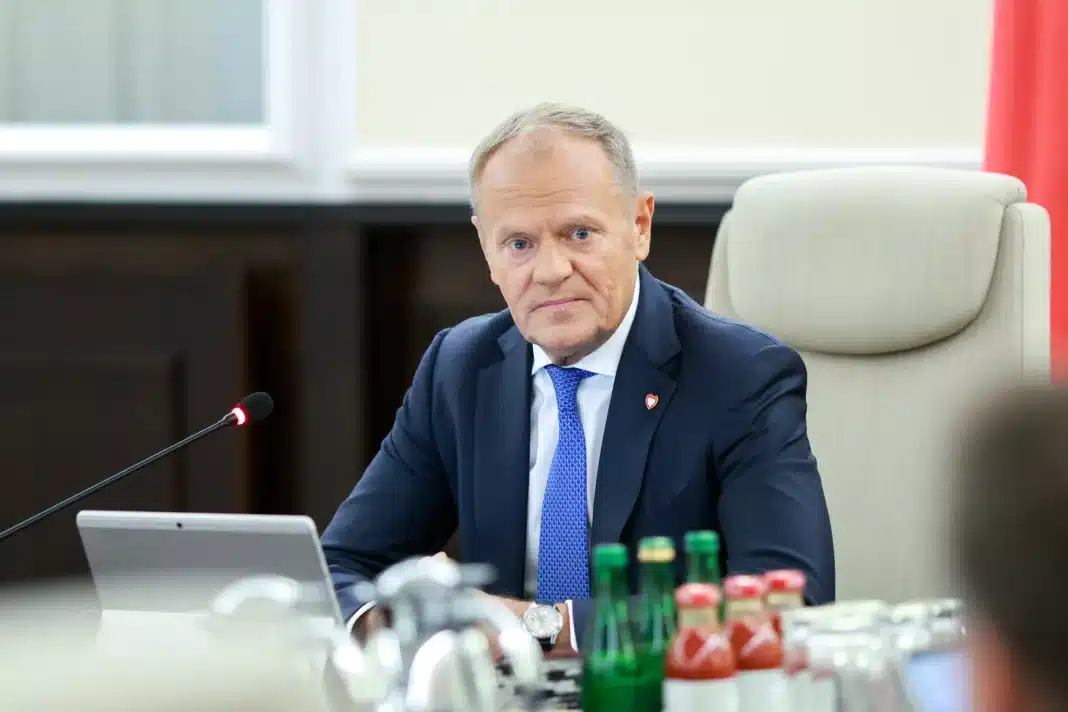
Prime Minister Donald Tusk addressed the case on Tuesday, 28 July, during remarks delivered before a meeting of the Council of Ministers. He described the assault as part of a broader problem involving growing aggression, political radicalisation and hostility towards people perceived as foreign.
A video circulated widely on social media showed three men attacking a young Ukrainian man in Wrocław. His partner was also assaulted when she attempted to protect him. Both victims required hospital treatment.
Tusk argued that violence of this kind must not be treated as an isolated street incident. In his view, some perpetrators feel encouraged by political rhetoric that presents aggression, vigilantism and physical confrontation as acceptable forms of public activity.
Tusk calls on President Nawrocki to break his silence
A significant part of the prime minister’s statement was directed at President Karol Nawrocki.
Tusk accused the president of failing to respond publicly to the assault and urged him to speak out clearly against violence. He also referred to Nawrocki’s previous comments about organised fights and physical confrontation, arguing that public figures should consider how their statements may be interpreted by radical groups.
The prime minister pointed to people associated with bare-knuckle fighting circles, the Kamraci movement and Robert Bąkiewicz’s Border Defence Movement. He suggested that rhetoric promoted within such environments could contribute to an atmosphere in which aggression is legitimised or even admired.
Tusk’s remarks amounted to a direct political accusation: that some violent individuals believe they have received moral approval from parts of the political right.
The prime minister did not claim that political leaders were directly responsible for the attack. He argued, however, that politicians who glorify confrontation or encourage the formation of informal groups bear responsibility for the wider atmosphere surrounding such incidents.
Appeal to Jarosław Kaczyński
Tusk also addressed Jarosław Kaczyński, the leader of the opposition Law and Justice party.
He called on Kaczyński to stop encouraging the creation of what the prime minister described as unofficial militias or enforcement groups. His remarks referred to recent criticism by the PiS leader of the police and the conduct of officers during politically sensitive demonstrations.
According to Tusk, undermining confidence in the police while encouraging citizens to organise their own groups can weaken the authority of the state and create space for vigilantism.
He stressed that maintaining public order is the responsibility of state institutions rather than political organisations, activist groups or self-appointed patrols.
Attack threatens Poland’s international reputation
The prime minister warned that assaults targeting people because of their nationality, language or accent could seriously damage Poland’s international standing.
Following Russia’s full-scale invasion of Ukraine in February 2022, Poland received international recognition for welcoming millions of Ukrainian refugees and providing extensive humanitarian, military and political assistance.
Tusk argued that allowing Ukrainians to be beaten or humiliated in public would undermine that record of solidarity.
He stressed that disagreements between Poland and Ukraine, including disputes over history, migration, trade or government policy, could never justify attacks on individuals.
The prime minister also warned that violence between Poles and Ukrainians benefits extremist nationalist movements on both sides and serves Russia’s strategic interests by creating divisions between countries supporting Ukraine.
Government promises support for the police
Tusk said that fighting violence, organised aggression and politically motivated intimidation must remain a priority for the state.
He promised the police the full support of his government in identifying and prosecuting people responsible for similar attacks. He also indicated that the government could consider legislative changes if officers and prosecutors concluded that the existing legal framework was insufficient.
The prime minister emphasised that perpetrators should be identified quickly and punished effectively. In his view, a strong response is necessary not only to deliver justice in individual cases but also to discourage others from committing similar offences.
Two men suspected of involvement in the Wrocław assault were detained following the incident. Police continued to investigate the circumstances of the attack and the role played by each of the individuals involved.
The case is being examined in the context of a possible nationality-based motive.
Tusk urges witnesses not to remain passive
The prime minister also appealed directly to members of the public.
He called on witnesses to react when they see violence, contact the police immediately and support people who are being attacked. He argued that public indifference creates favourable conditions for aggressors, particularly when victims are outnumbered or unable to defend themselves.
Tusk said that the overwhelming majority of Polish citizens were decent people who rejected violence. However, he warned that silence and passivity could allow a relatively small number of aggressive individuals to dominate public spaces.
He appealed for solidarity not only with Ukrainians but with all vulnerable people, including women, children and anyone targeted because of their identity, appearance, origin or manner of speaking.
The prime minister also noted that the problem was not limited to attacks on foreigners. Polish citizens are also increasingly exposed to street violence, intimidation and aggression committed by other Poles.
Assault began with an argument in a shop
The attack took place on Sunday, 26 July, near Okulickiego Street in Wrocław.
The victims were 20-year-old Anastazja and her 21-year-old partner, Maksym, both Ukrainian citizens. According to preliminary police findings, the incident began with an argument while customers were waiting in a shop queue.
The dispute continued outside the building and rapidly escalated into physical violence.
A recording shared on social media showed three men repeatedly attacking Maksym. When Anastazja attempted to protect him, she was also beaten. Both victims were subsequently taken to hospital.
The circulation of the footage caused widespread outrage and prompted reactions from politicians, local authorities and representatives of the Ukrainian community in Poland.
Violence becomes part of a wider political dispute
The Wrocław assault has now become more than a criminal case. It has also intensified the political confrontation between the government and the opposition over responsibility for growing radicalisation.
Tusk maintains that aggressive political language can have consequences beyond parliament, television studios and social media. His opponents are likely to accuse him of using an individual crime to attack the political right and deepen existing divisions.
Regardless of that dispute, the attack has renewed questions about the safety of Ukrainians living in Poland and the ability of the authorities to prevent crimes motivated by nationality or prejudice.
The immediate priority is establishing the full circumstances of the assault and holding all those responsible to account. The broader challenge will be preventing political and social tensions from turning into further acts of violence.