

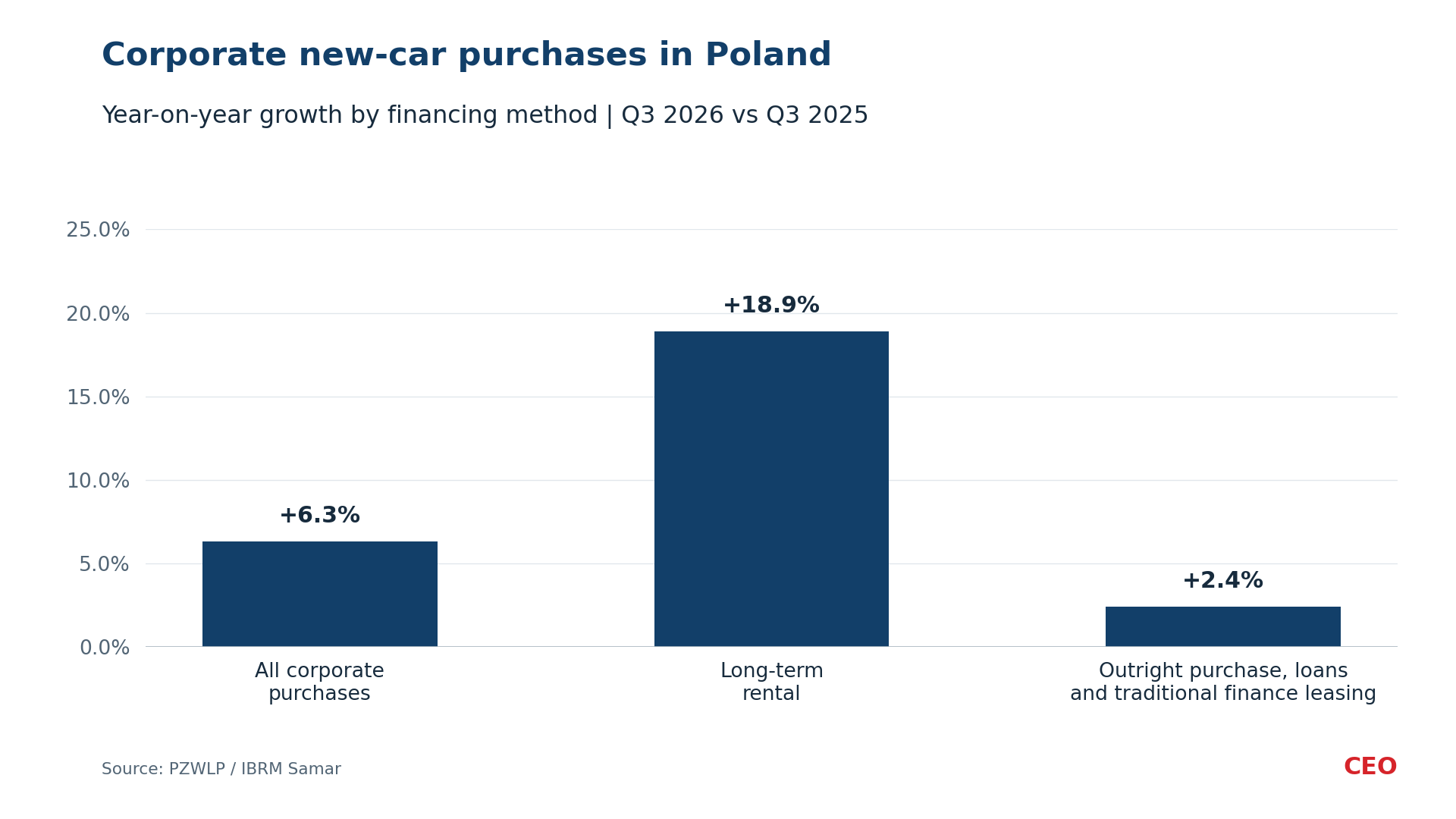
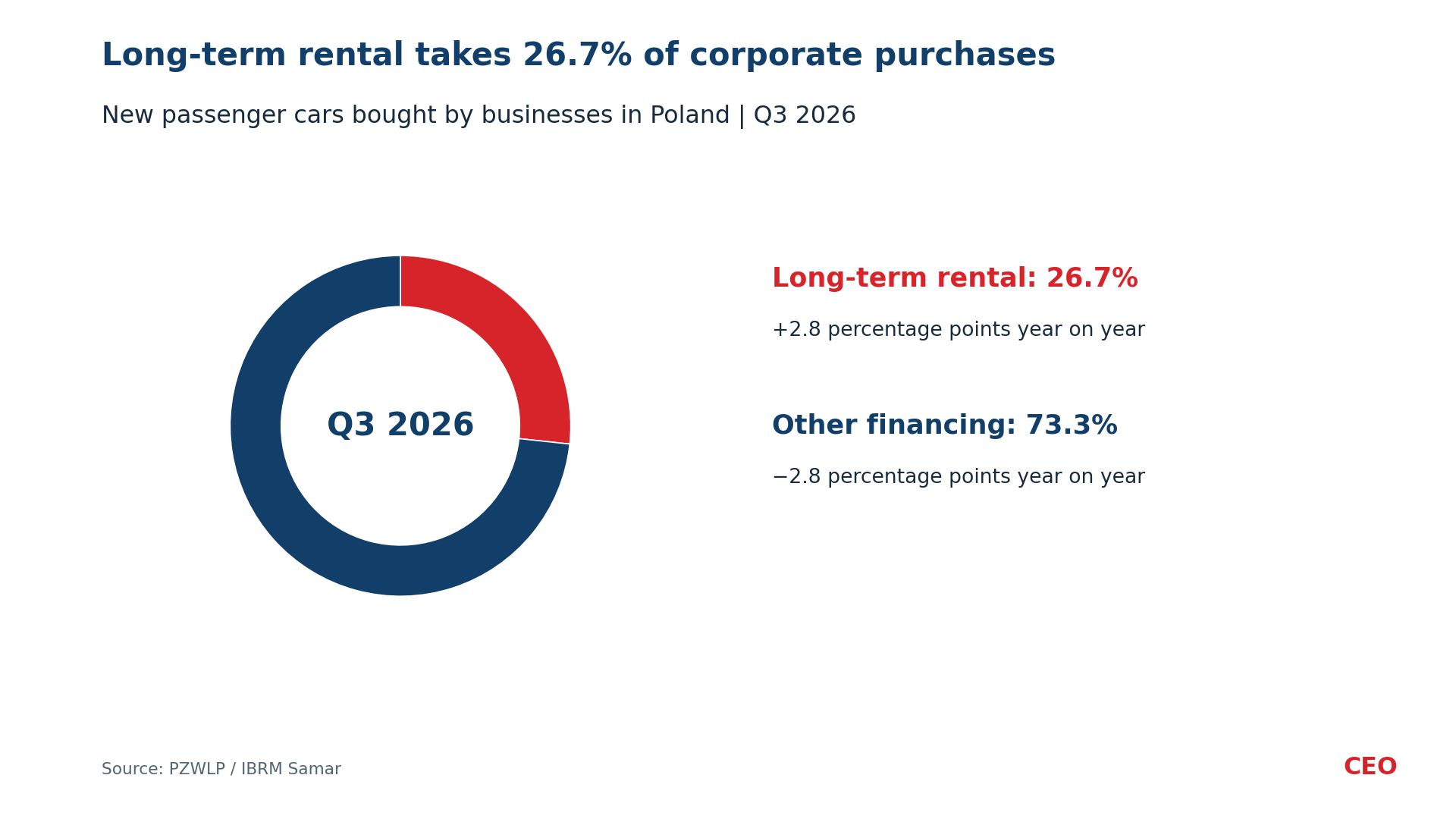
Long-term rental accounted for a record 26.7% of new passenger cars bought by businesses in Poland in the third quarter of 2026. Rental companies took delivery of nearly 28,500 cars, up 18.9% from a year earlier, while growth in short-term rental fleets also accelerated, according to PZWLP, Poland’s vehicle rental and leasing industry association.
By PZWLP. English adaptation of the Polish article, originally published on 9 November 2026.
Pictured: Paweł Piórkowski, president of PZWLP.
Nearly 160,000 new passenger cars were sold in Poland during the quarter. Businesses bought 106,500 vehicles, up 6.3% year on year, accounting for 67.2% of total sales. Private customers made up the remaining 32.8%.
Purchasing activity was supported primarily by competitively priced new models, including cars from Chinese manufacturers, and price reductions on vehicles from popular brands.
Long-term rental purchases rise 18.9%
Long-term rental, also referred to in the industry as car fleet management, or CFM, financed 26.7% of new passenger cars acquired by businesses. The nearly 28,500 vehicles bought by rental companies between July and September represented an 18.9% increase from a year earlier.[1]
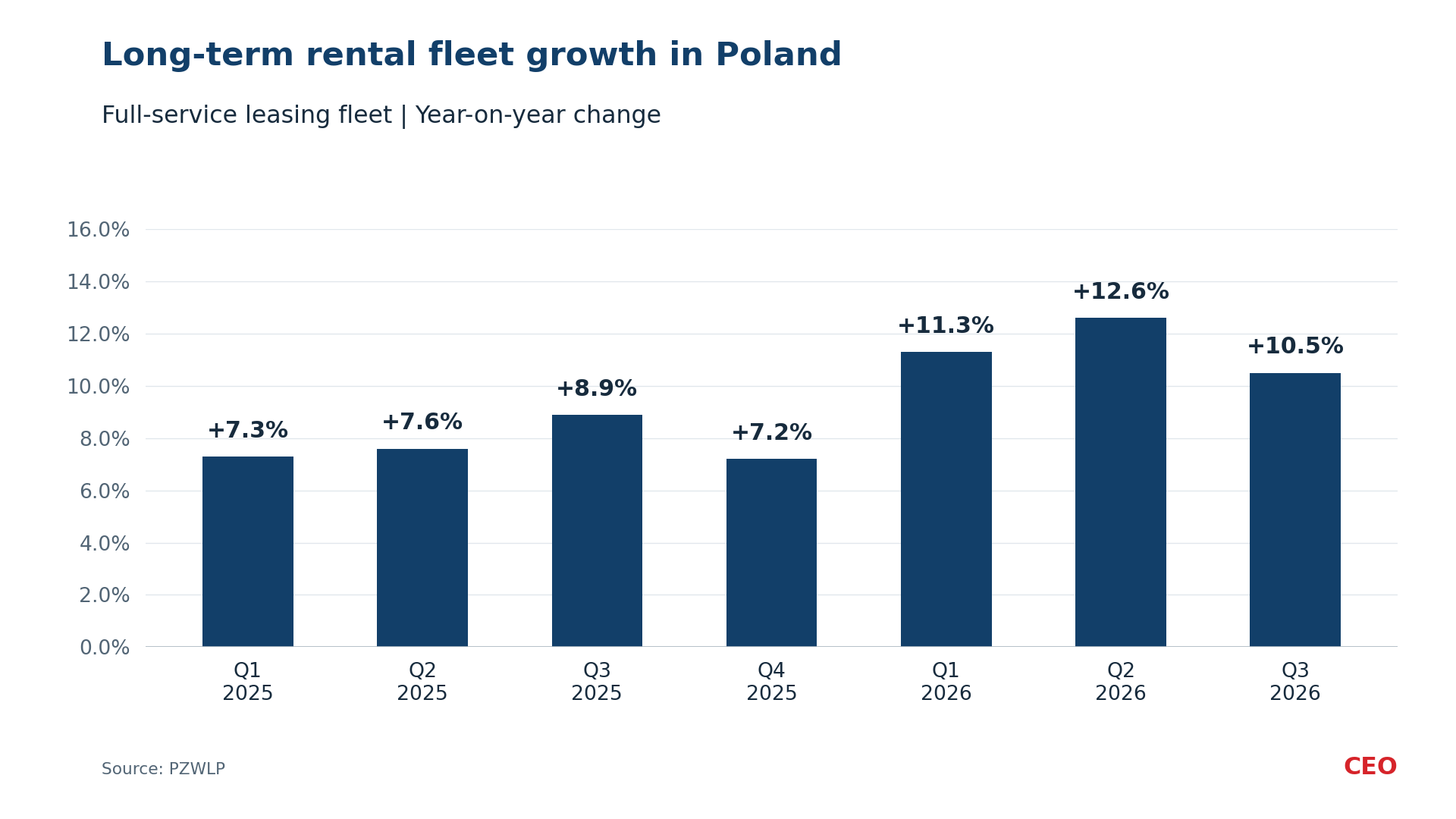
Purchases were accompanied by further fleet expansion. At the end of September, PZWLP members operated 265,700 passenger cars and light commercial vehicles with a gross vehicle weight of up to 3.5 tonnes under full-service leasing contracts. That was 10.5% more than a year earlier.
Results were supported by companies acting on previously deferred fleet decisions and replacing vehicles more quickly. Greater vehicle availability and improved manufacturers’ production capacity enabled businesses to make up some of the purchases constrained by supply problems in earlier quarters.
“The 18.9% year-on-year increase in registrations of new CFM vehicles and long-term rental’s record 26.7% share of corporate purchases show how important this financing model has become in the fleet market,” said Anna Makarewicz, a PZWLP board member. “At the same time, structural changes require CFM companies to be more cautious when pricing offers, particularly when forecasting vehicles’ residual values. In these conditions, competitive pricing needs to be combined with responsible management of vehicle-value risk throughout the period of use.”
“Regulatory changes are also increasingly affecting the industry’s operating environment. PZWLP therefore participates in dialogue with public authorities and work on legislation, providing members with knowledge and expert support to assess the potential market effects. We expect corporate interest in long-term rental to remain an important driver of industry growth in the coming months.”
Battery-electric vehicles reach 7% of fleets
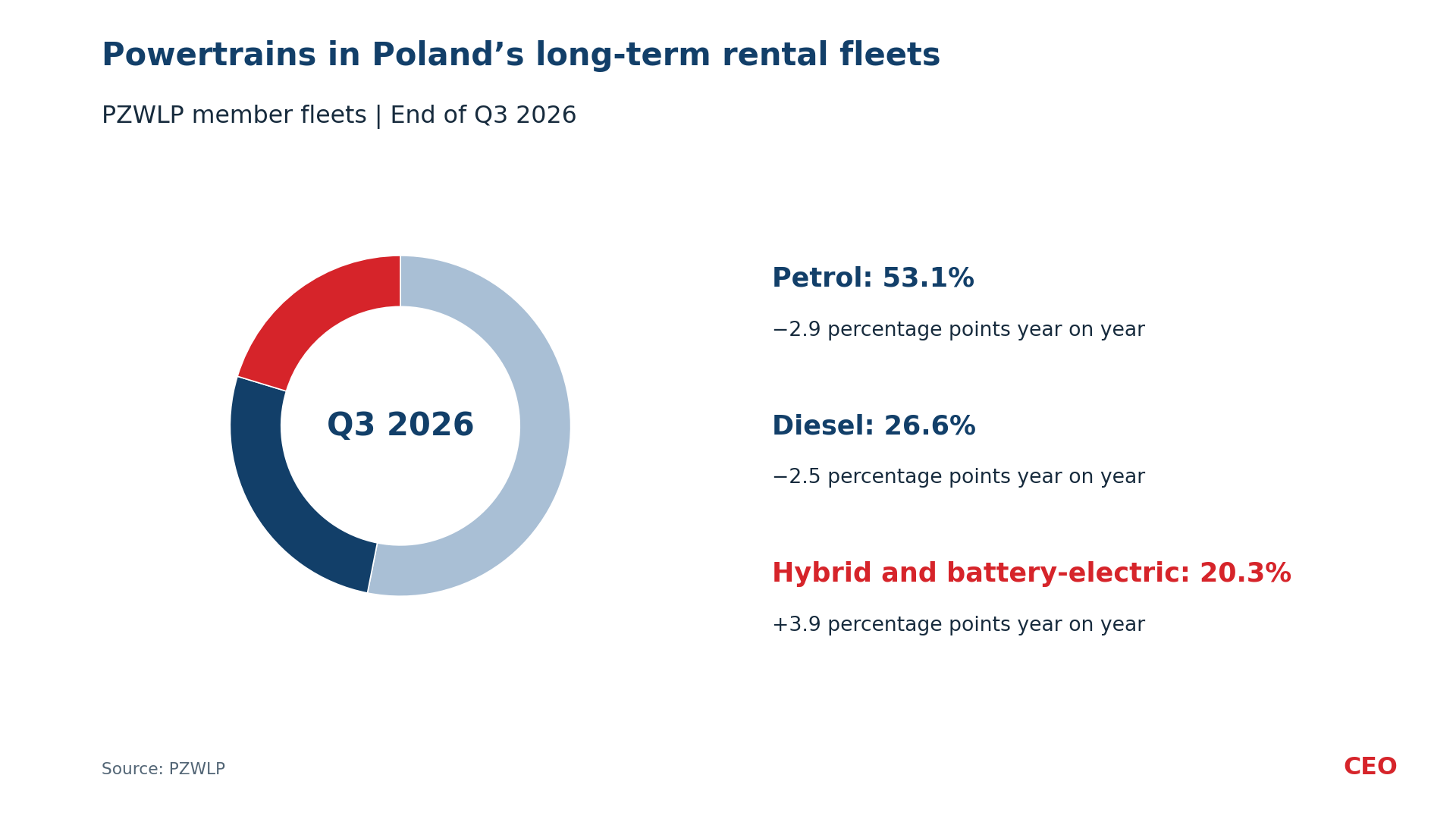
CFM fleets continued to shift towards lower- and zero-emission powertrains. PZWLP reported the following composition for its members’ fleets at the end of September 2026, with changes measured against a year earlier:
- Petrol: 53.1%, down 2.9 percentage points.
- Diesel: 26.6%, down 2.5 percentage points.
- Hybrid and battery-electric vehicles combined: 20.3%, up 3.9 percentage points.
- Battery-electric vehicles alone: 7.0%, up 2.2 percentage points. Their number rose 63% year on year.
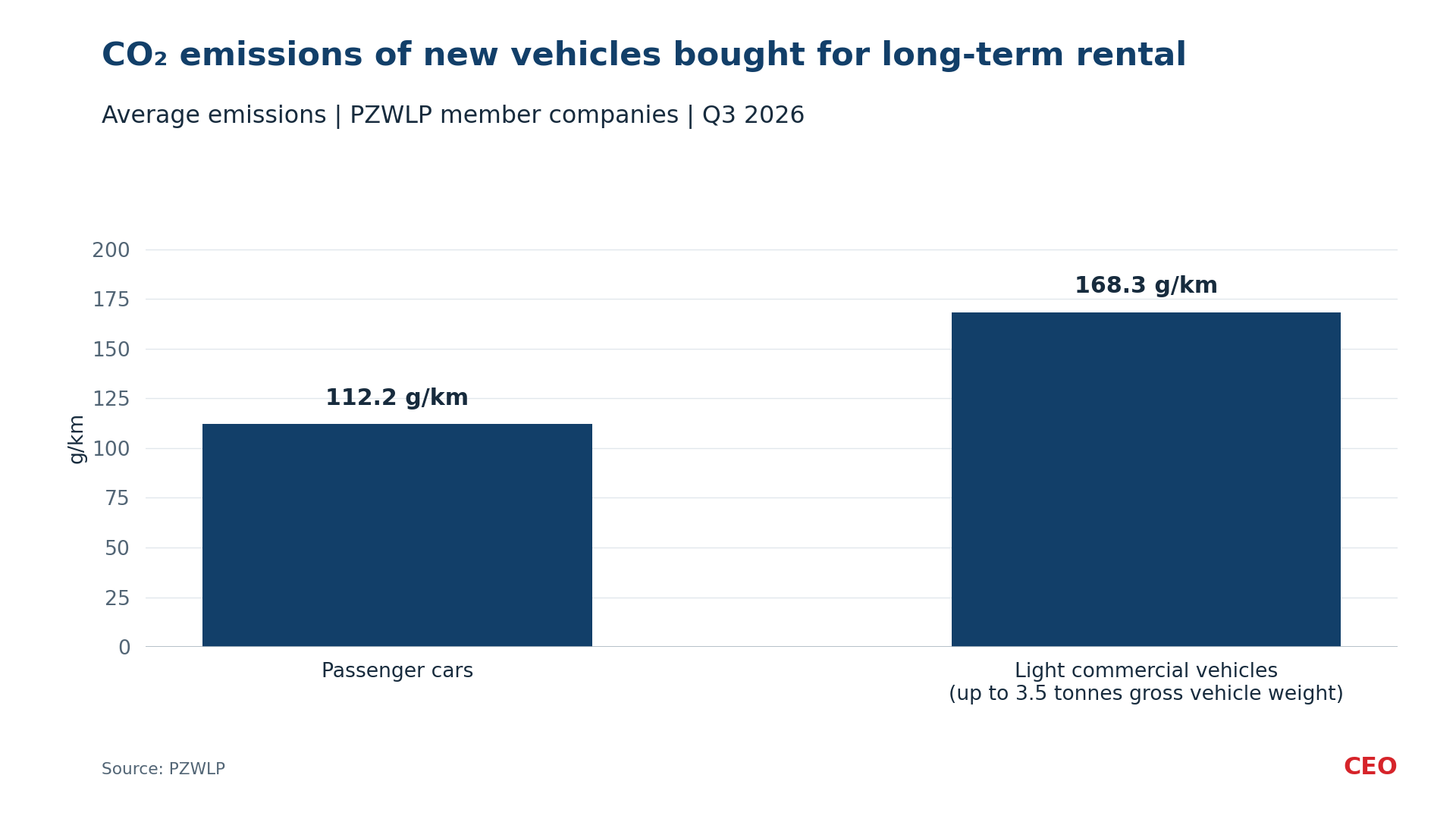
The changing fleet composition was also reflected in the emissions of new vehicles bought by PZWLP members for long-term rental. Average CO₂ emissions in the third quarter were 112.2 g/km for passenger cars and 168.3 g/km for light commercial vehicles.
Rent-a-car fleet growth accelerates to 9.2%
PZWLP’s rent-a-car members had a combined fleet of 21,700 vehicles, up 9.2% year on year. The segment continued the positive trend seen since the start of 2026, growing faster than in either of the preceding two quarters.
PZWLP cited rising tourist traffic, more air travel and the development of flexible car-rental models among the factors supporting results. It sees a positive outlook, with both private and business customers contributing to demand.
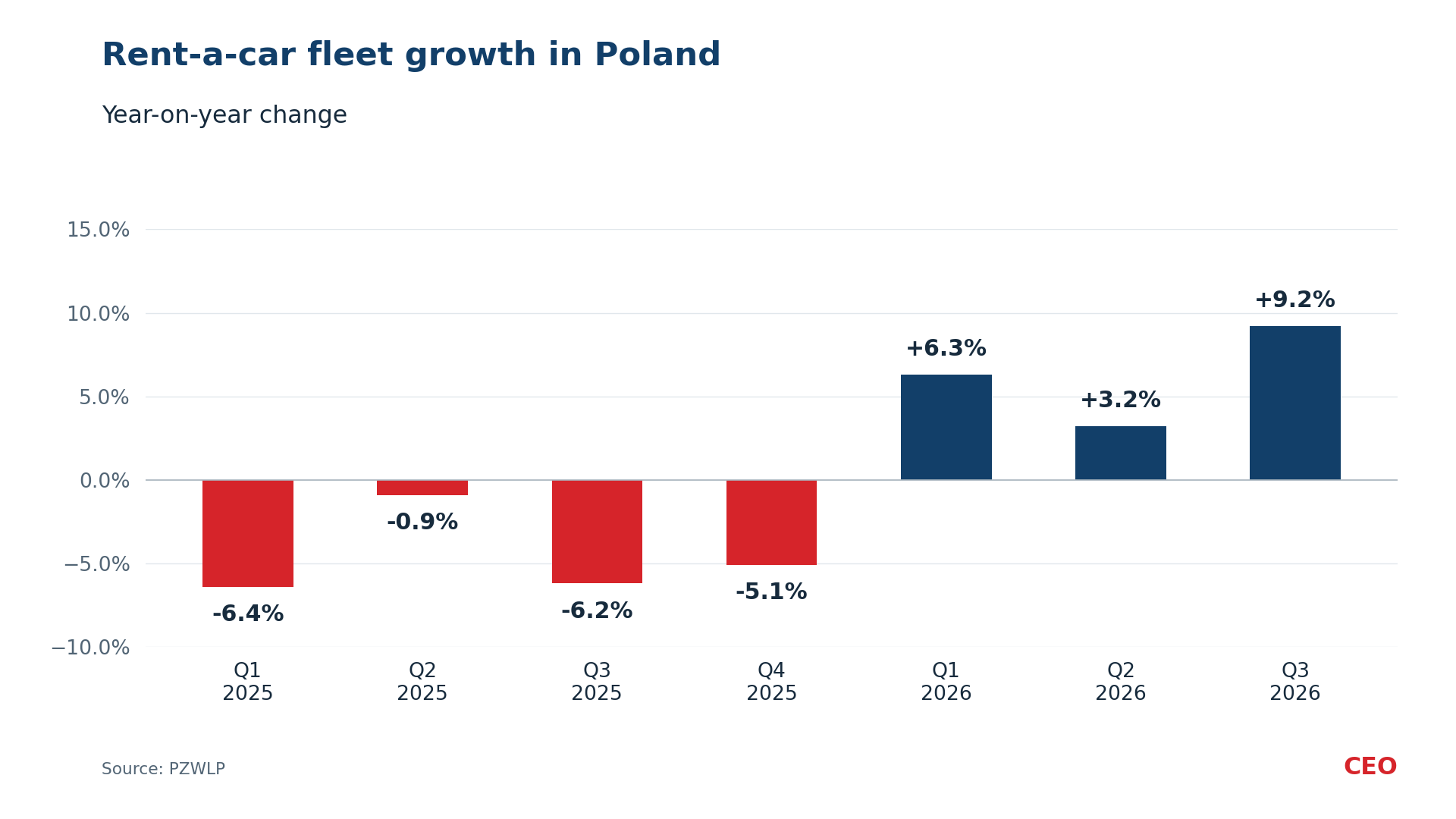
“The acceleration in rent-a-car fleet growth to 9.2% year on year shows that the industry is both maintaining its positive direction and strengthening its market position,” said Paweł Piórkowski, president of PZWLP. “As demand for rental services grows, optimising vehicle utilisation and adapting fleet composition to different customer needs become increasingly important. Companies in this segment need to combine vehicle availability with operating profitability and a high standard of service.”
“The industry is approaching its seasonal fleet reduction, so we expect subsequent readings to show fewer vehicles at member companies. The key will be to compare those changes with the position a year earlier. What matters is not the winter reduction itself, but its scale relative to the previous year.”
“This is also the time to plan fleets for the 2027 season. Those decisions will show whether this year’s results encourage companies to expand their fleets further. If they do, it will signal that growth in this segment is becoming more stable.”
[1] Data for the corresponding period of the previous year were revalidated and adjusted with additional estimates to make the comparison base fully consistent with current registration figures.
Truck rental fleet totals 9,800 vehicles
At the end of the third quarter of 2026, PZWLP members’ combined truck rental fleet stood at 9,800 vehicles. The figure covers long-, medium- and short-term rentals.