
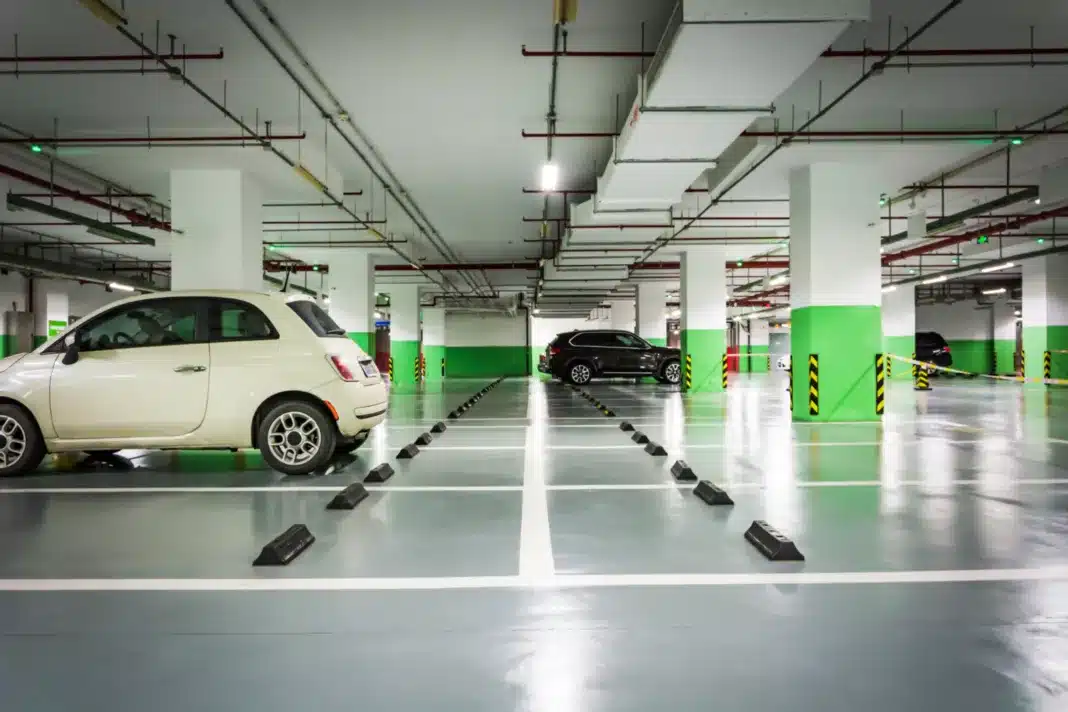

It is no longer about micro-apartments. Now, it is parking spaces that are expected to generate returns. A parking space for PLN 80,000? Increasingly, this is not an additional cost attached to an apartment, but a separate investment purchased for rental income.
Just over a decade ago, a parking space was an add-on to an apartment. Today, it is increasingly becoming a separate product — and in some cases a fully fledged investment. It has its own price, its own sales strategy and, increasingly, its own market history. Sometimes it even has a separate land and mortgage register, which means it functions as an independent property.
However, not all parking spaces have this status. In some developments, they are sold as a share in an underground garage, which affects their later sale and rental.
“In practice, this gives the owner a great deal of flexibility: the space can be sold independently of the apartment, rented out or kept as a separate asset. In extreme cases, it begins to function much like a small investment property,” says Jarosław Jędrzyński, expert at RynekPierwotny.pl.
For some, it is a necessity. For others, an unnecessary expense. Increasingly, however, a third approach is emerging: a parking space as an asset that can earn money.
How Much Does a Parking Space Cost in 2026?
Prices of parking spaces, like apartment prices, strongly depend on location and the standard of the development.
In Poland’s largest cities, the typical price range for spaces in underground garages is now between around PLN 40,000 and PLN 90,000, according to RynekPierwotny.pl. On the outskirts, offers can be found closer to the lower end of the range, while in intermediate districts prices of PLN 55,000–70,000 dominate.
In central locations and higher-standard developments, prices rise to PLN 70,000–150,000. In the most prestigious apartment projects, especially in Warsaw or Kraków, they can reach as much as PLN 250,000–350,000 for a single space.
Above-ground parking spaces remain much cheaper. Here, prices start at around PLN 15,000 on the outskirts, while in most cases they fall within the PLN 20,000–30,000 range. In locations with a severe shortage of parking, however, they can reach PLN 40,000.
In practice, this means that in many cases a parking space costs as much as several square metres of an apartment.
Parking as a Sales Tool
Although parking space prices can be high, in practice they are one of the most common elements in developers’ promotional strategies.
Nominally, they usually account for only a few percent of the apartment’s value, but in practice they are one of the easiest elements to “adjust” during the sales process.
For an investor building a residential estate, a parking space is a product whose price is relatively easy to manipulate. A reduction in the price of a space — even a significant one — can be offset by the margin on the apartment itself.
As a result, buyers can often negotiate. At the early stage of sales, discounts are usually symbolic, but toward the end of a project they can reach even several dozen percent. There are also cases of “package” sales or promotions in which a parking space is offered for a fraction of its price, or even as a bonus added to the apartment.
How Much Does It Really Cost to Build a Parking Space?
The high prices of parking spaces may be surprising, but their construction costs are even more interesting.
In the case of underground garages, parking spaces are among the most expensive elements of an entire development. Depending on location, ground conditions and the standard of the building, the cost of constructing a single parking space may currently range from around PLN 60,000 to as much as PLN 120,000, and even more in more difficult projects.
The paradox is that developers very often sell parking spaces below the cost of building them. They compensate for the missing amount in apartment prices — regardless of whether the buyer purchases a parking space or not.
This is precisely why parking spaces work so well as a promotional tool. Reducing their price does not hurt the developer as much as it might seem.
Can a Parking Space Generate Income?
As prices have risen, an investment approach has emerged. More and more people are buying parking spaces not only for their own use, but also with rental income in mind.
In good locations — especially where there is a shortage of parking spaces and paid parking zones are in place — such investments can generate stable, though moderate, income.
Location is crucial. City centres, dense urban development and areas where street parking is difficult or expensive work best.
How Much Can You Earn from a Parking Space?
Rising prices have led some buyers to treat parking spaces as a simple rental investment.
In practice, monthly rent most often falls within the range of 1–2% of the market value of the space, although in more expensive locations reaching the upper end of this range can be more difficult.
For example, for a space worth PLN 60,000, the monthly rent may amount to around PLN 300–600.
However, fixed costs must be deducted from this amount: the administrative fee, usually several dozen zlotys per month, property tax and income tax. As a result, the real net income is clearly lower.
In popular locations, the rental yield on a parking space most often ranges from around 5% to 7% annually, assuming continuous occupancy. This means a payback period of more than a decade, according to experts from RynekPierwotny.pl.
It is worth remembering, however, that — as with apartments — location is critical. Where parking is not a problem, even an attractive purchase price does not guarantee finding a tenant.
When Will Parking Not Pay Off?
Not every investment in a parking space makes sense.
The worst conditions occur where parking is not a real problem. This applies especially to peripheral residential estates that are well connected but have a large supply of above-ground spaces.
If there is more than one parking space per apartment and residents can easily find a place “outside the building”, rental potential drops sharply.
Another warning sign may be the absence of paid parking zones and limited pressure on parking spaces in the area.
To Buy or Not to Buy?
The decision to buy a parking space is becoming less and less obvious.
For people who use a car every day, it remains an element that genuinely affects everyday comfort. For investors, it can be an additional source of income.
On the other hand, rising prices, changing attitudes toward mobility and the development of public transport mean that some buyers consciously give up this expense.
A Market That Has Taken on a Life of Its Own
Parking spaces are no longer just an add-on to apartments. They have become a separate segment of the real estate market, with their own logic of pricing, demand and profitability.
For some, they are an unnecessary cost. For others, a daily necessity. And for a growing group, simply another form of investment.
Perhaps this is exactly why the decision to buy a parking space in 2026 is more complex than ever before.