


Spreadsheets are often the right project management tool at the beginning. They become a liability when the business starts depending on information that the file cannot keep current, connected and accountable.
A young company rarely needs an elaborate project management environment. A founder can coordinate early work through a spreadsheet containing deadlines, responsibilities and basic cost information. The tool is familiar, flexible and inexpensive. With only a few projects and a small team, most of the context does not need to be documented because it is already shared by the people involved.
Growth gradually changes that operating model. More customers create more deliverables, new employees introduce additional handovers, and decisions begin to move between departments, contractors and external partners. The original spreadsheet expands with new worksheets, formulas, comments and colour codes. Parallel files appear for management reporting, budgets and resource planning. What began as a convenient planning tool becomes an informal operating system for the company.
The transition is rarely obvious because spreadsheets usually continue to function at a technical level. The file still opens, formulas still calculate and reports can still be produced. The real problem is organisational: the spreadsheet no longer reflects the business quickly or consistently enough to support reliable decisions.

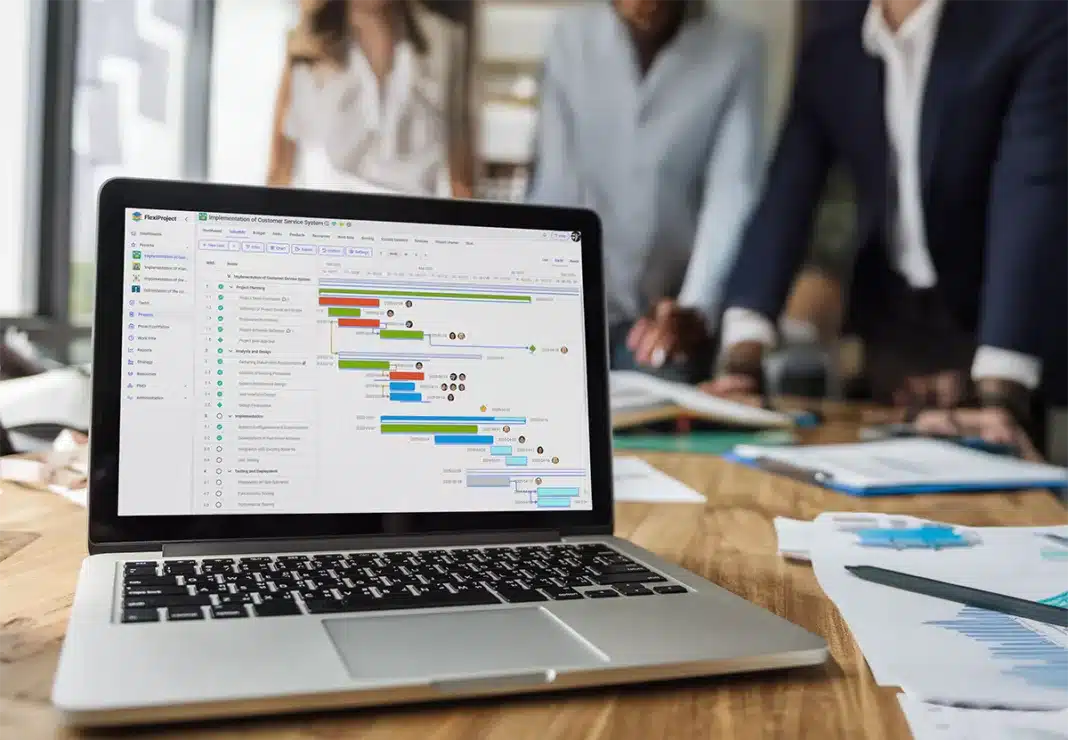
Caption: Spreadsheets can support early-stage planning, but growing companies eventually need a shared view of deadlines, responsibilities, resources and project performance.
The Problem Is Not the Spreadsheet Itself
Spreadsheets remain excellent tools for calculations, financial analysis, modelling and ad hoc reporting. They can also support small projects effectively when responsibilities are simple and the number of dependencies remains limited. Replacing them too early may introduce unnecessary process and administration. Problems emerge when a workbook begins performing several roles simultaneously. It becomes a task list, project schedule, resource plan, risk register, status report and record of management decisions. Each additional requirement is handled by extending the file. New columns are added, formulas become more complex and reporting logic is distributed across several worksheets.
This produces what may be described as governance debt. The company continues to manage more work without introducing the structures required to control it. The debt accumulates in undocumented formulas, private conventions, duplicated files and processes known only to selected employees. As long as the organisation remains stable, these workarounds may appear effective. Once projects accelerate or key people become unavailable, the weakness becomes visible.
Research into spreadsheet quality has repeatedly shown that errors are common in complex workbooks and can be difficult to detect. Studies of spreadsheet errors do not suggest that spreadsheets are inherently unsuitable. They show that informal development, repeated modification and insufficient review can create significant operational risk when a file becomes business-critical.
A workbook can also be technically correct while remaining managerially unreliable. The data may have been accurate when entered but become outdated before the next review. A deadline may change in the delivery plan but not in the management summary. A project owner may update one version while another department continues working from an earlier copy.
The critical issue is therefore not file size. It is the distance between the information in the spreadsheet and the current state of the business.
Growth Creates an Information-Latency Problem
In a small team, missing information is often corrected through conversation. People know which customer changed the brief, why a deadline moved and who is temporarily overloaded. This informal knowledge compensates for limitations in the planning system.
As the company grows, context becomes distributed. One person maintains the project spreadsheet, another keeps a private task list and a third records decisions in email or chat. Management receives a weekly status summary, although the operational information behind it may already be several days old. This creates information latency: the delay between an event occurring and the organisation being able to act on it. A task may be blocked on Monday, reported on Thursday and discussed by management the following week. By that point, the delay may have affected a customer commitment, resource allocation or another dependent project.
The organisation often responds by increasing reporting frequency. Project managers request more updates, teams attend additional meetings and new status files are introduced. Yet this does not necessarily improve visibility. It may simply increase the amount of manual coordination required to maintain several versions of the same information. A stronger project management model updates information at its source. The person responsible for a task reports its progress directly. The project schedule reflects that update, and management reporting draws from the same underlying data. This reduces the need to reconstruct project reality before every review.
A growing company does not primarily need more reports. It needs a shorter distance between delivery, information and decision-making.
The Hidden Cost Appears as Coordination Work
Spreadsheet-based project management rarely fails through one dramatic incident. Its cost is distributed across hundreds of small activities: copying status information, reconciling dates, checking file versions, explaining colour codes, rebuilding reports and searching for decisions made outside the workbook. This creates a coordination tax that does not appear as a separate expense in the company’s accounts. A project manager may spend several hours preparing an update rather than resolving delivery issues. Department heads may negotiate priorities without a reliable view of current workload. Employees may repeat the same information in a task file, a timesheet and a weekly report.
As the number of projects grows, coordination effort increases faster than the number of employees. Each additional initiative creates new dependencies, reporting requirements and competition for shared resources. The company adds capacity, but a growing proportion of that capacity is consumed by maintaining alignment. Resource planning is particularly difficult in disconnected spreadsheets. An employee may appear available in one project plan while being assigned to several other initiatives. Each schedule may look realistic in isolation even though the combined workload is impossible. The organisation discovers the conflict only when deadlines begin to move.
This is the point at which spreadsheet limitations affect strategic decisions. Management cannot reliably evaluate whether the company has capacity for a new customer implementation, product launch or internal transformation. Commitments are accepted based on partial information, while the consequences appear later as overtime, delayed delivery and declining quality.
Status Reporting Should Be an Output, Not a Separate Process
In many growing companies, project reporting becomes a parallel system. Teams perform the work in one set of tools and then manually reproduce progress in spreadsheets or presentations for management. The report is not generated from operational data; it is created as an additional deliverable. This arrangement creates an incentive to simplify or delay difficult information. Project statuses may remain positive until a problem becomes impossible to hide. Risks are described differently across departments. Forecasts are updated according to individual judgement rather than a shared reporting standard.
A dedicated project management environment changes the relationship between delivery and governance. Tasks, schedules, responsibilities, budgets, risks and decisions remain connected. Management views are generated from the same information used by the project team instead of being rebuilt independently before each meeting. The benefit is not simply a more attractive dashboard. It is traceability. When a milestone moves, management can identify the tasks, decisions or dependencies behind the change. When a budget forecast increases, the organisation can see whether the cause is additional scope, delayed work or a resource constraint. When a project is reported as at risk, the warning can be linked to named owners and agreed actions.
This connection between operational activity and executive reporting becomes increasingly important as the company expands. As discussed in an earlier analysis of why CEOs need real visibility into projects, effective oversight depends on current information about progress, resource utilisation, financial performance and emerging bottlenecks. A management report should therefore do more than describe what has already happened. It should help decision-makers identify where intervention is required and understand the likely consequences of delaying that intervention.

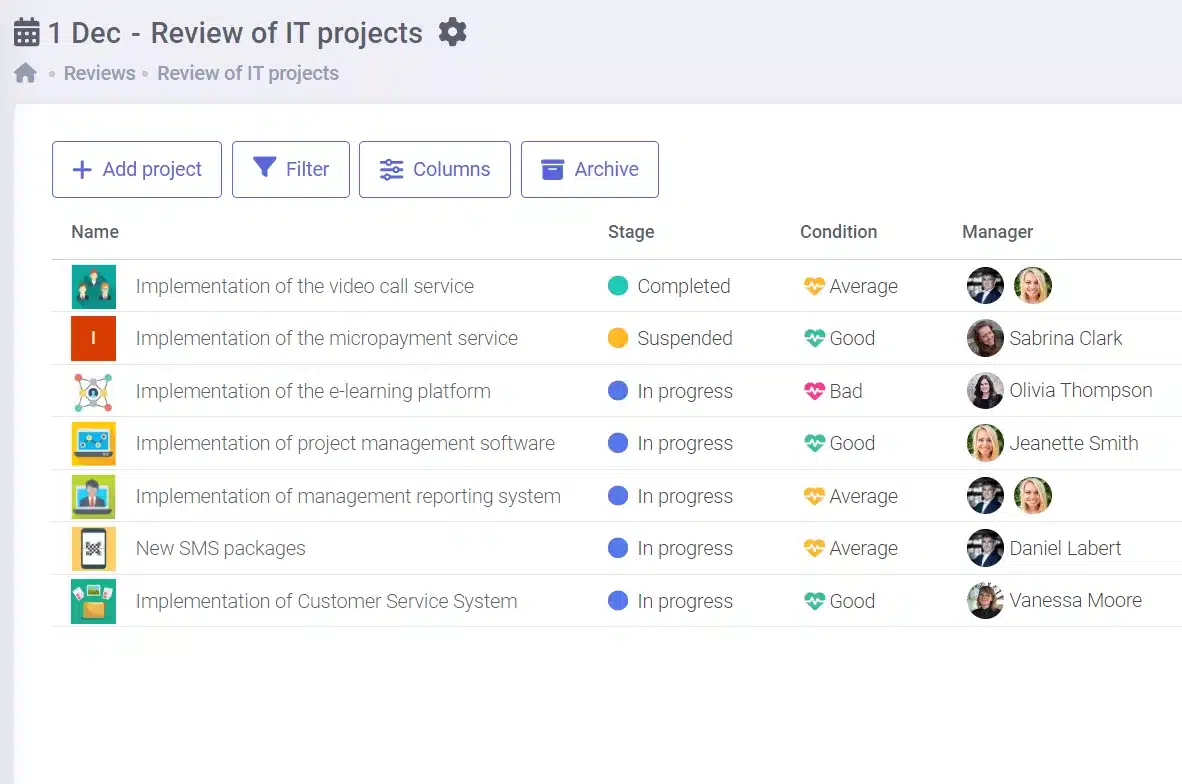
Caption: A shared project status view connects operational updates with management reporting and reduces the need to reconcile information across separate files.
Moving Beyond Spreadsheets Does Not Require Corporate Bureaucracy
Smaller organisations often delay implementing project management software because they associate it with rigid procedures and excessive documentation. That concern is valid. A system that forces every initiative through the same complex methodology can slow down the company and reduce employee engagement.
The objective should not be to reproduce a large corporate PMO. It should be to introduce enough structure to protect clarity as the organisation grows. Different projects require different levels of control. A short marketing campaign may need a Kanban board, clear ownership and deadlines. A product launch may require a formal schedule, budget, risk register and approval milestones. A strategic transformation may need recurring management reviews and portfolio-level reporting.
A mature system allows these approaches to coexist without losing visibility. The company can define lightweight templates for routine work and more controlled structures for complex or high-risk initiatives. Standardisation is introduced where it improves comparability and accountability, not where it merely creates additional administration. Migration should therefore begin with the operational problem rather than the software itself. If the company struggles with missed handovers, task ownership and workflow deserve priority. If leadership cannot compare projects, standardised reporting is more urgent. If several initiatives compete for the same specialists, resource visibility becomes essential.

The strongest implementation does not copy every worksheet into a new platform. It distinguishes between valuable business practices and workarounds that developed because spreadsheets lacked the required functionality.
What a Scalable Project Management Environment Must Provide
A growing company needs more than a digital task list. It needs a management environment that connects everyday delivery with the information required by project managers and company leadership. Team members should be able to identify their current responsibilities without searching across several files or communication channels. Project managers need reliable schedules, clearly assigned ownership, risk visibility and a record of decisions. Leadership needs concise information about progress, forecast costs, delayed milestones, resource pressure and projects requiring intervention.
Consistency is equally important. Recurring projects should not be rebuilt from the beginning. Project documentation should follow agreed formats where appropriate. Reviews should take place according to a defined cycle and use comparable information across departments. At this stage, many companies begin to establish an informal PMO function, even if they do not create a dedicated Project Management Office. A project coordinator, operations manager or senior project leader may assume responsibility for templates, reporting standards, governance and management reviews.
FlexiProject PMO software supports this transition by combining operational project delivery with configurable governance. Organisations can introduce project templates, approval paths, recurring reviews, standardised reports, warning indicators and project scoring without separating daily project work from management control. FlexiProject also enables teams to manage schedules, tasks, responsibilities, budgets, risks and project communication in one environment. This allows a company to begin with relatively straightforward project structures and introduce more advanced portfolio or PMO processes as the number and strategic importance of projects increase.
The distinction is important. The purpose of a scalable platform is not to make a small company behave like a corporation. It is to prevent growth from making the company harder to understand and manage.
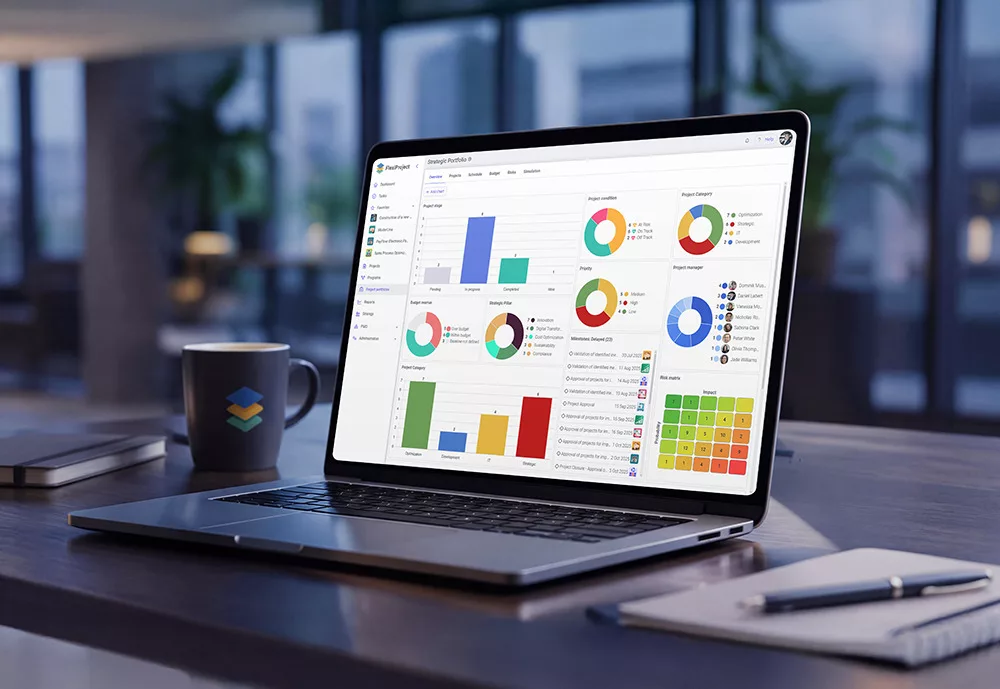
Caption: A shared project status view reduces the time spent reconciling updates across files, teams and management reports.
Multilingual and Mobile Access Strengthen Data Quality
International growth and distributed work create an additional challenge. A shared file may be technically accessible to every employee, but this does not guarantee that people will update it consistently or understand project information in the same way.
FlexiProject was designed for organisations operating across countries and multilingual teams. The system is available in 28 languages. The user guide and system documentation are available in English, Polish, Czech, German, Spanish, French, Hungarian, Italian, Portuguese, Romanian and Ukrainian. Training videos and system presentations are provided in Polish and English. This allows international organisations to introduce common project management standards while giving users access to an interface and learning materials suited to their location.
The FlexiProject mobile application complements the browser-based environment. Users can review assigned tasks, change their status, add comments and attach files, including photographs and documents. A consultant visiting a customer, a technician working on site or an employee away from the office can update progress directly from a smartphone.
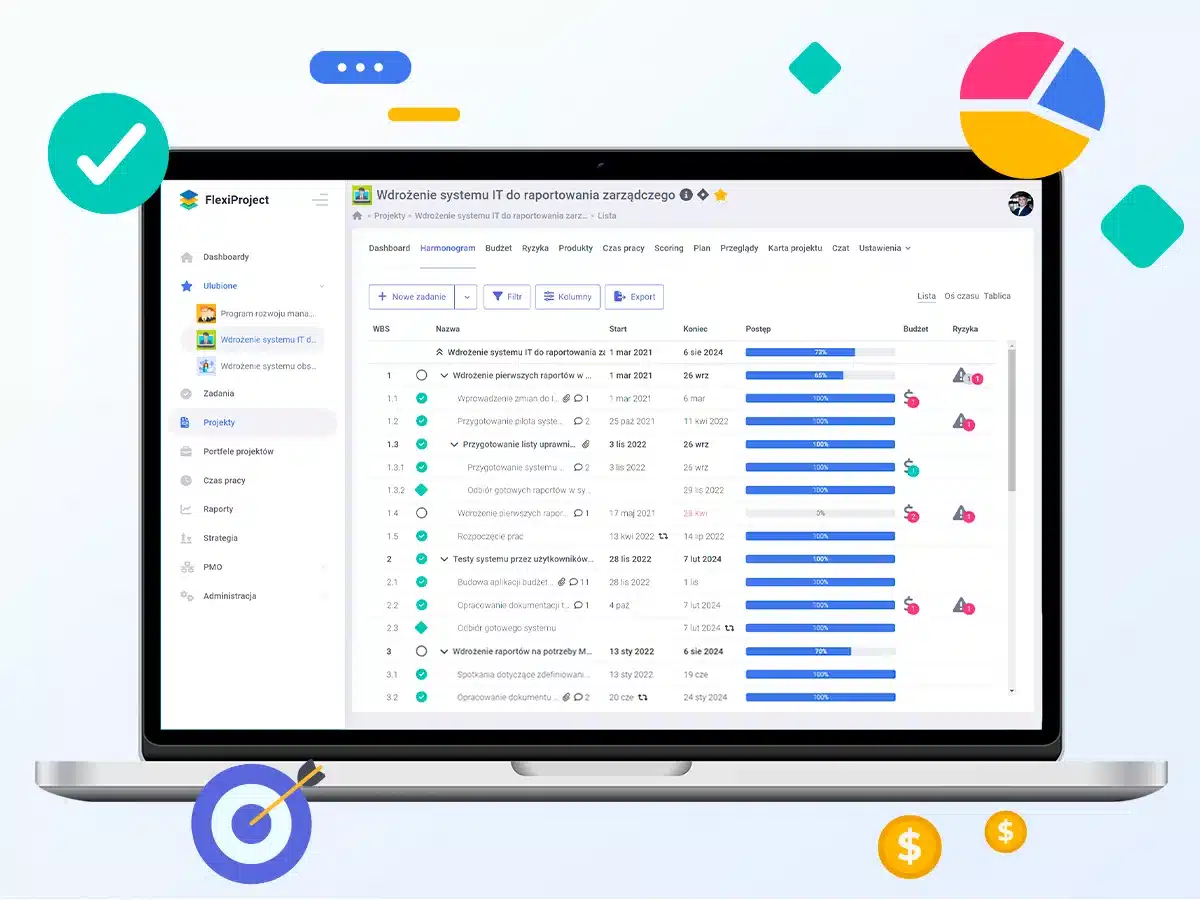
Mobile access matters because portfolio and management reports are only as reliable as the information provided by project teams. Reducing the delay between work being completed and its status being recorded improves the quality of project data available to managers.
When Should a Company Make the Transition?
The decision should not be based on an arbitrary employee threshold. A company with 100 employees may manage a limited number of predictable projects, while a 20-person consultancy may coordinate dozens of complex customer implementations.
The more useful indicators are operational. The company has probably outgrown spreadsheet-based project management when different versions of project information circulate simultaneously, reporting requires repeated manual consolidation, resource conflicts are discovered late, project knowledge depends on selected employees or management cannot trace status summaries back to current delivery data.
Another warning sign is the appearance of increasingly sophisticated spreadsheet controls. Complex macros, extensive permissions, connected workbooks and detailed instructions may indicate that the company is investing heavily in protecting a system that has moved beyond its original purpose. The transition should happen before the workbook becomes impossible to replace. Once critical processes depend on years of undocumented logic and one employee’s knowledge, migration becomes more expensive and disruptive.
Spreadsheets do not need to disappear. They remain useful for specialised calculations, data analysis and exports. Their role simply changes. Instead of acting as the central coordination layer for the company’s projects, they become supporting tools within a broader management environment.
Growing companies outgrow spreadsheets when collaboration, accountability and timely management information become more valuable than unrestricted flexibility. Moving to a dedicated project management platform at that point is not an exercise in bureaucracy. It is an investment in maintaining operational clarity while the business continues to expand.