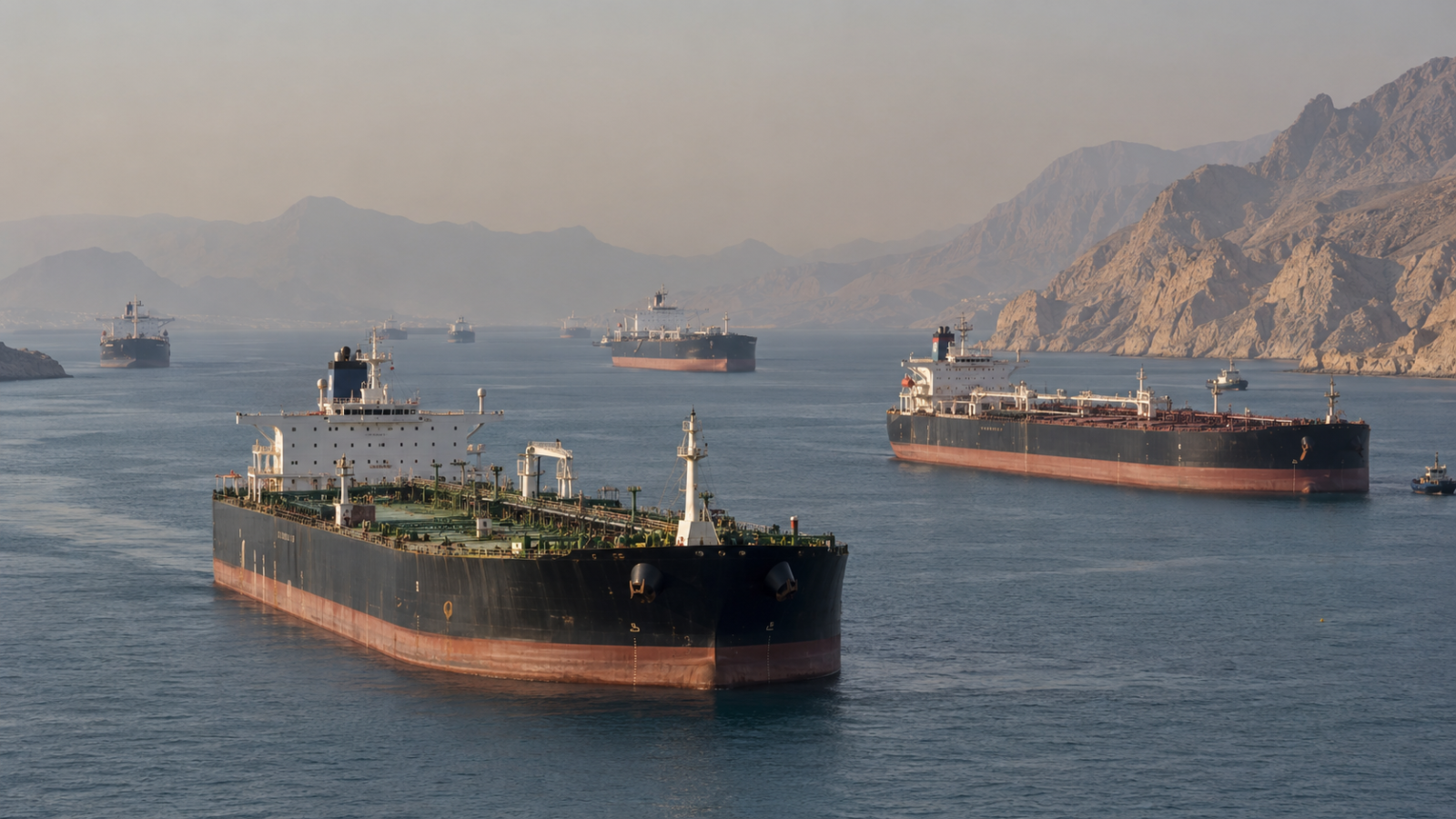
Thirty-one laden LNG carriers passed through the Strait of Hormuz in October 2026, up 35% from September and the highest number since the war with Iran began. Qatar’s gas exports nevertheless remain well below pre-war levels.
By Adam Ujazdowski. Polish original published on 10 November 2026.
Of those vessels, 23 carried liquefied natural gas (LNG) loaded at Qatar’s Ras Laffan terminal, according to S&P Global Energy. The other eight carried gas from the Das Island terminal in the United Arab Emirates.
Kpler recorded 42 LNG cargo loadings across the region in October, compared with 27 in September. Ras Laffan accounted for 35 loadings, totalling more than 2.7 million tonnes of gas.
LNG traffic through Hormuz recovers
Source: S&P Global Energy, Reuters
LNG shipping from the UAE has recovered faster than exports from Qatar, which is still sending out substantially less gas than before the war. Qatar is one of the world’s leading LNG exporters, and disruption in the strait affects delivery schedules, freight costs and ship insurance.
Source: Kpler, Reuters
Regional cargo loadings increased by 55.6% from September. That does not imply an equivalent increase in deliveries to customers: a vessel can load gas at the end of one month and pass through Hormuz in the next.
Before the war, Qatar exported almost 6.2 million tonnes of LNG in February. October’s figure of more than 2.7 million tonnes covers loadings at Ras Laffan, whereas February’s figure measures exports from the whole country. The two figures therefore cannot be used to calculate the precise decline.
European gas prices rise as storage levels fall behind last year
Gas for delivery the following month at Europe’s TTF hub reached $32.86 per million British thermal units (MMBtu) on 28 October. That was a 14.2% increase over the week, according to Kpler’s analysis published on 29 October.
Prices rose on concerns about Middle Eastern supplies, forecasts of colder weather and lower wind power generation. Disruption at Norwegian gas infrastructure also weighed on the market.
Source: Kpler; approximate figures
EU gas storage facilities were about 75% full at the end of October, 10 percentage points below a year earlier. Gas was being injected at a rate of around 60 million cubic metres a day, according to Kpler. The forecast cold spell could, however, bring forward larger withdrawals from storage.
With stocks lower, further interruptions to Persian Gulf supplies would be more damaging for Europe. Pipeline imports also matter: Kpler reported that EU pipeline inflows fell 1.3% week on week to around 2.92 billion cubic metres.
Europe imports less LNG as it competes with Asia
In its 29 October analysis, Kpler estimated weekly LNG imports into Europe at around 2.04 million tonnes, down 8.9% from the previous week. Imports from 1 to 28 October totalled about 8 million tonnes, compared with 10.57 million tonnes for the whole of October 2025. The 2026 figure did not yet include the final three days of the month.
On 21 October, Asian LNG traded at a premium of $1.28 per MMBtu to European TTF gas. A week later, the relationship had reversed, with Europe priced $0.51 higher than Asia. That could encourage suppliers able to redirect cargoes to sell their gas in Europe.
Kpler raised its 2026 LNG demand forecasts for South Korea and Thailand by 0.4 million tonnes each. Stronger Asian demand could limit the gas available to Europe even if Qatar’s exports continue to recover.
Shipping risks persist in the strait
A total of 750 vessels of various types passed through Hormuz in October, compared with 749 in September, according to S&P Global Energy. Transits by very large crude carriers (VLCCs) fell from 184 to 156, while bulk carrier transits rose to 149.
The International Maritime Organization reported around 30 attacks on ships in October. Its secretary-general also warned that mines could be present along the route.
Sources: Reuters (10 November 2026), S&P Global Energy (2 November 2026), Kpler (29 October 2026).